



It’s not just CIA Operatives who should learn how to travel with minimalist gear. Everyone should figure out how to do more with less. For instance, Clint B. is a fellow who loves the outdoors. He’s hiked the lengths of the Appalachian, Pacific Crest, and Continental Divide trails by foot, three times each. He’s traversed over 30,000 miles during his hiking career.
When Clint first started hiking, his packing list looked pretty standard, including items such as leather boots, plenty of extra clothes, a tent, a sleeping bag and a huge bag to stow it all away. The problem was, as Clint stated, “As I trudged with that heavy burden, all I could think about was how painful it was to hike like this and what I could do to lighten my load.” In other words, Clint quickly realized that his hiking career wouldn’t be successful unless he lightened his load and carried only a single backpack full of gear.
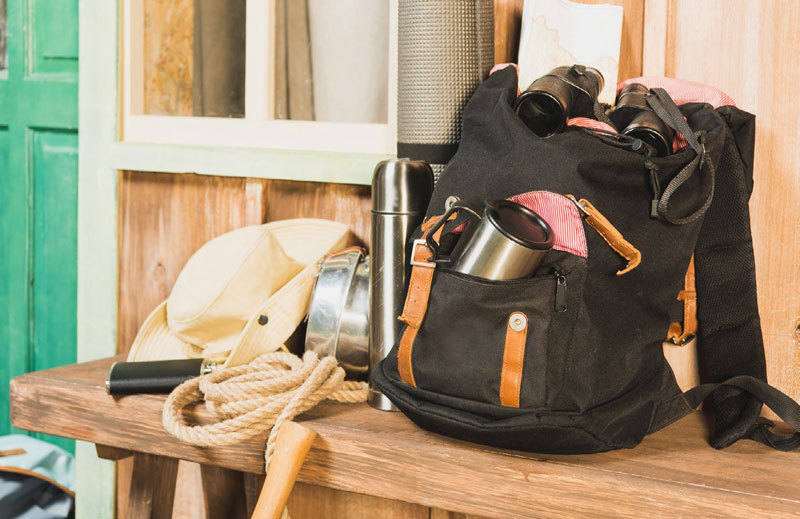 The next thing Clint did was go through his backpack and remove anything that wasn’t essential. One of the first things he got rid of was the extra pairs of clothing in his bag. In addition, he swapped out his big hiking boots for trail-running sneakers. As Clint removed more and more unnecessary gear, he whittled his backpack down from roughly 30lbs of gear to only 8lbs.
Even if you aren’t planning a long hiking trip anytime soon, you should still prepare to travel with only a backpack that contains a gear load that won’t break your back. Just like Clint, you don’t want to be tired and sore on your first day hiking, especially if you are getting out of dodge during a dangerous situation. There is no question we can move faster and safer if we have less burden to carry on our shoulders.
First, when it comes to traveling with just one backpack, you need to decide the maximum amount of weight you want to carry. This is obviously going to be different for everyone since we are all in different physical conditions. As a general rule of thumb, if you sit in an office most of the day and don’t get much exercise, then you probably don’t want to carry more than 15-20lbs on your back. On the other hand, if you exercise daily and are in pretty good physical shape, you can probably bump that up to 25-30lbs.
When it comes to packing your backpack, here are three rules to remember:
Pack the must-haves, not the nice-to-haves. Lay out all your gear and then think about every item, eliminating anything you don’t absolutely need. If it’s your first trip, you might end up packing more things just because you don’t know exactly what you will need the first go around. Most first-time travelers wish they’d packed much less once they get going on their trip.
Don’t over pack when it comes to clothing. It’s easier to do laundry or simply wear a T-shirt with a little stain, compared to packing lots of extra clothes. If fashion matters, pick clothes that blend in and have a simple color pattern so that you can easily mix-and-match every clothing item you take.
Bring versatile items. Focus on items that will have multiple uses and reconsider anything you’ll use only once or twice. Don’t forget, you can buy or trade gear if you are in a bind or find a temporary fix, instead of carrying tons of extra items.
Remember, this doesn’t just apply if you’re hiking or camping on the weekends. Take a look at your bug out bag too and honestly ask yourself if you could hike for miles with it on your back in a crisis situation. If the answer is no, start pulling items out.

It gave me the best vantage point to listen, ask questions and discuss the operation with the support team. The meeting director (or some silly title like that) started off by telling us he was going to perform a roll call of all of the key support staff and then present the operation. As he rambled on for about 10 more seconds, the deputy director said “Yeah, we got it. I’ll take it from here”. He looked at me and said, “Here’s the deal. (name, title, and reputation) is being allowed to go to (city in Europe) for a rare invitation-only awards ceremony. All of these geniuses will be jabbering about how they are smarter than everyone else. He’s not even going to talk to you, but this is a tasking order from the highest levels of government. It’s been years since he has been allowed to step foot out of (facility in city). See if you can get to him and get him to talk to you. That’s it. That’s all you have to do. Think you can handle that”?
 He went on to say that this guy was a one-of-a-kind genius and that he had spotted every undercover operator every Agency had sent in the last 20+ years. He knew every face, every published paper and every name even remotely associated with his field. He could spot a spy as soon as they arrived on the grounds of the institute.
Next thing I knew, I had the mission briefing package and I was gearing up for the roll out. Then it struck me, I get to go to a (European city) for a two week, all expenses paid trip and my only tasking was to see if I could say “Hello” to a world-famous mathematician. I thought to myself, “yeah, I think I can handle this.”
Okay, the real truth is that I felt an incredible rush of eagerness to accomplish what no American spy had been able to do in over 20 years and I knew that if I failed (which was very likely), no one would notice or even care. I wish I could tell you that I developed an ingenious, foolproof plan. Well, what I actually had was a two-week U.S. taxpayer vacation in (City) and a hope that I could pull-off a Hail Mary.
In this case, my cover was that I was attending on behalf of my colleague (real person, real achievements and international recognition – but he owed Uncle Sam a favor) from (Company Name) Lab. I was posing as his friend and peer who had accepted the invitation due to the original invitee not being able to attend.
The Agency had already arranged for me to piggy back on the identity of an actual world-class scientist who was a close acquaintance and fellow brainiac of the Lab’s invited guest. I arrived a few days early to case the critical areas and develop a solid AFAM (Area Familiarization). On the opening day of the awards conference, I strolled in and started getting my bearings. Low and behold, not twenty yards ahead was a large circular standing table where about six men stood and talked.
 It didn’t take long to spot the eccentric hair and fashion choices that revealed my target. I strutted right through the crowd, excusing myself as I moved them aside while showing little regard for their individual sense of being uncrowned royalty. I wanted to come across bold and focused, but not deranged and dangerous. The little chippering sounds of the crowd drew the attention of the mighty men at the standing table. They watched as I continued to approach them. When I arrived at their table, I interrupted and introduced myself as (name), the American who is supposed to talk to “you” and then pointed directly at (Name, title and reputation) (Hereafter Man A).
I said, “No cause for concern my friends. I am here to check out (city) and enjoy a two-week vacation courtesy of my fellow American tax payers. So, if/when anyone asks, please tell them I came right up to you, you told me to buzz off and I did. The other thing that you guys might be interested in is that I have way too much expense money to spend. So, when any of you want a drink, meal, or whatever, let me know and me and my fellow Americans will pick up the tab. Thanks guys. I hope you guys have as much fun over the next couple of weeks as I’m going to have. See Ya”.
I walked off and went straight across the room to a table where the gorgeous conference hostesses were milling around. After a few minutes of warm up, we began having the most boisterous laughs that room has probably ever heard. I sent a round of drinks over to the brainiacs and raised my glass of grape juice to them. Then I asked the ladies if they would like to meet the stars of this international event. They smiled and nodded. I took the entire cadre of beautiful hostesses in what must have been the sexiest procession any of these pocket-protector, black rimmed glasses wearing, geniuses had ever witnessed to their table. When I got the girls to the table, I began introductions. I bragged to the girls about each prodigies’ achievements and then told the prodigy the name of the beauty now standing at his elbow.
I ordered a round of drinks for the table and then excused myself. Not my target, but one of his close colleagues, asked me where I was going (clearly concerned that they may not have the charisma to keep this bevvy of hotties hanging around). I told them I was off to tour the city and that if they needed more drinks or anything, they could have the concierge track me down. I didn’t return to the gathering until several hours later.
That evening, there was a semi-formal dinner. I wasn’t shy about getting up from my table and going over to sit with the hot chicks. They all giggled and the room made this kind of “grumble rumble” sound. Many of the attendees looked at me in deep disgust, but I didn’t care about them. I only cared about how one man would react. I caught his eye and saw him make a very small smile and kind of chuckle. I avoided any direct contact with him that night and focused on entertaining the ladies. At the end of the evening, I left early to go set up. I wanted to see him when he left and see if I could tell which of those other five men at the table with him might be his true friend. And there it was, he came out with all five and then he and the fellow who had been on his right at the standing table (Man B) seemed to send the other four away to bed and engaged in what appeared to be an earnest chat.
I didn’t care what they said, what they were talking about or even where they were going. I already had what I needed: my future warm introduction. As the conference chugged ahead for a few days, I made it my singular task to find ways to make Man B run into me on breaks, in the restroom, at snacks, etc. The only way this works is if you can predict where he is going and when he will be there so you can already be there and have him think he ran into you. I would only smile and offer a half-hearted wave to Man A. His reply smiles began to be warmer and often included a slight head-nod.
It was about the seventh or eight day of the conference when I arranged to run into both Man A and Man B at another “members only” soiree in the conference hall. I brought over a tray filled with wine glasses. I put them down in front of Man B and said… Part 2 Of This Operation Will Continue Next Month.

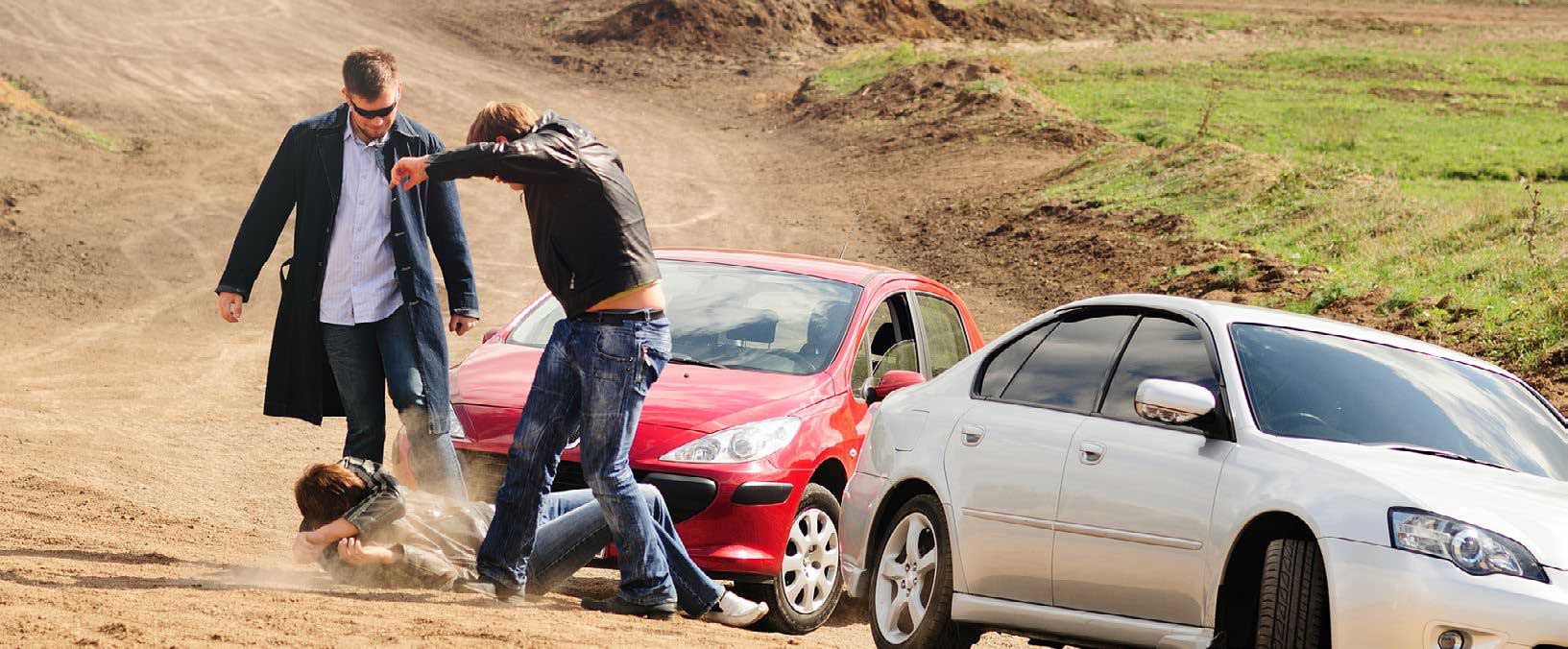 Putting humans behind the wheel of a car, traveling at even neighborhood speeds, can escalate the physiology of the brain and body and get us into an intense mood. Add in a situation of getting cut off or even a minor fender bender and what should have been something to be brushed off, now turns into an emotional melt down.This can happen to anyone, turning even the most calm and logical person into a raging lunatic. Therefore, we must be aware of the steps we can take to proactively evade a road rage situation, but also have countermeasures in place to deal defensively with violent situations.To deal with this, think of tackling the issues proactively, reactively and defensively. Proactively, we can avoid most potential situations by doing a few simple things after we’ve made another driver irate for whatever reason. Obviously, keep driving and don’t stop. In many cases, there can only be a dangerous encounter if you stop and engage or give another driver a chance to engage you.
Second, leave space between you and the car in front of you whether you’re moving or stationary. Getting locked into traffic gives you less options to escape a potentially dangerous situation. The final proactive step is to take a picture of the person’s license plate. Why? Even if you leave the scene and try to avoid any contact, it doesn’t mean the person won’t follow you or seek revenge somehow. Knowing who is after you is much better than fearing who could come back and try to harm you. Also, having the driver see you take a picture of their license plate may have them thinking twice before resorting to destructive behavior.
If you do engage with a person for whatever reason, there are reactive steps you can take. The easiest thing is to apologize for whatever you did or they thought you did. You may not have noticed that you cut someone off in traffic and denying it will only make the other person more angry. So, who cares, say you’re sorry and move on.
If an angry person approaches your window, don’t roll down the windows or open your doors. Don’t give them an easy opportunity to grab or hit you. Note that they may want to damage your car, as we see many times with mobs attempting to shut down streets and highways during protests. Dealing with a dent in your car is easier than getting assaulted by multiple people.
If you are surrounded by a mob, signal that you’re going to call the police and then do call the police if they don’t leave you alone. It puts the ball in the aggressor’s court, if they really want to deal with law enforcement, and works just as well even if you are bluffing. Worst case scenario, if you do call, you’ll have not only extra help coming, but you’ll have a record of being on the receiving end of the aggressor’s verbal or physical assaults.
There are those situations where, for whatever reason, things do get physical and you must defend yourself. Just because you refuse to roll down your window, doesn’t mean they won’t break it. Sometimes you are boxed in by other traffic or you have to defend other family members in the car.
In these cases, knowing a protective block and a powerful strike can save your life. The kind of block you can do while seated in a car is a “Triangular Cover” which wraps your arm around the side of your head tightly, protecting it from broken glass and/or oncoming fists.
A useful strike is the “Hammer strike” that uses the bottom of your fist, to strike someone’s arm if they’re reaching in to hit or choke you or it can be used as a fury of strikes when standing against your opponent. Targeting anything from the forearm to the face will disorient and cause pain, allowing you time to escape. Once again, having these three lines of defense gives you several options at different intervals of a potentially deadly road rage situation.

We all know that life in the military isn’t safe. It carries real risks of death and dismemberment every single day. Even during peacetime, the men and women of our military face these risks because of training accidents and high-risk operations. Case in point: I have a buddy from high school who just lost his 22-year-old son over the Sea of Japan when his C130 refueler was struck by an FA-18 at 0200 in the morning as they were practicing night refueling. Of course, in this case, nothing could’ve been done to save the five crewmen killed in midair who plunged to the ocean below, but in many other cases, medics can quickly intervene to save life and limb.To help improve survival rates in the military in both peacetime and war, not only do we train medics who specialize in combat and casualty care, but we also train most everyone in some type of basic first aid so that they can assist others or even themselves if injured. We have seen survival rates skyrocket over the past 2 decades because of new, aggressive training and intervention measures that were not in place before. In fact, for the preceding century, there really wasn’t much of a change in survival rates as 90% of all soldiers who died did so in the field before they made it to definitive medical care. Today, that number is lower as more and more are trained to immediately intervene to preserve life through the implementation of basic first aid measures that work.
 In Tennessee, we have large LED boards that hang over our interstates on which the DOT flashes important messages. One of the recent messages told us to be careful, as in 2018, over 1,000 Tennesseans lost their lives on our highways. I wonder if that number would be that high if the first people on the scene knew basic first aid and weren’t scared to jump in and save lives.
What would you do if you happened upon a serious car crash before emergency personnel arrived? What if a shooter came into the place you and your family were eating and shot several people before making a rapid exit? What if you took your spouse or girlfriend dancing and someone got into a fight on the dance floor and got stabbed or cut? Would you know what to do? Would you know how to save their life? Or would you stand off to the side helplessly watching and waiting, hoping someone else would step up while another person’s life slipped away before your very eyes?
There is no reason you shouldn’t the skills and the confidence needed to save the life of another. In fact, there are programs available all over the country where you can receive excellent training in a day or two that will give you these necessary skills and the confidence to intervene in saving the lives of others.
One such proven program is offered by the NAEMT (the National Association of Emergency Medical Technicians) and the training is called TCCC or Tactical Combat Casualty Care Course. In this one or two day course, depending on your previous experience and training, you’ll cover all essential areas that you need to be aware of from tactical scenarios, to drags and carries, obtaining an airway, using hemostatic dressings that stop bleeding and properly using and applying tourniquets. At first look, you may think that isn’t much, until you realize that most people in the field die from either not being able to breathe or from bleeding to death. Both of those can occur within mere minutes, well before other help arrives. I’d highly recommend that you find a similar course near you and take it. Not next year, but next month. The life you save may be your own or that of someone you love.

While money can’t buy happiness, it can buy some tools and techniques that can extend your life long enough for you to actually have a chance to find it. The problem is, with all of the excellent survival training, most people don’t spend enough time training on how to survive the financial dangers that are headed our way.For instance, you can find the majority of my food stored in my pantry and my freezers. You can find the majority of my guns in my gun safes. I also have bug out bags and tons of other gear stored throughout my house. But, like I said, we often forget to have a survival plan for the very thing that allows us to acquire those things we are trying to protect. This is why Jason recently asked me to put together a Free Wealth Survival Kit for you.
Many of you have reached out to me in the past few months to acquire physical gold and silver inside and outside of your IRAs. I’ve been amazed at the number of existing clients from Universal Coin and Bullion that have called to let me know that they enjoy reading my articles in the Spy & Survival Briefing and have been wanting to invest in gold and silver, but don’t know where to start. If you are like them and are looking to pick up a little bit of survival protection for a worst-case scenario, then call me and I will help you to acquire some of my top recommendations: 1-ounce Silver American Eagles and 1/10 ounce Gold American Eagles.
If, however, you are looking to take things to another level and have a large amount of money ($25,000-$1,000,000+) in a 401k, 403B, SEP, Simple, Roth, or Traditional IRA, then you need to listen very carefully to the following five reasons that so many people are transferring and rolling over their funds into real, physical, tangible, gold and silver.
#1 – Simplicity – It is amazingly easy to transfer or rollover your IRA or 401k into gold and silver. Many people stop short of transferring an IRA simply because they are overwhelmed by the paperwork. I make it a very easy process. In 10-15 minutes on the phone, we will determine if rolling or transferring your IRAs is the right thing for you. Then we fill out the paperwork and make a plan for what precious metals are right for you.
#2 – Inflation Protection – While the current published inflation rate is just under 2%, I think we all know better. The government has changed the way it calculates inflation more than 20 times since 1978! If we measured inflation using the same calculations as they did in 1979, it would be around 9% right now. Gold and silver have historically been able to counter the eroding effect that inflation has on our dollars. They will still buy around the same amount of goods that they would have back in 1933, when we first started moving away from the gold standard.
#3 – Tangibility – I vividly remember the first time I asked our resident gold expert why people should buy physical gold vs ETFs (Exchange Traded Funds) or gold stocks. He said, “If we were to go fishing offshore and you fell overboard in rough seas, would you want me to throw you a life preserver or a picture of a life preserver?” Having real, physical, tangible gold and silver in your IRA is a comforting feeling. You are one phone call away from having that gold and silver shipped directly to your doorstep within a few days.
#4 – Diversification – Nearly all top performing financial analysts advise and recommend that precious metals be included in every portfolio as part of a sound asset diversification strategy. Many times, gold and silver act as a negative beta to the equities markets. When past paper market bubbles have burst, gold and silver have often maintained and even grown investment portfolios while stocks were falling.
#5 – Performance – Over the long term, gold and silver coins have shown appreciation in value and many times outperformed almost every other investment class out there. Since 1970, gold bullion has far outperformed the Dow Jones Industrial Average, the S&P 500 and many other traditional investment arenas.
Whether you are looking to survive, thrive, or both, I can help. Call or email me directly and mention that you read my article in Jason Hanson’s Spy & Survival Briefing and I will send you my Wealth Survival Kit free of charge to help you make the best decision for you and your family.
[Publisher’s Note: For questions about buying gold and silver coins you can contact Forest Hamilton directly at foresthamilton@universalcoin.com or call 800-822-4653. Please know, if you purchase any coins from Forest, we don’t receive any compensation from him. We simply know he’s one of the good guys in the business that can be trusted.]
Unable to figure out who was behind all of these e-mails, Laurie began deleting her social media and contacted the police. Over time, for an unexplained reason, her stalker simply stopped contacting her or anyone she knew. Of course, Laurie lives in fear that this person will reemerge, but the fact remains that this person learned a great deal of information about Laurie and her family from the Internet.
Even if you aren’t a social media user or don’t have a huge online following, there is likely still some information about your personal life that can be discovered online. With all the nut jobs in the world, you never know what someone will do with this information, which is why I want to share with you a few steps you can take to minimize your online presence.
Remove social media/shopping accounts. One of the biggest tools used by criminals to learn your personal information is by monitoring your social media. Whether it’s a picture of your home or even a review of a great restaurant you eat at, social media gives away a lot of personal details, which if why you might want to delete your accounts. In addition to social media, you should delete or deactivate your online shopping accounts such as Amazon or Wal-Mart. I know this is inconvenient, but if you truly want to protect yourself, this is necessary. These websites store information about you including your home address and can easily give someone clues to your life if a hacker gets ahold of this information.
Contact data collection websites. Chances are, if you’ve ever Googled someone’s name, you will see results from websites such as Spokeo or Whitepages. These websites are data collection websites that track your online browsing and then sell your information to advertisers. To see which data collection websites have your information, I would do an Internet search for your name and document all of these types of websites that have info on you. Next, I would contact each of them directly to opt out of their data collection. Most of these websites will require you to send in a physical letter and it may take some time, but it’s worth getting your information off their websites.
Create a positive presence. Let’s say you’re self-employed and someone posted a negative comment about your work online. Most likely, it will be difficult for you to get this type of information deleted so you will want to overcome it with positive information. For instance, you could join online forums or professional groups related to your job and post positive comments or information. Of course, you don’t want to include personal things like your home address, but keep it related to your profession. This may sound counterintuitive when you are trying to delete your information from the Internet, but the fact is, if you can’t delete the negative information, then you need to make sure there are more positive things posted online.
Eliminate obsolete search results. Google’s URL removal tool helps you to erase information displayed on the internet from your past. For example, this could be a webpage containing your personal information that you’d like removed, such as a former employer’s page long after you’ve left the job. When your name is Googled, the page of your former employer may continue to appear in the search results because your name legitimately once appeared on their website. The thing is, even if you click on the link and go to the website your name is probably nowhere to be found. What this means is that the page’s old version is cached somewhere on a Google server.
This is where the Google tool has a crucial role to play. Send the URL to Google for updating its servers to delete the search result that’s cached so that your association with the page no longer exists. However, do bear in mind that Google provides no guarantees that it will remove such cached information, but it’s worth a shot.
If you don’t want to do this work yourself, there are many companies that will help you delete your information from the Internet, however, they will charge you hundreds of dollars. A few of these companies include DeleteMe and Reputation Defender. Whatever you decide to do, be careful about the amount of personal information you put online.


