


Everyone should treat their phone conversations as if someone else is listening
In my opinion, I always believe someone is listening to my conversations. Most likely it is the U.S. government making sure I’m never saying anything I shouldn’t share.
“Cellphones are easy to tap — especially if they are equipped with spying software from the manufacturer.”
Why?
The reality is cellphones are easy to tap — especially if they are equipped with spying software from the manufacturer…
Asking for Trouble
These days, a majority of the electronics we buy in the United States are manufactured abroad. In fact, 90% of computers and 70% of cellphones sold in America are manufactured in China.
Recently, top intelligence officials voiced their concerns regarding two Chinese electronic manufacturing companies who may be using their products to spy on American citizens. This technology has been around for a long time. It wouldn’t be difficult for countries like Russia, China or even the U.S. to carry out this type of espionage.
On the other hand, it wouldn’t make financial sense for a Chinese electronics company to install spying capabilities on every single device they produce. They might do this for special orders they believe could end up in the hands of U.S. government officials. The reality is it would be unrealistic to equip millions of cellphones with this technology.
That’s not to say this type of espionage can’t be executed on a large scale. Our enemies wouldn’t have to record every conversation a person has. They could design the spy software to key in on certain words such as “classified” or “case officer.” Across-the-board monitoring is too difficult and a waste of money — it would be more effective to be selective in this way.
Cellphone espionage has more to do with the cellphone number and phone’s location and less to do with the physical phone itself. U.S. lawmakers are urging consumers to avoid buying phones from certain Chinese companies — Huawei and ZTE — but the fact is it’s not just the actual phone that makes it possible to spy on conversations.
There Are Ears Everywhere
As I mentioned before, I believe my conversations are always being monitored. I would never share personal information such as my Social Security number or, frankly, any information I’m not comfortable sharing with the public.
If you want to do everything possible to ensure your cellphone isn’t being monitored, I suggest using burner phones. I recommend buying a new phone each month and getting a new number each time you replace your phone. This might seem inconvenient, but it’s one of the best ways to ensure no one is listening.
Also, you need to change your location each time you use your burner phone. For example, don’t sit inside your home using the same cell tower even though you have a new phone. Go to a place where there is a lot of cellphone activity — such as a shopping mall or sporting event. This makes it more difficult for anyone to hone in on you.
The bottom line is most of China’s technology is tied to their government — everything manufactured in China is monitored. The Chinese government wants to make sure they get a piece of the pie… or at the very least have access to the latest and best technology.
SAVINT
Your Monthly Savings Intelligence
Imagine having all the light you need AND the full freedom to use your hands in an emergency.
Introducing the ULTIMATE in hands-free survival gear — a waterproof, mega-bright flashlight you wear like a glove.
It’s the best of both worlds!
I have one of these Tactical Survival Gloves set aside to send out immediately — FREE of charge.
Bad Things Come in Suspicious Packages

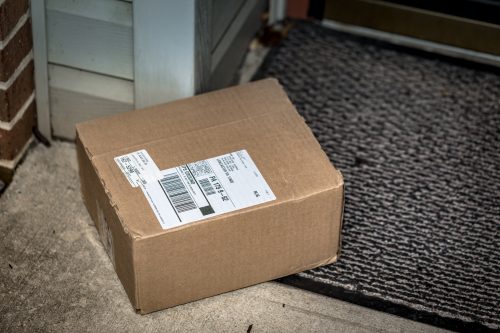
What to Do With an Unexpected Delivery
For 19 days in March, the nation watched nervously as bombs were delivered to unsuspecting victims in Austin, Texas.
The harrowing ordeal began on March 2, when Anthony Stephan House handled a package that had been left on his doorstep. He was killed when the package exploded. Two more packages detonated on March 12, killing 17-year-old Draylen Mason. His mother and another 75-year-old woman were injured.
Next, the bomber set up a tripwire connected to a bomb anchored on a “For Sale” sign. The tripwire was sophisticated enough to lead police to believe they were dealing with a professional who had some sort of training. Two more people were injured in this explosion.
Two days after the tripwire incident, a package exploded on a conveyor belt at a FedEx processing facility outside San Antonio. Roughly six hours later, police were alerted to a suspicious package at another FedEx facility near the Austin airport, which they were able to intercept.
Dead on Arrival
Law enforcement began looking for the person who sent these packages. They quickly discovered surveillance footage of a man wearing a blond wig and pink gloves mailing one of the parcels.
Once police identified the suspected bomber, they began tracking his location based on his cellphone. This led them to a hotel about 20 miles outside Austin. While waiting for a SWAT team, police observed the suspect enter his vehicle. They began following him down a freeway service road. As police closed in, the suspect detonated a bomb inside his car. He died at the scene.
The man behind the bombings was 23-year-old Mark Anthony Conditt. A confession video was found on his cellphone that claimed that the bombings would continue until police caught him. Who knows how many more victims there could have been?
This isn’t the first time we’ve seen this type of crime. For almost 20 years, the Unabomber, Ted Kaczynski, mailed bombs all over the country. These attacks resulted in three deaths and countless injuries.
“Mail bombs are a popular tactic for domestic terrorists.”
Since mail bombs are a popular tactic for domestic terrorists, here are a few critical reminders to help protect you from an exploding package.
Signed, Sealed, Delivered
These days, you can receive virtually anything by mail — whether it’s groceries, clothes, household items, you name it, you can have it delivered. And with so many companies offering two-day shipping, many people are constantly receiving packages.
Here’s the No. 1 thing: Take the time to track every single one.
Ideally, you should check daily to see where your package is and when it’s expected to arrive. If you ever receive a package at your door and it’s not something that is scheduled to arrive, you must use caution.
If an unexpected package shows up at your door, look for signs and markings that might be suspicious. For example, does the package have a return address? Is it a handwritten street address or a printed label such as one from Amazon?
Most people who would send something in the mail should know your correct address. If the address is wrong or misspelled, this could be a sign it’s from someone who doesn’t know you. Another red flag is if the package is excessively taped. In other words, does it look like every part of the box is taped closed?
How to Stay Safe
If you receive a package that you didn’t order and it has any of the indications above, leave it alone. Do not touch the package or move it to somewhere you think is safe. Some mail bombs are rigged with a switch to go off when the package is moved or opened. Immediately notify local law enforcement so they can inspect the package and keep everyone away until it’s deemed safe.
Remember, the Austin bomber bought many of his supplies at a local hardware store. While I hope we don’t see more crimes like this, it’s important to use caution anytime you get something unexpected in the mail. Be sure everyone in your household has this information so they know what to do with a suspicious package.
Sprains, Strains and Fractures — Oh My!

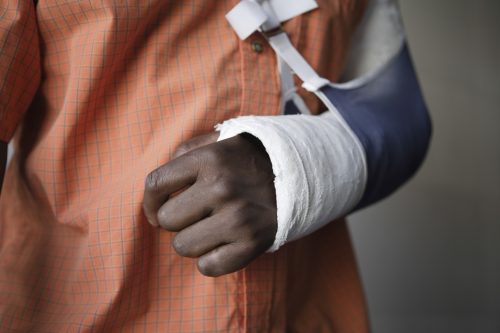
How to Identify and Treat Musculoskeletal Injuries
Bones, joints, muscles, tendons and ligaments make up the musculoskeletal system, which we depend on for physical movement, work, protection of internal organs and locomotion.
Trauma to these structures can result in fractures, dislocations, sprains, strains and contusions.
If you’ve had a broken bone before, you know it hurts. A lot. But so do dislocations and sprains.
When you’re in that much pain, sometimes it is difficult to tell which type of injury you’re dealing with. The good news is the principles of treatment are essentially the same.
Let’s Break It Down
A fracture is a broken bone. A dislocation is the traumatic disruption of a joint so that it is no longer functional — this almost always includes injury or disruption to the ligament as well. A stretching injury to a ligament is a sprain. A stretching injury to a tendon or muscle is a strain. Blunt trauma to a muscle is a bruise or contusion.
In each of these cases, trauma is always involved. Basically, that means a sudden force on a structure in such a way that the structure is incapable of safely absorbing it.
- When it comes to bones, trauma often results in a fracture. In order to decrease pain and prevent further injury to the bones or surrounding soft tissues, blood vessels and nerves, you need to fashion a splint. Use whatever solid material you can find that is stiff enough to prevent further movement of the broken pieces in relation to one another.
Apply the makeshift splint in as close to a functional anatomical position as possible — along the long axis of the bone. It should cross and stabilize the joint above and below if possible. Then secure it with cloth, bandages or tape until you can reach medical care.
Make sure you have a pulse in the part of the limb that is furthest away from you. If you do not, you should consider adjusting the fracture and re-splinting.
- When a joint dislocates, this usually means that you will also have some torn ligaments that once held the bones together. If possible, you may try to put the dislocated joint back into place with traction and some manipulation of the joint. Then apply a splint (or a sling in the case of the shoulder) as above and seek medical attention.
- Sprains or stretched ligaments can hurt as badly as fractures — especially in a weight-bearing area like the ankle, knee or hip. More severe injuries will usually swell, discolor and deform. It is important to splint these as well to prevent pain and further injury — the structural integrity of the joint is diminished by the injury to the soft tissues that hold the joint in place (ligaments).
- Strains and/or contusions — though painful with motion — are usually not as limiting as other types of musculoskeletal injury. Sometimes strains will need surgical repair. But usually ice, pain meds, rest and time will help your body heal itself.
In any of the above examples, your goal should be to stabilize the injured area to decrease pain and prevent further trauma. You should always seek medical attention as soon as possible after an injury. Sometimes you need to take basic steps to ease suffering and avoid aggravating the afflicted area until you can. Hopefully, this information will give you what you need to make it to a medical facility safely and comfortably.
Barter Like a Boss

Top Five Tradeable Items to Stock for a Crisis
In 2015, the Global Terrorism Index ranked Boko Haram as one of the deadliest terrorist groups on the planet. Not only is this group responsible for the murder of tens of thousands of people, but it has displaced nearly 2 million people, mostly from northeast Nigeria. According to the United Nations, this is one of the worst humanitarian crises the world has ever seen.
Most of those who have been displaced from their homes have no money and are struggling to make it day to day. With so little cash available, it is no longer a viable medium of exchange. So people are forced to find other ways to get the necessities they need to survive.
They’ve had to resort to bartering.
This for That
While you probably don’t have to worry about a terrorist group forcing you from your home, the reality is any number of other disasters could dismantle the economy, rendering cash useless:
- Natural disasters such as wildfires, hurricanes or floods could make certain supplies (like gas) scarce
- A natural or man-made disaster (like an EMP or a cyberattack) could shut down the power grid. All forms of digital money would instantly become worthless
- We could see a situation like in Venezuela, where government malfeasance has sent the inflation rate through the roof.
“After a disaster, ‘black gold’ will quickly become a hot commodity.”
If any of these crises comes to pass, you will need to be prepared to survive by any means necessary. Here are five items I recommend stockpiling for trade in a dire situation:
- Clean water and filters. Water is critical for survival. The problem is one of the quickest ways disease spreads after a disaster is through contaminated water. I recommend storing at least 30 days’ worth of clean drinking water in your home. In addition, I encourage everyone to have a quality water filter such as the SurvFilter. But don’t stop at one — you should have multiple water filters to use as barter, because a water filter could easily be worth its weight in gold
- Antibiotics. During a survival situation, a $20 bottle of antibiotics could become incredibly valuable if all pharmacies are looted or closed. So it’s a good idea to have a stockpile of (legally obtained) antibiotics. Be sure to include multiple medications to treat different illnesses. One way to purchase antibiotics over the counter is to buy ones labeled as fish antibiotics. But if you start growing gills, remember I’m not a doctor
- Fire starters. In an emergency situation, the ability to build a fire is critical for cooking and warmth. For this reason, I recommend stockpiling matches, lighters, flint, firewood and other DIY ways to help start a fire and keep it going. Don’t forget you can also use a fire to signal your location if you need help. One thing I stockpile that doesn’t cost any money is dryer lint because it’s a great way to get a fire going
- Weapons and ammo. There is no question a firearm should be part of your survival gear. Of course, the firearm is useless if you don’t have the right ammo. I suggest stockpiling at least 1,000 rounds of ammo for every caliber of gun you own. I also recommend storing extras of the most common calibers, such as .22, .22 LR, .223, .308, 9 mm and 12-gauge shells. Of course, the key if you decide to trade ammo or firearms during a survival situation is to make sure they won’t be used against you
- Fuel. After a disaster, “black gold” will quickly become a hot commodity. I don’t just mean gasoline. Store extra propane along with other types of fuel (including wood and batteries, even solar panels) that can be used in a survival situation. Fuel can be very valuable since most people will need some way to cook and keep their family warm.
As you build up your food storage and stash of survival gear, consider adding extra amounts of the items listed above. These things can become extremely valuable when in short supply, which allows you to trade them for other items you may need.
Fight Fire With Preparation

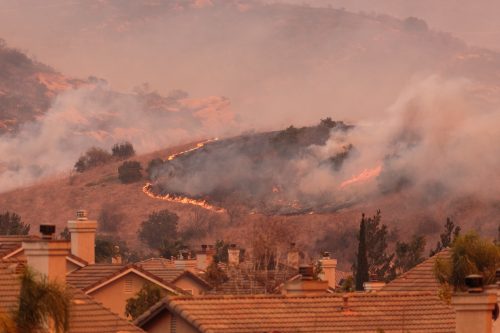
Tips to Protect Your Family and Property During Wildfire Season
Fire season is upon us! And if the lack of moisture in Colorado this winter is any indicator — IT’S GONNA BE BAD.
Now, you may not own a cabin in the mountains or plan to visit one of our amazing national parks this summer. But that doesn’t mean you’re “out of the woods” (couldn’t help it) when it comes to wildfires. With these types of conditions, the path of destruction could still reach you.
Luckily, there are a few things you can do to protect your home and your family in the event of a wildfire. I am going to concentrate on three key elements: preparation, information and plan of action.
Preparation
If I had a dime for every time I said 90% of survival is preparation, I’d be a rich man. This is no different. Here are four steps you should take to minimize liability:
- Remove any flammable items and debris from the immediate area around your home or business. Fire needs fuel — the less it has to consume the better
- Make sure you never let the fuel level in your vehicle drop below half a tank in case you have to evacuate
- If you are an avid Spy & Survival Briefing reader, you already know you need to have a go bag and water in your vehicle. Check regularly to ensure anything that uses power (flashlight, radio, etc.) is fully charged. (You should also have extra batteries.)
- Review your homeowners’ or rental insurance policy to make sure you are covered in a worst-case scenario.
Information
Knowing the current status of a raging forest fire is vital. This will make all the difference when it comes down to life-or-death decisions.
- Monitor your local television and radio stations for the latest information from the National Weather Service as well as local law enforcement and first responders
- Some communities have a system in place to text or email updates and warnings like “EVACUATE NOW!”
- Note the location of emergency shelters in your area as established by the Red Cross. Another great resource for this information is by texting “SHELTER [your ZIP code]” to 4FEMA (43362).
In order to get the latest on any emergency situation, make sure you have a comms plan in place — including multiple ways of gathering intelligence in case the power is out or cell towers are jammed.
Plan of Action
This should be obvious, but I’m going to say it anyway: In an evacuation situation SOONER IS BETTER. Whether you decide to bug out based on the information you gathered or local authorities order you to vacate your home, remember the five P’s of evacuation:
1. People.
2. Prescriptions.
3. Papers.
4. Personal needs.
5. Priceless items (but NEVER property over life).
Once you have everything together, GET GOING. In addition to half a tank of gas (at least), you should also have a paper map in your car. If there’s already a ton of smoke in the air, it can affect the functioning of your GPS. Plus, you should have multiple escape routes prepared in case of road closures.
Drive slowly and keep your headlights and hazard lights on. This will help while driving through any smoke. Also, make sure your vents are closed, fans are off and the recirculation button is on.
Unfortunately, there’s no option to “hunker down” in the event of a wildfire. All you can do is keep your yard free of fuel and be ready to get the hell out of Dodge as fast as you can.
Other than that, if you care to do a rain dance, we here in Colorado sure could use one.
More Than Just Shelter
One Weird Way a Tent Might Save Your Life
Last fall, Tim Heingartner set out with a friend to hike in British Columbia’s Height of the Rockies Provincial Park.
Prior to the trip, Tim had purchased the MSR Elixir backpacking tent because it was lightweight and affordable. The first day in the park, the two friends hiked roughly 10 miles before making camp for the night.
“The tent you buy should fit the climate and environment.”
In the Line of Fire
When the men stopped to eat lunch on the second day, they noticed a wildfire down in the valley. They could tell the fire was growing quickly. Then it dawned on them that they were surrounded by impassable mountains.
Upon realizing the fire would soon trap them, Tim and Rich began hiking back the way they had come. As they moved down the mountain, the men noticed tankers and helicopters dropping water, which gave them hope they could get out before it was too late.
After several miles, they stopped to lighten their packs. They kept enough food and water to survive for two days, but abandoned the rest of their gear so they could move faster.
As the men were getting ready to continue their trek, Tim came up with an idea. He quickly cut the bright-red floor out of his tent and made a flag out of it with his walking stick.
Soon, the pair were met by a fire crew who escorted them out of the danger area. Apparently, a helicopter pilot conducting water drops had spotted the red flag and notified ground crews of the men’s location. According to rescuers, had they found the Tim and Rich only an hour later, they would have likely been trapped.
Center of At(tent)ion
As strange as it sounds, it was Tim’s tent that played a critical role in helping these guys get back to safety. The truth is quality tents are often overlooked when it comes to survival gear. So I want to share my top three recommendations when it comes to the best survival tents.
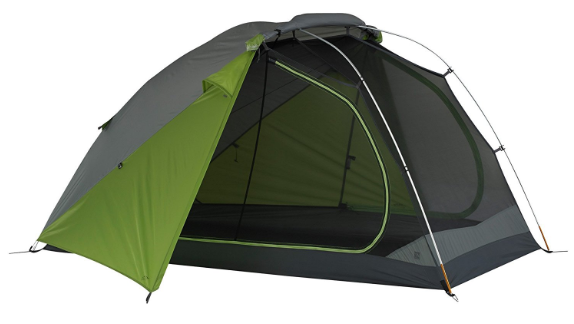
1. Kelty TN2: The best thing about this tent is that it’s compact and lightweight — only 4.5 pounds. It provides plenty of airflow, which makes it ideal for warmer climates. It sells for around $185 on Amazon. Sleeps two people.
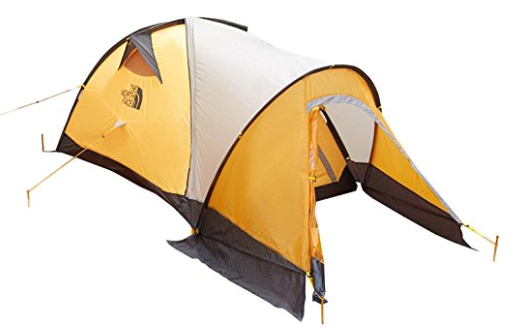
2. North Face Assault 2: This is a top-of-the-line tent designed to withstand strong winds at high altitudes. If you live in a colder region, this is a tent you should look into. This two-person tent weighs just over 4 pounds. This sells for $450 on Amazon and comes with a lifetime guarantee.
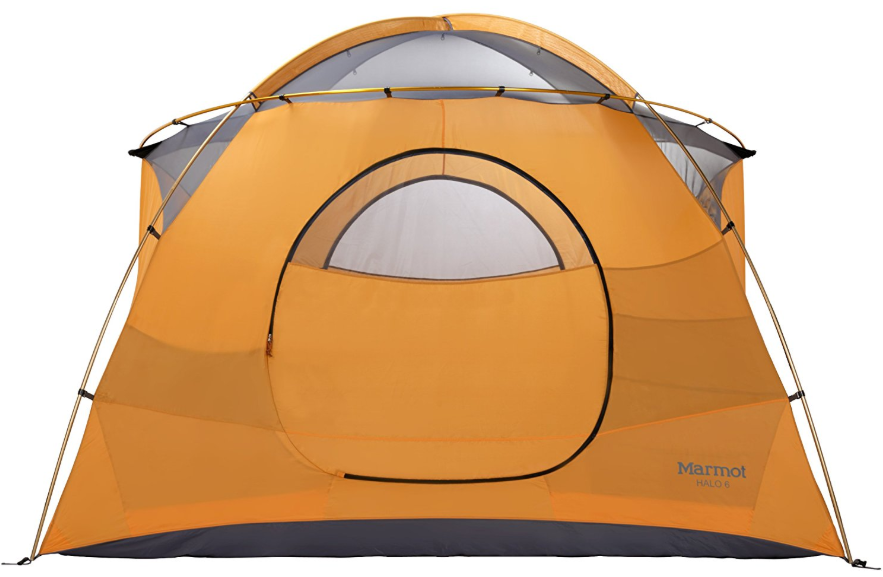
3. Marmot Halo 6P: This is a six-person tent, which means it’s heavier and more expensive. However, it’s spacious and provides plenty of airflow with several openings at the top. If you will have a large group to shelter, this tent is a great choice. It sells for around $600.
As you can see, one critical factor when choosing a tent is to consider where you live. The tent you buy should fit the climate and environment. For example, if you live in Las Vegas, you probably won’t need an insulated tent designed to keep you warm in a howling blizzard.
Another thing to think about is whether you want to have a different tent for each family member or if you will carry one tent for the entire family to sleep in — and if you choose the latter, who’s going to carry it.
Obviously, the primary way a tent protects you is by providing shelter. But who knows? It could also save your life in less conventional ways.
Let Your Home Security Go to the Dogs
Why Man’s Best Friend Is a Criminal’s Kryptonite
Recently, I woke up at about 3 a.m. to my dog (a Rhodesian Ridgeback named Ford) barking his head off in the living room. This is very out of character for him, which was a huge red flag for me.
I immediately bounded out of bed, grabbed my Glock and positioned myself away from the door with my handgun ready to engage. I stopped all movement and listened for several seconds. There wasn’t a sound.
Then I proceeded down the hall to the living room and noticed my dog was at the front door. Again, very odd for this time of night. Keeping all the lights off, I activated my front door camera. Nothing.
I continued performing a quick sweep of the rest of the interior of my home, taking care to “slice the pie” when necessary. This is a method used to clear corners and doorway entrances where you clear each area in small slices.
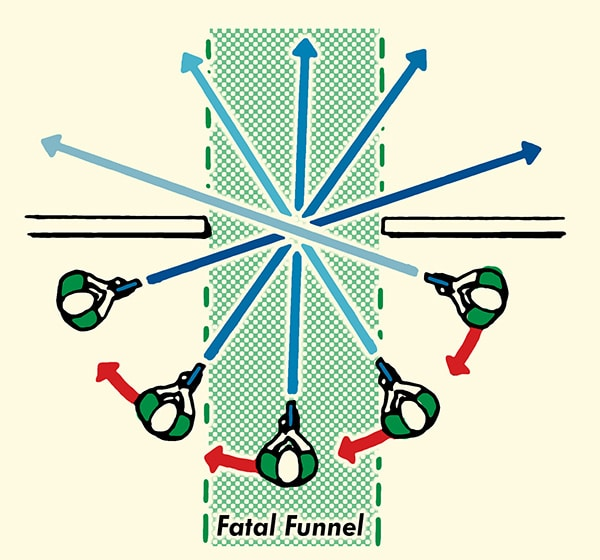
Image courtesy of the Art of Manliness.
Luckily, my home was ALL CLEAR.
So what was that all about? I asked Ford. (He didn’t answer.) It could have been any number of things — not the least of which an intruder. If this ever happens to you in the middle of the night, you need to know what to do.
Before I continue, know that I preach preparation and vigilance — NOT paranoia. That said, when a situation occurs that is not the norm, let your training take the wheel and react — just like I did.
Beware of Dog
If someone were in my home after being confronted by my dog, they would have to be either brave, desperate or stupid. Criminals generally look for the path of least resistance. After hearing my dog’s reaction, most burglars would be off to the next target.
This is why a dog is one of the very best forms of home protection. Not only will they give you a heads-up, but they are also a great deterrent to a would-be burglar. A barking dog, even a smaller one, is about as inviting to an intruder as a shotgun pointed at their face.
Whether or not you own a dog, if you hear something inside your home that is “uncharacteristic,” you should do the following:
1. Call 911. Tell them you think there is an intruder in your home.
2. Arm yourself. If you own a firearm, get it. Then crouch and position yourself in a location that provides cover (behind a door frame, for example).
3. Be quiet. If you have children, a spouse or roommates, try to establish if they are the source of the disruption.
4. Make yourself known. Announce, “I have called the police and they are on the way.”
If you don’t get a response and the disruption continues, you have a decision to make…
Hold or Engage
The smartest choice depends on the situation. You must quickly perform a threat assessment to determine the level of risk to yourself and anyone else in your household.
• If you sense the intruder(s) advancing toward you, hold your position and prepare to engage
• If you think the intruder(s) are roaming through your residence, you can slowly close the distance, moving from cover to cover to investigate. Understand that this technique of clearing (also known as close-quarters combat) is something that spec-ops train for years to perfect, so use this as a last resort. Better to let law enforcement do their job than to round a corner in your home and find yourself face to face with an armed assailant
• If you feel it is a life-threatening situation, you have to do what you can to protect yourself and your family. Just know that this decision could have terrible consequences.
If you hear a bump in the night, it could very well turn out to be nothing (like in my case). But if it isn’t, you don’t want to take any chances. The best thing to do is take steps to deter criminals from targeting your home in the first place. Just ask Ford.


