


Five Spy-Tested Intelligence Gathering Techniques
In early May, four senior members of the Islamic State terrorist group were captured near the Iraq border. Intelligence operatives used information gained from the popular messaging app Telegram, which they found on the cellphone of another member of ISIS who was captured a few months earlier by Turkish counterterrorism officers.
Ismail al-Eithawi, aide to the Iraqi-born leader of ISIS Abu Bakr al-Baghdadi, used Telegram to send a message to four other senior jihadists to arrange a meeting in Iraq. As soon as they crossed the border from Syria, they were arrested by American and Iraqi forces.
This operation led to the discovery of a wealth of information about the terrorist group, including hidden bank accounts and secret communication codes.
“There are several ways spies gather intel… [Here’s] how you can apply them to obtain information after a disaster.”
The Cat’s out of the Bag
This type of sting operation is critical in helping American forces combat ISIS and its underground terrorist network.
However, the fact that details of the operation were leaked closed off certain intelligence channels. After the first media reports, I can assure you that every ISIS member using Telegram probably threw their phone away.
While this was definitely a huge win for the intelligence community, intelligence officers must now find new ways to root out members of ISIS and their plans.
There are several different ways spies gather intel on their targets. Here, I want to share a few of those methods — and how you can apply them to obtain information after a disaster.
HUMINT
This is the collection of information from human sources. When police interview a witness to a crime, that is HUMINT. Another example is when intelligence officers set up a meeting with an informant who can provide information on a target. During a disaster, this type of intelligence is critical because a person who has firsthand knowledge of what’s going on can help you avoid danger. I love HUMINT. It is — by far — the best method of gathering intelligence.
GEOINT
Geospatial intelligence includes imagery that depicts physical features (both natural and man-made) and geographical locations, often obtained using satellites. Obviously, most of us don’t have access to a satellite, but using a general reference map (to plot alternate routes when bugging out) or a topographical map (to gauge terrain if you’re on foot) is essential to surviving a disaster situation. Make sure you always have a paper map in your bug-out bag.
“This is also why you want to be careful about the pictures you post on social media.”
OSINT
Open source intelligence is information gathered from public sources such as the news, internet and government records. This is one of the most common ways the average person can gather intelligence. It’s incredibly valuable because it is constantly updated. Listening to the radio and watching the news will definitely help you prepare for an incoming disaster or manage a prolonged crisis.
SIGINT
Signals intelligence refers to electronic transfers — including communications — that are collected and analyzed. Obtaining the messages the ISIS leaders sent using the Telegram app falls under this method. In a survival situation, you never know who’s listening on the airwaves. I recommend speaking in code or at the very least being very careful what you say. You wouldn’t want to announce your bug-out location to the world or let people know what supplies you have.
IMINT
Imagery intelligence is one of the oldest ways that adversaries gather information about each other. By analyzing aerial photos, you can learn an enormous amount of information about a particular person, situation or environment. For example, if someone was posting pictures of flooding in your town, you could use them to keep tabs on the affected area and react quickly if the danger starts heading toward you. This is also why you want to be careful about the pictures you post on social media. Be careful not to give out too much personal information about yourself by what’s in the background.
These are just a few of the intelligence gathering methods used by intelligence operatives all over the world. Even if you’re not a covert operative, these techniques are still useful for gathering information during a disaster.
The more intel you have, the better you will be able to adapt to the situation and the more likely you are to survive.
“Go Bag Lite” — What to Pack for a Walk in the Woods

Seven Essential Items to Keep Your Day Hike From Turning Deadly
It’s summertime — get out and see the sights! There’s no better or healthier way to enjoy the great outdoors than to go hiking. That said, you are going to need more than just sunscreen…
In the SEAL teams, we carried a LOT of equipment. All of which was not only vital to mission success but also absolutely necessary when the sh*t hit the fan.
Our “first-line gear” is what we carried on our body — in our shirt and pants pockets as well as on our belts. If we had to ditch everything else and were on E&E (escape and evasion), this is what we relied on.
This is the worst-case scenario. Imagine you have been separated from your team and are literally “on the run” with the bare minimum of lifesaving equipment.
Hitting the Trails
You should have the same mindset before you hit the trails. A simple day hike can turn into a fight for survival if you’re not prepared.
As with any mission, success comes down to planning. So before you go, take these steps:
- Familiarize yourself with the trail/terrain you are going to “conquer” by doing a map study (and be sure to take the map with you)
- Check the weather forecast so you can dress accordingly (layers are always a good idea)
- Be aware of what (if any) regional hazards to watch out for — this includes venomous snakes/insects, other wild animals, flash floods and landslides.
Once you have properly educated yourself, I highly recommend bringing with you the following items. Think of this list as a minimum, lightweight collection of lifesaving equipment.
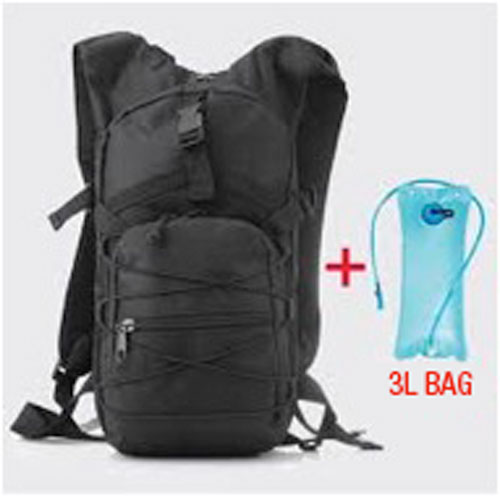
Water. I am making this the first item because it is one of the most important. Water will keep you from becoming dehydrated and suffering heat-related issues. I suggest buying a bladder hydration system you can put in a small backpack that has a chest strap. These are relatively cheap. They’re also incredibly lightweight, yet they can hold up to three liters of water. They also come with a convenient suction hose that lies over your shoulder so you can hydrate while on the move
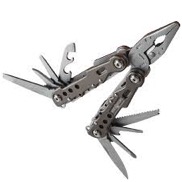
Multitool. These little gadgets are invaluable. Some multitools have a dozen (or more) various tools integrated into one compact device. Even if this is not something you carry every day, you definitely don’t want to hit the trail without one
Rain jacket. Always dress in layers — especially in an environment where sunny and 75 degrees can turn into a wicked thunderstorm in a matter of minutes. Don’t be fooled by clear skies and assume you have nothing to worry about. Staying dry is critical for survival. It will dramatically reduce your chances of getting hypothermia. You can purchase a quality waterproof/windproof jacket that folds down to the size of your fist and put it in your hydration pack pocket. If you want to go the cheap (but just as effective) route, I recommend using a heavy-duty lawn bag. Just cut holes for your head and arms
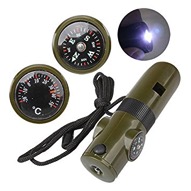
Navigation/signaling device. If you get lost or need help, these compact, lightweight items could be the difference between life and death. I recommend the 7-in-1 Outdoor Survival Compass, which includes a whistle, thermometer, magnifying glass, LED light, signaling mirror and a tiny compartment where you can store a few waterproof matches. You can wear this item around your neck or place it in your hydration pack
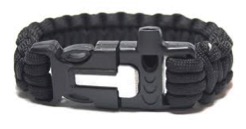
Fire+. But it’s just a day hike — why would I need to start a fire? Well, if you get lost or injured and day turns to night and you are soaking wet and toying with hypothermia, you will want a fire. I recommend two things. First, a butane lighter, which is compact, reliable and windproof. But if/when that fails, I also recommend a survival bracelet as backup, which you can wear on your wrist or attach to your hydration pack. The one pictured below is made of 100 feet of paracord, which you can use for dozens of different tasks — building a shelter, making a tourniquet, crossing a body of water, you name it. Integrated into the buckle is a flint stick and slightly serrated edge. This will allow you to start a fire. Don’t forget a half roll of toilet paper. Besides the obvious use, it is an ideal fire starter

Footwear. This item depends on the degree of difficulty of your trek as well as your personal preference. You could go with a lightweight trail running shoe or a durable Gore-Tex waterproof hiking boot. That said, make sure your hike isn’t the first time you wear your new shoes. Break them in PRIOR to hitting the trail. Trust me — a silver dollar-sized blister on your heel will ruin your day. Been there, done that. I also highly recommend wearing a thin liner sock underneath your hiking socks. It will act like a second skin and prevent blisters and hot spots
Sun protection. This article began with a reminder to keep the sun off. A good hat in addition to sunscreen will protect you from immediate (and future) sun damage. Just remember the top of your ears. Several of my friends’ parents are missing their upper ears because this wasn’t something they worried about back in the day.
These are the seven items I recommend you keep on your person anytime you go for a hike. Obviously, for an overnight or multiday hike, you will need additional equipment. But think of this list as YOUR “first-line” gear, so you can be a survivor, not a statistic.
Pre-Fight Planning: Three Tips For Coming Out on Top

Kelly Herron is an avid jogger who lives in Seattle. One day, she was four miles into her 10-mile run when she needed to stop and use a public restroom. As Kelly was washing her hands, she had a gut feeling that something was wrong.
The next thing she knew, registered sex offender Gary Steiner was standing behind her attempting to assault her. According to Kelly, “He immediately took me down to the ground, hit both my knees and legs, and then it was a fight on the bathroom floor and I just kept screaming, ‘Not today, motherf*****!’”
Three weeks prior to this encounter, Kelly had taken a two-hour self-defense course scheduled by her employer. Kelly works for a company where many of the employees walk to and from their cars early in the morning and late at night depending on their shift.
Obviously, this class wasn’t a guarantee of safety, but it taught Kelly self-awareness — and, most importantly, the confidence she needed to face her attacker.
Visualize the Win
During this class, Kelly practiced visualizing herself in a dangerous situation and planning how she would respond. One of the key points she took away from the class was to be loud and fight savagely.
By yelling and scratching at her attacker’s face, Kelly was able to fight him off so she could make a break for the door and escape. Then she used a carabiner to lock him in the restroom until police arrived and arrested Steiner. He was charged with attempted rape and second-degree assault.
The fact is Kelly may not have survived if she wasn’t mentally prepared to fight back using any means necessary. Considering this, I want to share with you how you can prepare yourself with “pre-fight” planning in case you ever find yourself in a similar situation.
- Read the news. Every day, I read the news where I live so I know of any crimes that have occurred. The thing is most criminals are repeat offenders. If you stay up to date on crime trends in your area, you’ll have a better idea of what to look out for so you can defend yourself. Too many people bury their heads in the sand and believe bad things will never happen to them. But if you live in a town with frequent carjackings or home invasions, you need to be prepared to deal with one of these events should it occur
- Play “What if?” The next time you are leaving a gas station or the supermarket, ask yourself, “What would I do if I were attacked right now?” Think about what’s in your hand. Could you use it as a weapon? Would you drop your groceries to draw a firearm? Where could you find cover if you needed to run? Would you run inside the store or to your car? These are critical questions that could determine whether you survive the attack. Play out the scenario in your head to help you get ready for a real-life situation. But be careful with this one. The point isn’t to become paranoid or obsessive — just prepared
- Stay in the fight. Before I joined the CIA, I was a police officer. In the police academy, we were repeatedly told to “stay in the fight.” Just because you are shot, stabbed or injured doesn’t mean you are dead. In fact, about 80% of people who are shot survive. This is why you need to mentally tell yourself that no matter what happens, you are going to stay in the fight. And don’t be afraid to be brutal. Go for the eyes, throat and groin. This is the kind of mental prep work that saved Kelly. She went for her attacker’s face and was prepared to fight until the end.
Mental toughness is a hugely important survival skill. As the saying goes, success is 90% preparation (10% perspiration). Now, math was never my strong suit, but I can tell you that being ready to react and knowing what you will do in a dangerous situation could mean the very difference between life and death.
Don’t Let a Disaster Erase Your Identity


Build Your Financial Emergency Kit Today
Hurricane Katrina did untold damage to the city of New Orleans.
After the dust settled — and the excess water was drained — folks set about rebuilding their lives from the ground up. But many of the people of New Orleans found their efforts to rebuild impeded by one major factor.
The flooding was so extensive it washed away just about every personal document you could think of. Birth certificates, title deeds, marriage licenses, Social Security cards and driver’s licenses…
For tens of thousands of New Orleans residents… the storm had erased their identities.
Identity Crisis
Without even the most basic forms of identification, they were stuck in an infuriating bureaucratic limbo.
Without proof of homeownership, they couldn’t request aid to help them rebuild their houses. They couldn’t claim their insurance, access their own bank accounts or apply for work. And without identification, they couldn’t even apply for replacement documents.
Months later, folks would be able to claim a copy of their birth certificate from Louisiana’s vital records office. But claiming your own birth certificate after such a large-scale disaster isn’t as easy as you would think.
Although the records themselves were kept in waterproof containers, the offices where they were stored were still underwater over a month after the storm.
To make matters worse, only three of the records office’s employees had returned to work. Tens of thousands of people were waiting for their documents… and government work is slow going at the best of times.
The Whole Kit and Caboodle
This is why it is vital to maintain a Financial Emergency Kit (FEK).
An FEK is simply a secure store of all your crucial financial records. It should contain everything you need to recover your life as quickly as possible after a disaster.
“The flooding was so extensive it washed away just about every personal document you could think of.”
Here’s a comprehensive checklist of everything that should be in your FEK:
- Birth and marriage certificates
- Mortgage documents, titles, property deeds
- Insurance policies
- Social Security cards
- Passports
- Prescriptions
- Copy of your medical history
- Car registration
- Employment information
- Wills
- Recent tax returns
- Stocks, bonds and other negotiable certificates
- Bank, savings and retirement account numbers
- Copies of your pet’s medical records.
Make physical copies of these documents and put them in a waterproof bag, along with an encrypted flash drive containing duplicate files. Keep your FEK in an easily accessible location, so you can grab everything you need before evacuating in an emergency.
In case you can’t get to your FEK before catastrophe hits, I suggest storing it in a brightly colored, fireproof, waterproof container. That way, even if your house is totally destroyed, you’ll still have a chance of recovering your FEK.
Grow Your Own “Garden Variety” Remedies

Get Post-Disaster Relief With These Eight Herbs
Despite the great scientific advances we have made — and continue to make — people all over the world continue to seek out and apply ancient approaches to their health. Some of these methods have worked effectively for thousands of years. I’m talking about holistic, homeopathic, naturopathic, Chinese and Ayurvedic medicine.
To address even the basic distinctions between these alternative remedies would take volumes. But I would like to give you a very brief overview of a few general remedies for common ailments.
These natural solutions could come in handy during a survival situation when you may not have access to more traditional medicines. Or you might prefer them if you’re a person who favors a simpler approach to health and wellness.
Plant-Based Medicine
Many of our modern medicines have their basis in common plants and herbs. In fact, here are two plant products that have been around for a very long time. I believe most everyone should consider these as basic supplements every day.
The first is salicylic acid, which was initially isolated from willow bark and meadowsweet. Most recently, it was modified into acetylsalicylic acid, or aspirin.
Not only is aspirin a terrific fever reducer and pain reliever, but it has also been shown to reduce risk of heart attacks due to cardiovascular disease, atrial fibrillation and cerebrovascular disease (stroke). It is frequently used to treat warts, psoriasis, dandruff and inflammatory bowel diseases such as Crohn’s disease and ulcerative colitis (UC).
The second is metformin, which has been in use since the medieval period in Europe. Its original source was Leguminosae (legumes), and to this day we don’t really know how they work.
Metformin has many great benefits beyond its ability to help control insulin resistance in Type 2 diabetes. Several off-label uses include treatment of polycystic ovary syndrome (PCOS) symptoms, infertility, anti-aging, weight loss — it’s even an anti-cancer supplement.
Herbal Relief
There are also a great many herbs that are effective in alleviating symptoms that many people deal with on a daily basis. Some of which include:
Echinacea is an herb that boosts the immune system. It can help reduce your risk of catching a cold by over 50%. If you do get sick, it can help decrease your cold’s severity and length. Echinacea also helps combat cancer, relieves pain and may act as a mild laxative
St. John’s wort is a common herb that is used to minimize the effects of mild to moderate depression. It is safe to use even with traditional antidepressants. It can also be used to treat the symptoms of PMS and menopause and has been shown to have anti-inflammatory and anti-cancer effects
Turmeric (curcumin) is a strong natural anti-inflammatory and antioxidant. The problem is that your body doesn’t absorb curcumin very well unless it is combined with black pepper. When you buy turmeric, look for a product with high curcumin levels that is mixed with black pepper
Feverfew is a fantastic herb that combats migraine headaches, decreases inflammation, decreases blood clot risk and even combats certain types of cancers
Berberine helps reduces insulin resistance, lowers cholesterol, fights cancer growth, combats obesity and increases nitric oxide levels — thus helping combat heart disease
Lavender helps reduce stress and anxiety, relieves pain and headaches and improves sleep
Lemon balm is a natural antibacterial agent that also helps improve mood and sleep. It has been shown to help fight off herpes outbreaks as well as decrease overall inflammation
Peppermint oil relieves muscle and joint pains, increases energy and mental clarity, improves physical performance, freshens breath, relieves allergy symptoms and helps relieve IBS symptoms.
There are so many more amazing supplements, herbs and oils you can use to improve your health and ward off disease. Of course, always consult your physician before adding any supplements or herbs to your routine.
But if you’re interested in taking a more holistic approach to your health, I encourage you to read more on this topic online or even consider buying a book that covers alternative health remedies. In a survival situation, your physical well-being is one of your strongest assets.
Here’s to your best health.
Selling U.S. Secrets To The Highest Bidder

Traitors Pose a Triple Threat to Life, Liberty and Cybersecurity
by JAVELIN
Ex-CIA Operative
Over the past few months, there have been several reports of former intelligence officials who have betrayed their country and, most importantly, the American people they were supposed to be protecting.
One of these men, Kevin Mallory, is a former CIA officer who admittedly handed over intelligence documents to Chinese operatives in exchange for thousands of dollars. The twist is that Mallory supposedly told former CIA officers that he’d been approached by foreign operatives and was planning to meet them.
“The entire American public is now at a greater risk of being hacked.”
Basically, he was playing both sides by giving the Chinese intelligence documents while telling the CIA he was working to out Chinese spies.
Secrets for Sale
Similarly, last month, Ron Hansen, a former Defense Intelligence Agency case officer who specialized in U.S. cybersecurity, was arrested for attempted espionage prior to boarding a flight to China. Over the past few years, Hansen is alleged to have received $800,000 from Chinese operatives in exchange for information related to U.S. cybersecurity.
The fact is both these traitors used their security clearances, training and contacts to betray the American people. In both cases, severe debt was the driving force behind their willingness to commit espionage. These men both had access to information they knew they could get paid for, and they were both extremely arrogant that they wouldn’t be caught.
What’s a Triple Agent?
To be clear, I’ve never worked with a triple agent, but I’ve known about them and the way they operate. They are known as offensive counterintelligence. While collecting information against a specific target, they double and work for the other side. However, they are still really working for the U.S. and gaining information on their targets while pretending to be a double agent.
Here’s the No. 1 rule about a triple agent. They will NEVER disclose the fact they are actually a triple agent. In other words, if Mallory were truly operating as a triple, he would NEVER reveal it to anyone — even after getting caught.
The reason a true triple is trained never to confess is because once they do, there is no saving them. However, I doubt that is the case, as Mallory has already shared so much. True triples are trained to shut up and know that their fellow agents will get them out if they are jammed up.
Now that these two guys are in U.S. custody, I can assure you that interrogators are attempting to make them sing. Investigators will want to know everything about their contacts and their meetings. They especially will want to know who they worked with in the U.S., and they will go after everyone involved in selling out our country.
Your Best Line of Defense
At this point, we don’t know how damaging the information these two dirtbags gave up will be. I speculate that most of the compromised information has to do with U.S. cybersecurity. In the case of Hansen, we know for a fact that this is the type of information he was giving to the Chinese.
Essentially, the Chinese now know how the U.S. Cyber Command operates and how our nation defends against hacking. What this means is the entire American public is now at a greater risk of being hacked — so everyone needs to take cybersecurity seriously.
Be sure to regularly update your passwords and use two-factor authentication on every online account that allows you to do so. Also, I know that only one out of 100 people reading this will do what I’m about to say, but ditch your smartphone and get a flip phone.
Cyberattacks are one of the biggest threats we face today. Multiple countries such as China and Russia are working hard to gather intelligence on our nation’s cybersecurity strategies — so prepare accordingly.
New Malware Detected — Is Your Router at Risk?
Plus Four Ways to Prevent a Future Hack
It’s no secret that Russian hackers are constantly targeting the U.S. Well, the same Russian hacking group that leaked emails from the Democratic National Committee in 2016 has struck again, this time putting the average American at risk.
The so-called Sofacy Group — also known as APT28, Pawn Storm, Tsar Team and Fancy Bear — are a group of hackers who operate under the Russian military intelligence agency. Recently, they created malware aimed at routers in hundreds of thousands of homes and businesses.
The malware, dubbed VPNFilter, can render your router inoperable and potentially collect all the information that passes through it. In other words, anything you do online could be exposed to Russian hackers. This includes the logins and passwords to any websites you visit.
Router Rehab
Unfortunately, there isn’t any simple way to tell if your router has been infected. Originally, the affected brands included Linksys, Mikrotik, Netgear, QNAP and TP-Link — all of which are popular in the U.S. However, that list was later expanded to include at least another 56 models from Asus, D-Link, Huawei, Ubiquiti, UPVEL and ZTE.
“The malware can render your router inoperable and potentially collect all the information that passes through it.”
The malware is also encrypted, making it more difficult to detect if it is active on a specific router or network. The safest assumption if you own ANY of the routers listed above is to take immediate measures to protect your information.
In order to ensure your router isn’t overrun with malware, the first thing you should do is to reboot your router. Hopefully, this will erase any trace of it.
However, it’s also a good idea to take a few extra steps to ensure your router isn’t compromised — and hopefully, prevent it from being hacked in the future. That being said, here are four things I recommend doing to make your router as secure as possible.
1. Do a factory reset — After you reboot your router, you should also do a complete factory reset. This will take a little bit longer since you will need to reconfigure all the network settings, but this should effectively remove any malware from the router. Your owner’s manual should provide detailed instructions on how to do a factory reset.
2. Turn on the firewall — When doing the factory reset, enable the router’s built-in firewall, which prevents hackers from even seeing your network. Most routers have a “stealth mode” option. I recommend enabling this as well to make your devices even more difficult to for hackers to find.
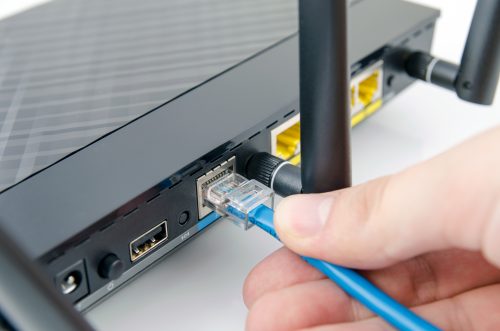
3. Disable remote access — In your router’s settings, there should be an option to disable admin access via wireless. This means the only way anyone can access the admin panel through a browser is by being connected directly to the router using an Ethernet cable. This prevents someone from simply remotely connecting to your router as the admin since it requires the physical presence of a cable connection.
4. Use WPA2 encryption — WPA2 (Wi-Fi Protected Access 2) is the standard security encryption that most new routers use. However, if your router is a few years old it may not being using WPA2, which means it could easily be hacked. In that case, you need to update your router’s firmware, which should include an upgrade to the higher security standard.
If this sounds a bit confusing, I’m sure you can ask your kids or grandkids — or find some teenage kid in your neighborhood — to help you take the necessary steps to protect your home network.


