


JANUARYDownload This Newsletter
Here Are Two Different Plans to Consider

Melinda Herman was at her Loganville, GA home with her two young children when an intruder with a crowbar broke into the family’s home. Two weeks prior to this home invasion, Melinda and her husband Donnie had gone to the shooting range and practiced what they would do in this exact scenario. 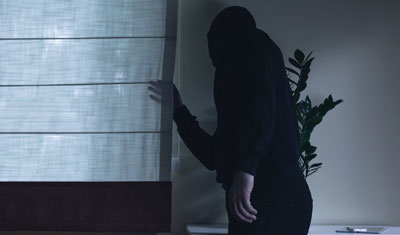 As the intruder moved around the home, Melinda grabbed her .38 revolver and took her two children to the attic where they hid. Melinda was on the phone with her husband who was roughly an hour away and had already called 911 to alert the police.
Thankfully, Melinda and her two children were unharmed during this incident and she did a great job of protecting herself and kids. (5 out of 6 hits in a stressful situation is pretty darn good.) There is no denying that the Herman’s are alive and safe because they had previously discussed a home invasion plan. Obviously, the criminal who carried out this crime was searching every part of the home and had Melinda not been armed, who knows what he would have done.
The reality is, everyone needs a home defense plan so that you know exactly what to do if you ever experience a home invasion. With that being said, there is no “one size fits all” defense plan. In other words, you have to look at your specific home and layout and devise a plan with your family that is tailored to your family. Considering this, I want to share with you two different home defense plans that will provide you and your family with a good starting point for your own planning.
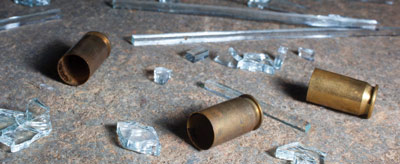
“Melinda Herman fired six shots at the intruder, hitting him five times…”
Family sleeps upstairs. One of the best advantages to living in a two-story home is the fact that stairs serve as a chokepoint. Put simply, you know that if someone wants to come to the second level they must do so using the stairs. If everyone in your family sleeps upstairs this can be a huge safety advantage during a home invasion. For instance, if someone kicks down your front door at 2am, your plan could be to grab your gun and flashlight, then run to the top of the stairs. You could stay at the stairs and yell for the criminal to get out or you’ll shoot. Your family could gather in a bedroom and hide while you protect them at the top of the stairs. If the criminal was foolish enough to try and run up the stairs, you would have to shoot them and stop the threat.
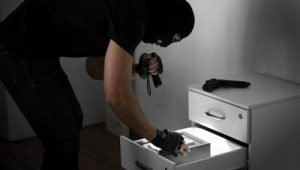
“You don’t want to accidentally shoot one of your loved ones who is fleeing
from the intruder.”
Family is spread around the home. For those who live on a single level or simply have family members sleeping in different parts of the house, your home defense plan will have to be different. In other words, if your family is spread throughout the house and you hear someone break in during the middle of the night, you will have no choice but to rush and confront the intruder. If you just sit at the top of the stairs, the intruder could get to someone sleeping in your basement or another part of your home. When going through the house to confront the intruder, it is very important to have the muzzle of your gun pointed at the floor. You don’t want to accidentally shoot one of your loved ones who is fleeing from the intruder. Another way to look at this type of plan is that it is an “active shooter” home defense plan, meaning you can’t just sit there in safety, you have to go and stop the threat.
As I mentioned earlier, there is no standard home defense plan for everyone to use. However, these two plans can give you a solid base to build upon to hopefully keep you and your loved ones safe.

 In last month’s article, I laid out why the market was right for ac- quiring gold. This month, I again sat down with Dr. Mike Fuljenz, President of Universal Coin and Bullion. But this time, I asked him about his thoughts on silver. Here’s what he had to say:
#1: Silver is down more than gold, but historically rises faster than gold. Silver is like “gold on steroids” once gold starts rising. In the 1970s, gold rose 24-fold, from $35 to $850, but silver rose 39-fold, from $1.29 to $50. And, from 2001 to 2011, gold rose 650% (from $255 to $1,920) while silver rose 1,100% (from $4.06 to $48.70). Silver is a much “thinner” market than gold – representing only 0.01% of the world’s financial wealth. In rough terms, the world owns $7.5 trillion in gold but only $50 billion in silver – a 150:1 ratio – so a similar amount of demand in both metals tends to send silver up faster than gold.
#2: Silver is an industrial and precious metals “double play.” Gold has only marginal use as an industrial metal, but silver has massive and growing uses in industry. Silver demand from industrial use represented 60% of all demand in 2017 and that percentage is expected to grow in 2018 and 2019. The biggest percentage growth in silver applications now comes from China, in electronics, solar panels, high-capacity batteries and the traditional photographic uses.
#3: There is a silver supply shortage, especially depleted inventories. Due to lower silver prices in recent years, new silver supplies have not been coming to market as fast. Profit margins have also shrunk substantially, reducing exploration budgets for finding new supplies. To meet current demand, companies, governments, dealers and exchanges have drastically drawn down their inventories of silver. The only significant inventories left are those in exchange-traded funds (ETFs), which are required to hold bullion to back their funds. The cupboards are nearly empty in governments and dealer inventories. If demand were to suddenly surge, investor needs could not be met by existing supplies, so the price could rise fast.
“Due to lower silver prices in recent years, new silver supplies have not been coming to market as fast.”
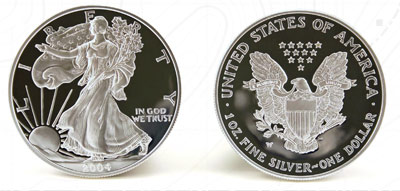
#4: Silver is “poor man’s gold,” the affordable precious metal. Beginning investors can’t necessarily afford the multiple thousands of dollars necessary to buy gold coins or more than one rare gold coin. Silver is the natural place to start, for as little as $20. Since silver tends to follow gold, but in greater percentage terms, if gold makes a move, silver could rise more, giving greater percentage gains to silver investors. A good place for the beginning investor to start would be the United States Official Legal Tender Silver American Eagle coins.
#5: Silver has reached “double bottom” territory. The mid-term election uncertainty has helped silver reach a “double bottom” price pattern below $14 an ounce. Technical chartists call a “double bottom” a very bullish pattern in which a stock or commodity sets a double bottom separated by an interim peak. Silver set a low of $13.82 in December 2015, followed by a quick rise to $20.71 in August of 2016. Now, silver is back to $14. Silver may touch its 2015 lows or it may not, but it is close enough to those lows to provide a technical “double bottom.” Now that silver’s low price is set in place under $14, is it possible we will see another assault on $50 or higher? Many experts believe we could see dramatic new highs in silver in the next few years, making right now a great buying opportunity so I highly encourage you to purchase some silver now.
[Publisher’s Note: For questions about buying gold and silver coins you can contact Forest Hamilton directly at foresthamilton@universalcoin.com or call 800-822-4653. Please know, if you purchase any coins from Forest, we don’t receive any compensation from him. We simply know he’s one of the good guys in the business that can be trusted.]

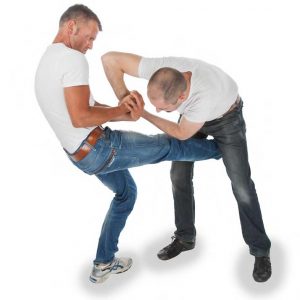 To put it simply, Fairbairn’s Defendu worked. This system of unarmed combat made it possible for a person of average strength and skill to meet and win against a highly trained opponent in the martial arts. Although there are several techniques which help the average person accomplish this, here are two basic moves that you can learn and implement quickly that are part of the Defendu curriculum.
Snap Kick: A snap kick is accomplished by lifting the knee and snapping the lower leg into the target. Power is generated primarily from the sharp extension of the leg and the speed with which the lower leg shoots into the target. Imagine having the laces of your shoe make contact with the groin of your opponent. It doesn’t involve the hips as much as other kicks do, which is why it’s easy for beginners. As a result, kickers don’t have to compromise their balance by shifting their center of gravity. This means they can quickly step in with a follow-up technique or retract the leg to its original position.
Elbow Strike: In this technique, you need to keep your arms up near your head. If you leave your arms hanging by your side, you will be leaving your head vulnerable. If your arms are up high, you will be able to intuitively block strikes by your attacker without much movement. In this position, you can quickly counter with your own elbow strike by striking downward, across the attacker’s face.
Combination Kick – Strike: As in most combative arts, gaining a superior fighting advantage comes not through the use of one individual move, but using a combination of moves. In the two examples above, using a snap kick into an elbow strike is both simple, yet effective. Once again, striking down low with the low line attack to the groin and then following up with a diagonal downward elbow strike to the face can yield immense damage.
The bottom line is that Defendu focuses on simplicity, so even when multiple moves are used in combination, they are easy to transition between in order to help you defeat your attacker.
Chances are, you probably haven’t sat around your kitchen table with your family discussing exploit kits and whether or not you need one. Unless, of course, you are a criminal mastermind planning cyber-attacks. You see, exploit kits are essentially a toolkit that cyber criminals use to expose vulnerabilities in systems so they can spread malware or carry out other malicious activities.
One of the most concerning cases of an exploit kit being used occurred earlier this year when hackers targeted Microsoft’s Internet Explorer. The scary thing is, if the hackers had successfully launched their exploit kit, they would have gained access to execute code with the same rights as the current user and be able to change memory and hijack execution of programs. In other words, they would have achieved access to many components of the computer operating system. Luckily, Microsoft quickly released a security patch to fix the initial vulnerability so users couldn’t be attacked.
 A typical exploit kit usually has different steps along the way targeting multiple vulnerabilities in security. The initial step of an exploit kit is when the hackers make contact with their victim, usually by sending them spam e-mail with an infected link or by placing a malicious advertisement on a legitimate website. Once the victim has clicked on the link or malicious content, the hackers will filter out who they want to target. What I mean is, a hacker could target people from a certain country or geographical location by filtering IP addresses. Next, the victims are directed to the exploit’s landing page. As soon as the victim is at this page the hackers determine which vulnerabilities can be exploited and used in the next phase of the attack.
After determining which vulnerability they can use, the hackers will download and execute malware onto the victim’s computer. Essentially, this last step gives the hackers access to the operating system and now they can do a lot of harm to the victim.
Although this may sound confusing, it’s not for the cyber criminals who can easily attack your computer. This is why you must remember to do the following:
Update everything. Most folks know how critical it is to always run updates on their computers. Obviously, this is how companies such as Microsoft will block many cyber attacks. However, some people may not realize that you also need to update your web browser and any programs you use. Just because you update the operating system on your computer it doesn’t mean the browser was updated. So, whether you use Internet Explorer, Firefox, or Chrome make sure you always check for the latest browser updates.
Use Antivirus that scans websites. It is crucial to use antivirus software with the many different attacks occurring these days. However, you should make sure the antivirus software you use also scans websites you visit. For example, if you visited a website with a malicious advertisement, your antivirus software would scan the website and alert you to the risk before you click on it. Popular antivirus software includes McAfee, Norton, and Bitdefender.
Block JavaScript. JavaScript is used in web browsers to deliver interactive content, however, it’s also commonly used by hackers to infect computers with malicious content. For this reason, I recommend using a web browser add-on that can block the use of JavaScript unless you give it permission. For Firefox users, there is an add-on called NoScript and for Chrome users you could use ScriptSafe.
Over the next few years, cyber-attacks will only get worse and you will be targeted if you haven’t already been. So, make sure you protect yourself from exploit kits because they can easily infect your computer and you won’t know until it’s too late.

As the weather gets colder, many tend to spend more time indoors, but some of us remain active outside. With seasonal changes, different sets of environmental risks move to the forefront. Though relatively uncommon, cold-related injuries are important to consider because of the potential for devastating, as well as, permanent physical complications due to the effects of cold and wet on our bodies. We can approach these injuries by dividing them into the non-freezing cold injuries like chilblain and trench foot and the freezing injuries like frostnip and frostbite.Chilblain, also known as pernio, occurs after prolonged exposure to moderately cold temperatures coupled with humid environments. It is defined as inflammation of the skin that results in redness, itching and sometimes pain. Often, bumps or nodules also become evident. Chilblain usually resolves on its own within 2 to 3 weeks, but the best way to avoid it is common sense prevention. Dress warmly, avoid humidity, and change clothing if wet. Trench foot, first described in World War I, is very similar to chilblain. It occurs in cold, but not freezing, and wet environments and it involves the feet. It can result in permanent injury and cold sensitivity. Prevention is key so make sure you put on dry socks if the ones you’re wearing get wet. You should also have spare socks in your bag or car if you go hiking or camping in the winter.
The freezing injuries have the potential to be much more serious. We can divide the freezing injuries into three types. The mildest is frostnip. Frostnip occurs when a body part begins to freeze from short-term cold exposure. Again, humidity causes these changes to occur more rapidly, while diseases like diabetes and vascular disease can also make a person more susceptible to these injuries. Frostnip is essentially mild frostbite that results in reddening of the skin with an initial feeling of cold which then proceeds to a prickly sensation and then numbness. It is rapidly reversible and doesn’t result in any long-term problems or complications.
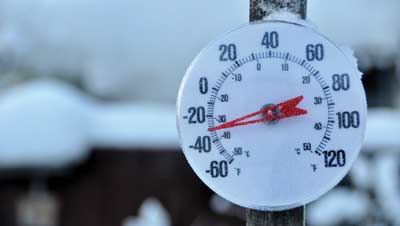 If not reversed by warming, frostnip may progress to superficial frostbite with the skin beginning to feel warm again as it is damaged and as the effects of freezing descend from the epidermis or superficial layers of the skin to the dermis or deeper layers. The reddened skin of frostnip turns white and pale. Rewarming usually causes a stinging and burning sensation. Blistering of the skin may occur 12 to 36 hours after rewarming. Permanent injury at this stage is rare, though the individual may be more susceptible to future cold injury.
As frostbite progresses to severe or deep frostbite, the skin turns gray and sensation is lost. The individual may also lose functionality of joints and muscles. Blisters usually form 24 to 48 hours after rewarming and the involved areas usually harden, turn black and die. This gangrene usually then requires surgical intervention for debridement of the dead tissue and amputation of involved extremities.
The colder, wetter and more exposed an area is, the more quickly it is affected. In addition, if you have certain diseases that affect your circulation, your risk for injury is increased. Alcohol also worsens your risk for injury as it impairs circulation and alters other protective mechanisms.
A few tricks you can use to help prevent injury are taking aspirin or ibuprofen to reduce inflammation and help prevent blood clotting from cold injury. Make sure you are dressed in layers. If your clothing becomes wet, change to dry clothing as soon as possible. Use pocket warmers. Remain alert and recognize cold injury early. There is nothing wrong with being active outside in the cold as long as you remain alert and take common sense precautions in order to remain healthy. Stay alert, stay alive.

After all of the schooling, training, special courses, and evaluations, before my first military airborne combat recon mission, I had one last duty to accomplish. I had to go see the base legal advisor (JAG’s office) to complete my will. It was an abrupt and stunning assault on my sense of invincibility and immortality. I wasn’t just starting an exciting adventure, I was potentially entering my own coffin.But, even as mind-bending as that event was, it was even more of a full-on gut punch when I sat down with NSA’s General Counsel (GC). Just after I was awarded my certification as Globally Cleared (a term that denotes that a foreign intelligence operations officer has passed all of the training and evaluations and is determined to be medically, physically, and operationally qualified for ops anywhere in the world) I was given a sheet with a list of admin activities that had to be accomplished.
At the bottom of that burdensome list was a sit-down appointment with the Agency’s GC to accomplish a very detailed list of what my loved ones should do and know if failure was the outcome. It was harder than anything else I had yet accomplished and it drove home the sober realization that my family would truly suffer more than just emotionally; it could devastate them financially.
When any of us prepare for things, be it a family trip to Yellowstone National Park or invading the palace of a foreign tyrant, at the fundamental core of that process is the expectation that we will succeed. Seldom in our planning do we consider that we will fail. The entire purpose of planning and preparing is to ensure we are successful at the endeavor. But what if you didn’t make it to Yellowstone? What if you were involved in a fatal car accident? What if the tyrannical despot’s elite security forces got the drop on you?
At the end of every planning and mission prep meeting we had, we would all make sure that each of us had the final prep – our C&R package. In our C&R package we wrote letters to our loved ones telling them things we needed and wanted them to know. Those letters often contained love letters to our spouses, special messages to our children, friends, and other loved ones. Some even contained letters to be held until our children graduated, etc.
Another letter we included in that C&R package was a full listing of our financial information, passwords, life insurance information and such things as where we kept the key to the riding lawn mower, a reminder that the truck uses diesel, not gas, etc. You get the gist. Anything that we wished we had said or told to our spouse or loved ones if we knew we were going to die on that mission.
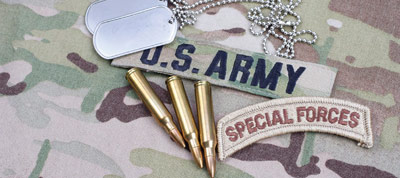 On the outside of the envelope with the letters, we listed our Challenges and Responses (C&R). The purpose of our C&R’s was to verify our identity and communicate our status to any rescuers. Simply put, if we were ever captured or were the target of a search and rescue mission, the rescuers would issue the challenges and we would have to provide the pre-established responses or risk being left behind as an imposter.
For example, a couple of my C&R’s: C – What is your favorite number; R – Six. C – Does your wife know about your mistress; R- I don’t have one.
With a New Year right upon us, do your family a huge favor and complete your final prep next week. Yes, some things will change and you will have to update it, but even just having a letter you prepared for this eventuality will mean the world to them. Also, I strongly encourage each family member of age to develop their own C&R’s against the day something horrific may happen to them. Always be better prepared than the average person.
Ten years ago, it was pretty common for police officers to carry a fully loaded duty weapon, along with two back-up magazines somewhere on their duty belt. Nowadays, most officers I know carry at least three magazines on their belt, a back-up gun and more magazines in their patrol car. Obviously, we have seen an increase in active shooter situations where people carry out heinous crimes with hundreds of rounds of ammunition. So, in the world we live in, it’s important for the police to be prepared with extra ammunition and likewise, armed citizens should also consider carrying a spare magazine or two, just in case.Years ago, Sgt. Timothy Gramins was working as a police officer in Skokie, IL when he heard a call on the radio that a bank had just been robbed in a town roughly 11 miles away. Gramins headed to the nearest highway believing this would be the best way for the bank robber to get away. As soon as he hopped on the highway, Gramins spotted a white Pontiac Bonneville driven by a black male, which was the same vehicle and description of the robber. Once seeing the officer, the suspect immediately raced off the highway and began firing rounds at the pursuing officer. As the pursuit entered a neighborhood, the suspect stopped his vehicle and jumped out firing rounds at Gramins who was still inside his car. Gramins fired multiple rounds back, as the shooter approached the driver’s side window.
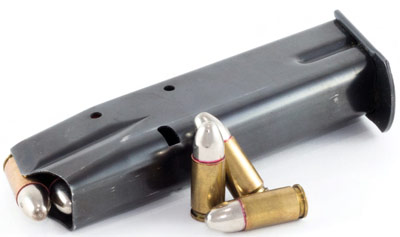 The gunman ended up running his pistol dry and returned to his vehicle, which gave Gramins time to escape his car and reload his pistol. The gunman returned with another pistol and began firing at Gramins who had taken cover behind his car. As the two exchanged gunfire, Gramins realized the suspect was not going down and considered grabbing his AR-15 but it was secured in his trunk and he couldn’t get to it. As Gramins reloaded his gun again, he ran to a grassy area on the side curb where his patrol car was stopped. The suspect was looking underneath the car for Gramins who at this point had proned out on the grass to get a more stable shot. When the suspect bent down to look under the car again, Gramins established a solid sight picture and squeezed off three controlled shots in rapid succession. These final three rounds all struck the suspect in the head, ending the deadly shootout.
During the shootout, the suspect fired 21 rounds and Gramins fired a total of 33 rounds, leaving only 4 rounds left in his last magazine. Even though the suspect was shot 14 times, his rampage didn’t end until the final headshots. This is exactly why you want to consider carrying a spare magazine since you never know what it will take to stop a threat. Here are three different ways you may want to consider carrying a back-up magazine if you don’t already do so.
Neomag: The NeoMag is a magnetic clip that holds the magazine in place. The way it works is that you attach the clip to any single or double stack magazine and then you can clip the entire magazine anywhere you’d like. The clip is made of titanium and the only retention is the strong magnet that holds the magazine in place. Depending on the caliber you purchase, the NeoMag sells for around $40.
Desantis Mag-Packer: This is a pocket magazine pouch constructed of nylon that will stay firmly in place when you remove your spare magazine. It keeps your spare magazine in an upright position, making for an easy grip. If you like to carry your spare magazine in a pocket, this is definitely a good option. This sells for around $20.
SnagMag: The SnagMag is another clip-designed magazine holder. However, it doesn’t use a magnet to hold the magazine, instead, it uses plastic clips to keep it in place. One difference the SnagMag has compared to other clip magazine holders is that it has a tiny hook design that will actually snag as you pull the magazine out of your pocket. This little piece will snag on your pants so you only draw the magazine out and not the clip holder as well. This sells for around $35.
The biggest advantage to magazine holders such as the NeoMag or SnagMag is that you can literally clip them anywhere on your body such as inside the waistband, outside the waistband or clipped to your pocket. Of course, if you strictly want to carry the extra mag in your pant pocket, you can’t go wrong with any of these options.


