



As you and I know, criminals target those who are vulnerable or whom they perceive to be easy targets, which often includes senior citizens. In the small town of Bunker Hill, Indiana, the Caring Hands Assisted Living Facility became the target of an armed robbery carried out by two masked men. Early one morning, a man, wearing a ski mask, entered the facility armed with a handgun and demanded a nurse open a locked cabinet where narcotics were stored. The nurse complied with the request and the masked gunman made off with approximately 642 pills. Luckily, no one was injured during the robbery.
The investigation into the robbery led police to a home in Peru, IN where there was a van believed to be the getaway vehicle. During a search of the home and van, officers found syringes and marijuana, along with a BB style handgun, which investigators believed was the weapon displayed during the robbery
Subsequently, police arrested Wallace Taylor, 24 and Caleb Sullivan, 23. Both men were incarcerated in the Miami County Jail on felony charges for burglary while armed with a deadly weapon, robbery while armed with a deadly weapon, residential entry, theft and dealing in narcotics.
Unfortunately, criminals know that nursing homes have an abundance of medications, along with many people who have their personal valuables, including wallets or jewelry in their rooms that can easily be accessed. Since you might have loved ones in an assisted living facility or you might be there yourself, here are a few tips that can be applied to the confines or restrictions of living in a care facility.
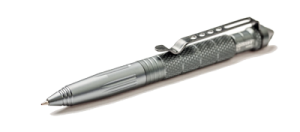 Tactical pen. Most nursing homes have policies against having a firearm, pepper spray or taser. They don’t want to take on the liability of any of these weapons being used inside their facility. However, if a deranged person entered the facility, you need to have a way to protect yourself. A tactical pen is perfect because it is incredibly simple to use and can be carried at all times whether you’re going to eat or just taking a stroll around the hallways.
Install a camera in the room. I realize many people are hesitant to install a security camera in a bedroom, but in the case of an assisted living facility, this is something I would definitely recommend if you’re allowed to. Of course, talk to your loved one first and make sure they’re onboard with this. But, this can act as a deterrent to any criminal activity. You should post a sign on their door letting anyone entering know that they are being recorded. A few cameras you may wish to check out are made by Wyze, Nest and Arlo.
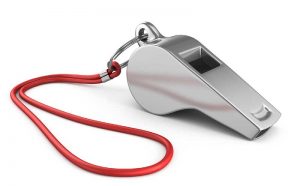 Carry a whistle and flashlight. In the event there is danger in a facility, you want to make as much noise as possible. You may not be able to yell like you used to, which is why you should consider wearing a whistle around your neck. This could alert staff to any trouble you may encounter and will hopefully scare away anyone trying to harm you, as they don’t want to be caught in the act.
Another item I would keep handy is a flashlight. You don’t want to be walking down a hallway when the lights fail and be stuck there. Plus, you can always use the flashlight to strike an attacker or shine it in their eyes to let them know that you see them coming.
Carry as little cash/cards as possible. There’s no reason to have a ton of cash and credit cards at the facility. If a thug bursts into the dining room and takes wallets from everyone, you don’t want to give them all your cash or access to your banking cards. Frankly, these items are more secure locked up in a room safe. There are plenty of good small safes you can buy these days and you might want to check out ones made by SentrySafe, First Alert and Honeywell.
If you or a loved one reside in an assisted living facility, consider implementing these safety measures to hopefully avoid being a victim of a crime. No matter what your physical levels may be, try to carry yourself with confidence as much as possible. If you ever suspect someone may be up to no good, look them in the eye and let them know that you clearly see them and aren’t going to be an easy victim.

I’ve been teaching self-defense to military, law enforcement and civilians for almost 25 years and there is one aspect to everyone’s training that must be the same. Techniques may differ depending on the mission for the military, laws that police must stay within and scenarios that civilians prepare for. However, the one thing that must be present within all of their arsenals is many times the missing piece.
Put simply, emotional training. “Techniques” are useless without emotional intensity training alongside of them. Anyone can perform a self-defense technique while calm, relaxed and ready for whatever attack is coming. True training must involve being surprised, while having one’s heart rate spike and perspective at least slightly cloudy by chaos. That is reality. That is how it will be in a real-life situation and it should be mimicked in one’s training.
If you want the mindset of a warrior, you must strengthen it by making sure it can adapt under pressure and stress. There are four main components that must be a part of this type of training.
The first is variety, so you don’t know exactly what you are defending against. As stated before, anyone can do a block or perform a punch when they know what is coming at them. But, what happens if the opponent pulls a knife or attempts to take them down to the ground? That is variety, and having the ability to adapt within a second or two is priceless.
The second element that must be injected into training is the environment, such as light, footing and temperature. These create emotional stress because rarely is one attacked in a well-lit place, at room temperature on a matted surface.
Although this next additive to your training could be grouped in with the previous point, I have found that loud sounds also spike the emotions in a unique way, so make sure annoying music or yelling with your partners is included. Too much self-defense training is done with nice popular music in the background at just the perfect volume. In a violent attack, awkward and hair-raising sounds are all around.
Lastly, most people can emotionally handle stress if they are not somehow physically fatigued. For example, if you’re sick, and have missed out on sleep for a couple nights, emotionally getting through a day can be exponentially taxing. The same holds true for increasing your mental and emotional strength in self-defense. I’m not recommending getting sick on purpose or going without sleep as a form of training. Although, sleep deprivation is one way many elite units, such as the SEALs, test their candidates.
However, doing a round of 25 “burpees” or sprinting right before practicing a self-defense move or taking part in a sparring round can build the strong mindset we’ve been talking about.
The fact of the matter is, training and conditioning our minds to adapt and overcome variables that will be present will make you emotionally and mentally stronger.
g you time to escape. Once again, having these three lines of defense gives you several options at different intervals of a potentially deadly road rage situation.

It was about the seventh or eighth day of the conference when I arranged to run into both Man A and Man B at another “members only” soiree in the conference hall. I brought over a tray filled with wine glasses. I put them down in front of Man B and said, “These are for you if you promise to quit following me around” and I smiled, laughed and patted him on the back and then I walked away. He called at me to come back, but I pointed to the table with the ladies and expressed the idea “what, and pass up on these hotties? No stinking way.” Then I beckoned him to come with me. He looked to Man A for permission and as soon as he got the smile from Man A indicating his approval, Man B trotted over to me. I took him to the table and became his instant wingman and we charmed those ladies (whose job it is to appear charmed by anyone) and gave him his choice of wines.We bonded pretty easily. I helped him out to the taxi and asked him if he would consider skipping a part of the next day’s conference and come with me into town for a little mischief making. He was very eager to engage in some non-scientific experiments. That afternoon while we cruised around town having fun, I never asked him anything. We never talked about his work, his family, his interest or anything. I wanted him to be very comfortable with me so that he would drop his guard.
Whether it was coincidence, luck or an outright success, Man A asked if he could go with us the following night. I acted a bit apprehensive. I explained that if someone saw us together, he might catch some grief for hanging around the American. And if the wrong person saw me with him, they would want some kind of report and that is exactly what I wanted to avoid. I am on a secret vacation, I don’t want to spend one minute writing some silly contact report that will sit in a file cabinet for years.
We agreed that it would be best if Man A didn’t go with me and Man B tomorrow evening. The next evening, I laid it on heavy! Man B got the experience of his life. Everywhere we went, we took charge. We charmed the proprietors, the wait staff, our fellow customers and several wives of pissed of mini-men. He didn’t want to go home. In his world, this was a once-in-a-life-time experience. I convinced him that tomorrow night wound be even better.
The next day at the conference luncheon, Man A came and sat down with me, Man B and a few of our hottie-hostesses. Man B relived almost every moment from the previous night complete with wild embellishment and altered facts. I just agreed and let him ride that train all the way to glory town. Man A virtually insisted on going with us that evening. I looked at them and made them promise not to tell anyone, ever. I told them how I had cased the city before the conference and found some really interesting places we could go.
Of course, I had pre-selected the remote destinations and planned Surveillance Detection Routes and cover stops to get there. We agreed to a secret rendezvous at a spot that I had pre-selected on the Institutes campus. That location would allow us to slip through a damaged section of the stone perimeter fence and put us right where I had parked a rental car that was waiting for us. Yes, they had figured out that I was an American Spy, but instead of them being my targets, they genuinely felt that we had become friends and I was going to take them on a spy-like adventure. And I did.
 It was even more fun with the three of us. Again, I didn’t ask any questions and if they brought up some comment that could be related to their work, employer, etc. I reminded them that I would take us all home if they screwed up this vacation for me.
We laughed incessantly. About 3am, Man A decided he wanted to drive my rental car to the next destination. I had been doing all of the driving because I don’t drink alcohol and was the designated driver. But, I wasn’t on this mission to keep my targets morally straight, I wanted them to fall in love with me.
He got behind the wheel and in no more than two hundred yards, we wound up on the pedestrian path instead of the road. I kept telling him, but he ignored me. We were all laughing so hard as he tried to avoid the trash cans, benches, sign posts, etc. He actually thought he was on the road and kept cursing the idiot who would put benches in the road. Man B must have been about to the point of peeing in his own pants until Man A drove us right into a pedestrian barricade. No injuries, drunk Man A was only driving at about eight miles per hour so that he could thread through all of the obstacles on the walking path.
We fell out of the car laughing. Man A, reverting to his more natural state of conservativism and in a bit of a panic asked “what we were going to do?”. I simply said, lets drag it onto the road and keep going. For those of you not familiar with European cars, just know that two very drunk men and one secret agent can drag one of those tin cans just about anywhere.
We did it and clanked all the way back to the hotel. The next morning, none of us could look at each other without laughing. The conference was coming to a close. Many of the attendees were already packed and leaving for the airport. And that was the case for my target Man A (and Man B). But, before he left to go to the airport, Man A hugged me goodbye and slipped me a scrap of paper. It had a phone number and a mailing address. Nothing else. He asked me if I would be willing to give him my contact info. I was happy to do so since the Agency had already provided me with a fully back-stopped set of contact info. But as we shook hands, he leaned forward and whispered a name, an adversarial country, the specific institute and a peculiar phrase, something like “Senegal Red”. It didn’t mean much to me.
When I got back stateside, I headed for the secret rendezvous where a blacked-out vehicle would pick me up and get me into the Agency unseen. When I got into the conference room, we all sat down around the huge conference table and I shared a brief version of trip. At the end, I shared the info about exchanging contact info. I concluded with providing them the information that he whispered into my ear.
At my mention of the peculiar phrase, almost everyone in the room looked and behaved stunned. It turns out that they were all aware of an imminent cyber-attack on one or more of America’s infrastructure systems. It just so happened that the very individual that he outed to me and the exact institute for which he worked, were near the top of our cybersecurity threat matrix. While the information that he provided to us was very useful, it was really just a kernel that helped the cyber teams prepare and execute preemptive maneuvers and even design failsafe protocols.
There was a massive cyber-attack on our power grid about three days later. The combined work of many technical experts within and without the US Government colluded to thwart the malicious assault before it even began. It was only a few days later that I was summoned into the Deputy Director, R&D’s office. He had a few of his senior leadership and a couple of his experts with him. He told me that Man A had initiated some very rudimentary communications using our pre-established low-observable communications plan and that his hostility towards America had ratcheted down. They had quickly upgraded his communications to full covert comms. I later learned that using his covert comms, he had told one of our senior cryptographers that getting to know an American and become friends with him made it virtually impossible for him to not warn America about planned attacks against our citizenry. Americans became people to him and not just power-hungry fools bent on world domination.
Did Man A help us keep our lights from going out? Frankly, I am not sure. But, I do know intelligence officers do their best every day to protect our national infrastructure. However, since foreign adversaries are often targeting our power grid, please make sure you are prepared for an extended period of lights out. This means generators, batteries, propane heaters and stoves and plenty of food to cook on these stoves too.

 I was recently speaking with Mike Fuljenz, President of Universal Coin and Bullion and a consultant to the United States Mint. We discussed a variety of gold and silver topics, but there were two things that stood out the most. First, and most shocking, was that the U.S. Mint ran out of 1oz. Silver American Eagles on February 21.
American Silver Eagle coins reached 2,157,500 ounces sold in 21 days in February, which is 128.9% above the 942,500 ounces sold in February of 2018.
I have been in the silver and gold market for over 20 years, but usually, the mint always has plenty of supply. If there is a shortage, we generally don’t see it until October/November. This increase in sales shows that the demand is rising at a rate even the largest producer cannot keep up with.
The second item that Mike and I discussed was the fact that silver has enjoyed a “stealth” bull market since last November. After dipping below $14 on November 14, 2018 (with a London price setting at $13.97), silver rose more than $2 per ounce (+14.8%) to $16.035 on February 20, 2019 – up over 14% in 14 weeks. Using end of February prices, silver went up 11% from the end of November to the end of February, vs. only about 1% for the major stock market indexes.
Gold’s numbers are also strong, but less impressive than silver. Since the mid-November lows, gold rose 12.3% from $1,197.55 (November 13, 2018) to $1,345 on February 20, 2019. Using month-ending prices, gold rose 7.75% from the end of November 2018 to the end of February 2019 (vs. +11% for silver).
Silver tends to go up faster than gold in rising markets, but it also tends to decline faster during bear markets. Part of that is due to silver’s smaller market. Silver is gold’s “little brother” in terms of lower trading volume based on the lower total value of each metal’s annual new supplies. Specifically, about 950 million new ounces of silver are added to the global supply from mining each year. At $15 per ounce, that’s a $14 billion market. By comparison, gold adds about 120 million ounces a year – just one-eighth of the weight of new silver supplies, but since gold is valued at around $1,300 per ounce, gold’s market size is $156 billion per year, about 10 times the size of the silver market. This helps silver leverage the gains or losses in gold and this is why silver often looks like it trades like “gold on steroids.”
Another advantage of silver over gold is that silver has more industrial uses than gold. Silver’s high conductivity to electricity and heat makes it valuable in countless industrial usages. Silver is used in making solar cells, computer touch screens and medicine, as well as in jewelry and tableware. On the supply side, silver is usually only mined as a byproduct of a search for other metals – notably copper, gold, lead and zinc. Due to the low prices of copper, zinc and many other key commodities, mining exploration is down this year. The expected new silver supply in 2019 is 26,000 metric tons (836 million Troy ounces), the lowest new supply since 2013, according to estimates by Societe Generale SA.
There is also high and rising demand from new buyers for silver as an investment metal since it is lower-priced and therefore more affordable than gold. With the recent increase in both the demand and price of silver and gold, I encourage you to give me a call to see if I can help you. Pick my brain and we’ll figure out if buying silver and gold right now is a good idea for you and your family.
[Publisher’s Note: For questions about buying gold and silver coins you can contact Forest Hamilton directly at foresthamilton@universalcoin.com or call 800-822-4653. Please know, if you purchase any coins from Forest, we don’t receive any compensation from him. We simply know he’s one of the good guys in the business that can be trusted.]

In the United States, approximately 100 people are killed every single day by gunfire. Two-thirds of those deaths are self-induced, the other one-third are a direct result of an assault, accidental discharge or are shot by law enforcement in the line of duty. Three times as many people receive non-fatal injuries as die from gunfire, but 95% of those are either from an assault or by accidental discharges. Also, though knife stabbings are more prevalent than gunshots, the number of deaths is lower.
As deadly as trauma from a bullet or stabbing injury may be, the trauma is survivable in most situations depending on where a person was shot or stabbed and how quickly they get to definitive medical care. In fact, it’s estimated that 80% of the body is a “safe zone” in terms of not being immediately fatal if shot or stabbed. However, it is important for those victims to receive rapid and definitive medical care.
As a physician, I’ve seen people die after a single stab wound or bullet wound. I’ve also seen people survive multiple stabs and bullet wounds. Survival is really dependent on the path the bullet or the blade takes. Ultimately, the issue is how much blood loss the victim suffers. Of course, if you’re dealing with a head injury, impact trauma significantly plays into a person’s fate.
So, what do you do if you see or happen upon a person who’s been shot or stabbed? First, don’t panic. Keep your head. Focus. If you know someone has been shot or stabbed, keep them calm by keeping yourself calm. Don’t lose your cool. You can do that later if you must. Help them keep their heart rate down, help them slow their breathing and encourage them that all will be ok. The most important thing you can do in this situation is to control their bleeding. Do so quickly. It is amazing how much blood can be lost within a minute or two if an artery has been severed.
If the victim has an extremity injury that is bleeding briskly, apply a tourniquet above the injury. Use whatever you have available – a belt, a shoelace and a screwdriver or a t-shirt and a stick. If you happen to have an actual tourniquet, as we’ve previously recommended you carry, then use it. Tighten the tourniquet until the bleeding stops and leave it in place. DO NOT loosen it to check to see if the bleeding has stopped. Just apply it and leave it.
If they have a penetrating injury to the abdomen or pelvis, lay them flat and apply firm pressure. Remember that just because you can’t see internal bleeding, doesn’t mean it isn’t happening. Think of spleen on the left, liver on the right and kidneys in the back and apply pressure. If it’s an internal vascular (arterial or venous) bleed, there’s probably not much you can do. Hold pressure anyway.
Obviously, call 911. You may want to do this first depending on how bad the bleeding is. If they’re not bleeding out in front of you, call 911 first, then attend to them. EMS responds very quickly and will usually be there in 5 to 10 minutes. Keep their airway clear. If they are gurgling or having trouble breathing, turn them up on their uninjured side and keep their airway open. Calm their breathing. Slow them down. Slow deep breaths are best in most situations. Make eye contact and coach them. Comfort them. Encourage them.
If they have a chest wound, apply an occlusive dressing to prevent a tension pneumothorax that develops by air seeping into the chest through a hole in the chest wall (or even the lung). If too much air gets in between the chest wall and the lung, the lung can collapse and the pressure can build, compressing the heart and blood vessels.
Control the scene. We are all drawn to violence and danger out of curiosity. There will be bystanders. Use them. Have them clear the street, establish a perimeter, flag down the ambulance, call 911, find supplies, apply pressure, etc.
As a last resort – if you are in a dangerous situation with continuing violence or if EMS is delayed because of mass violence or just can’t get there for whatever reason, after stabilizing your patient as best as possible, get them in a vehicle and drive them to the nearest hospital. NOT a minor medical center, but a real hospital or even a freestanding Emergency Room. They are probably going to need surgery and their chances improve if you can get them to a place with a surgeon.
Ultimately, the best thing you can do is to control the bleeding, keep them calm, and get them definitive medical care by either calling it to you or by taking them to it if you must. Stay alert. Stay alive.
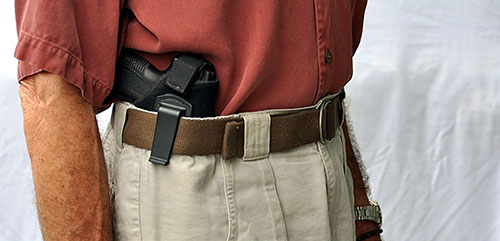 71-year-old Samuel W. was sitting in the Palms Internet Cafe in Ocala, Florida, when two men stormed in brandishing a handgun and a baseball bat. Immediately, one of the robbers yelled, “Don’t none of you [expletive] move”, at the café patrons.
In surveillance video released by police, Samuel, who is seated at a computer in the corner of the café, is seen standing up and pulling out a .380-caliber handgun shortly after the two men storm into the café. On the video, Samuel is seen firing shots at the robbers who panic and slip and fall as they flee the scene.
The two robbers, later identified as Davis Dawkins, 19, and Duwayne Henderson, also 19, were arrested hours later. They were charged with attempted armed robbery with a firearm and felony criminal mischief. According to local police, Samuel holds a valid concealed weapons permit and the shooting was deemed justifiable. (I’d say ‘obviously’, but if this were in California, you never know).
The thing is, no matter your age, you clearly need to be able to defend yourself in situations like this. Not only did Samuel address the threats, but in the surveillance video, he is seen moving toward them and continuing to engage the two robbers until they stumble out of the building.
Unfortunately, as we age, our bodies slow down and we can have difficulty operating certain handguns. The fact is, no matter what age or skill level you are, the key is to be comfortable with the gun and able to manipulate it when you need it most. Considering the changes that occur as we age, here are a few things to think about when carrying a firearm.
Semi-auto or revolver For anyone who is going to own a firearm, you should carry a gun that you can handle and shoot. A .45 caliber may have been your favorite gun when you were in your 20’s, but it may not be realistic for you to carry now. If a semi-auto is your thing, make sure that you can operate the controls and can firmly grasp the slide. Plus, make sure you can operate the magazine release button, the slide stop and any manual safeties. If you want to stick with a semi-auto consider carrying a .380 or 9mm caliber. (I personally carry a 9mm.)
On the other hand, a revolver is much easier to manipulate compared to a semi-auto. You don’t have to pull back a heavy slide as you do on a semi-auto. Simply open the cylinder and load or unload the individual cartridges. The trigger is the safety because it requires a long and deliberate pull to shoot. Revolvers are simple to operate even if you have arthritis. If you’re going to get a revolver, stick with quality brands such as Ruger and Smith & Wesson. You can’t go wrong with a Smith & Wesson J-frame, which easily fits in a pocket. (I own the Smith & Wesson model 642.)
Reduced Reaction Time As we age, one of our most noticeable physical changes is a reduction is reaction time. For those who have experienced a slowed reaction time, it’s important to remember that shooting first isn’t as critical as hitting your target. Getting your pistol out and putting rounds towards your threat isn’t that great if you are missing the bad guy. This is why I highly recommend doing dry fire practice daily. Do 25 trigger pulls a day and it will do wonders for your accuracy.
Mobility For those with reduced mobility, carrying a concealed weapon gets increasingly more difficult. The key is to know your capabilities and physical limitations when carrying a firearm. In other words, be honest with yourself and your abilities. If your range of motion is affected you obviously want to stay away from carrying a concealed gun in the small of your back. Pocket carry pistols are an ideal concealed carry weapon for those with limited movement since you simply need to be able to access your front pocket. Some of my favorite pocket carry pistols are the Ruger LCP, Sig Sauer P365 and Sig Sauer P238.
No matter what age you are, every single one of us is responsible for any bullet that leaves our gun. So, train as often as possible to stay up on your skills and make any necessary adjustments to your concealed carry set up to make sure you stay safe.


