



Monica Witt is a former counterintelligence specialist who was once involved in secret U.S. missions abroad, but she grew disillusioned with the United States and betrayed her country.
Witt was born and raised in Texas. She joined the Air Force in 1997 and soon was entrusted with some of the military’s most closely guarded secrets. She had access to top secret information and was trained in the Farsi language. She eventually left the military in 2008, but worked as a government contractor for about two more years.
In the years after she left the government, Witt grew fond of Iran and distrustful of the U.S. government. In February 2012, she traveled to Iran to attend a conference aimed at promoting anti-U.S. propaganda. This trip caught the attention of the FBI, which warned Witt that she was a target for recruitment by Iran. Witt’s anger with the U.S. only increased after her encounter with the FBI. In February 2013, Witt went to Iran for another conference, where she met with members of the Islamic Revolutionary Guard and told them she was a U.S. military veteran who wanted to emigrate to Iran. Next, she appeared in propaganda videos critical of the U.S.
Witt defected to Iran in August of 2013 and the Iranian government provided her with housing and computer services where she gave up classified information. Worse, she also helped the Iranians track down U.S. counterintelligence officers. Witt’s betrayal threatened sensitive operations that to this day officials will not disclose. In addition, she put her former co-workers in the crosshairs of a foreign adversary.
Sadly, traitors are nothing new. September was named “National Insider Threat Awareness Month” by the U.S. government as part of an effort to inform both government and private sectors on how to spot and report insider threats to officials. “All organizations are vulnerable to insider threats from employees who may use their authorized access to facilities, personnel or information to harm their organizations, intentionally or unintentionally,” said William Evanina, a former FBI and CIA official who heads the counterintelligence center.
Just like when you are trying to detect if someone is lying, when trying to decide if someone is an insider threat, you have to take their behaviors as a whole into consideration. In other words, just because someone may exhibit one or two behaviors that are common by bad actors, it doesn’t mean they are 100% guilty. With that being said, here are some typical signs that someone in government or even the private sector could be sharing information with an adversary or competitor. This person could be one of your employees, neighbors or co-workers.
Excessive habits. If a co-worker suddenly begins drinking, smoking, gambling or doing any sort of unhealthy habit excessively, this could be a warning sign. Of course, perhaps they have a specific stress in life or are going through a divorce, but if you know them well and they begin these habits for no obvious reason, it could be that they are hiding something about their work.
Unexplained wealth. Sometimes people suddenly come into money from winning the lottery or inheritances. However, if a co-worker is suddenly driving a $75,000 car (without explanation), and you know that their salary doesn’t support this type of purchase, you have to consider that the money could be coming from an adversary who is paying them for information. Excessive spending is one of the ways that CIA traitor Aldrich Ames was finally nabbed.
Thoughts of suicide. Desperate people do desperate things. When someone has turned on their country or their company, they will often have moments of guilt and reconsideration. The problem is, for many people, once you go down that path of lying, it can be very difficult to make amends. People in this situation may have thoughts of harming themselves, since they see no way out.
Lowered productivity. When someone is trying to serve two companies or two countries, it will be nearly impossible to keep up the work load. If someone who has been a hard working, dependable employee, suddenly becomes half the employee they used to be, chances are they could be working for someone else as well.
Unusual travel. Everyone loves taking a vacation, but if your employee is always traveling to Russia or to another city where one of your competitors is headquartered, this could be a red flag that they are attending meetings or conferences, just like Witt did.
As I mentioned, there could be a number of reasons that someone may be exhibiting the behaviors I’ve mentioned. However, if a co-worker or employee of yours has these things going on and you have no explanation, you may want to keep a close eye on them before it’s too late. And don’t forget, insider threats aren’t only co-workers and employees, it could be a nanny, maid, house painter and more.

The Filipino Martial Arts, many times referred to as “FMA”, offer a series of specific arts that have their own focus, but all contain brutal moves. Taking a look at the Filipino culture and history, many times in the last 100-200 years, they have been fighting armed soldiers with just knives and sticks. However, their fighting methodology is effective and not outdated. Some of these arts include: Dumog (Filipino wrestling), Kali (primarily based in edged weaponry), Arnis (modern Filipino stick fighting), Escrima (classical Filipino stick “fencing”), Pentak-Silat (Indonesian art of attack and defense), Panajackman (low line kicking combined with upper body strikes) and Kino Mutai (biting and eye gouging).
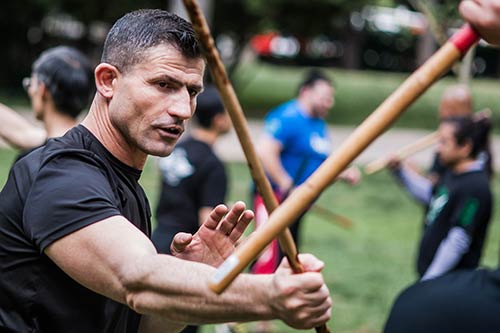 Among the many concepts and techniques in these combative arts, there is one concept that pleasantly surprises new practitioners while flooring older practitioners with its effectiveness and ease. The concept is called the “Destruction”, taken from Kali. It surprises practitioners because most martial arts deal with attacks, such as punches and kicks, with moves that are inefficient and unrealistic. For example, take an old traditional artist and throw a punch at them and in the majority of cases the traditional artist would respond with a “blocking” move.
The person who threw the punch suffers no negative consequences for doing so. Meaning, that a punch was thrown, then a block… guess what will happen next? In most combative situations, the attacker will throw another strike of some sort. This will force the practitioner to counter with another block. If that is successfully pulled off, another strike will come – maybe even a kick – and the response will be similar… a good old block. How many times will it take, until the defendant misses the block or the attacker acts too quickly?
The thought process of blocking probably originated from weapons defense, mostly sword use, in the “samurai” days. One warrior would take a mighty swing with a very heavy sword, while the other would counter with a block. Because of the size and immense weight of these swords, one could have the time to block and then counter with their own strike. This is a little bit different when one turns to empty hands and today’s modern punching combinations. When dealing with 50mph punches and 80mph kicks, time is not a luxury.
The concept of the Destruction in empty hand applications inflicts pain using nerve destructions to whatever limb is being thrown (i.e. right jab = right arm). By attacking these vulnerable areas on the first beat, one cuts off the opponent’s attack immediately. This then produces a moment where the pain registers in their body. Using this moment of pain (or pause), many Filipino practitioners follow up, usually in close quarters.
Therefore, if a jab punch is thrown, one could attack the hand (fist), forearm nerves, or bicep nerve, among others. If a left thigh kick is thrown, one can attack the foot, ankle, shin, or inner thigh nerve. Learning how to attack the incoming limb gives you not only an effective defensive move, but also a surprise attack that you need in your defensive arsenal. Of course, don’t just stop there, but continue to attack until the person is no longer a threat to you.

To live a full and healthy life, we need to focus on three things. First, we have to decrease inflammation. We now know that inflammation in our bodies causes disease – heart disease, strokes, cancer, arthritis and so on. In fact, whereas we once thought that high cholesterol was the primary cause of heart disease, we now know that it’s the inflammation in the walls of our coronary vessels that causes the destruction, encourages cholesterol plaquing and the advancement of cardiovascular disease.The activation and maintenance of inflammatory cascades in our bodies is a problem. We have to reverse inflammation. We do this by changing what we eat, what we drink, how we sleep, and how we exercise. We’ll get to this shortly.
Secondly, we have to decrease oxidative stress. Oxidation works inside our cells during and around the energy production cycles in our mitochondria. Oxidation can and does worsen when we use the wrong types of fuels to power our cells. High levels of oxidation damages DNA and causes mutations leading to dysfunction and cancer and damages our tissues and organs. We decrease oxidative stress by changing what we eat, what we drink, how we sleep and how we exercise. Sound familiar?
Third, we must improve immune system function. We have to optimize our body’s innate ability to recognize and react to threats that infect and destroy our cells. We do it by providing our immune system challenges that help it build defenses through immunizing ourselves to those threats in two ways. One way is by adhering to a regular immunization schedule. Yes, the science is good – and settled. Immunizations work. The other is by not depriving our bodies the access to antigens.
We are exposed to antigens thousands of times a day, however, we’ve become so germophobic that we are weakening and neutralizing our immune systems through hand sanitizer, sterility and the constant fear of germs, when, in fact, it’s those germs that most often give our immune systems the workout it needs.
So, how do we lock these three steps down? We choose the right fuels (food and supplements) in the right quantities (calorie restriction), at the right time (intermittent fasting). We stay hydrated. We get proper rest and recovery. We maintain proper fitness. If I had to choose one as being the most important between nutrition, hydration, sleep, and exercise, I’d say that until you get your sleep locked down, you’re just not going to get healthy.
Regarding our diet, we can preferentially use fats, proteins, and ketones as fuel in several ways. We can eat a low carb (75 grams/day) or a very low carb (50 grams/day) diet that focuses on complex carbohydrates and eliminates simple carbohydrates (sugars) while increasing our intake of protein, fats, and ketones. We can get ketotic. We can limit our feeding window to 6 to 8 hours a day. We can calorie restrict.
The real problem comes in when we combine carbs and fats, eat too many calories, don’t stay hydrated and don’t get enough restorative sleep. Combining carbs and fats is a sure recipe for an early death and is where much of our chronic disease comes from. However, if we eat fats and proteins without the simple carbs, we’re fine as we decrease inflammation, decrease insulin levels and decrease oxidative stress.
Regarding sleep, I used to say that I’d sleep when I’m dead. Now we know that we die faster if we don’t get adequate sleep. Other things that are strongly associated with poor sleep habits are obesity, poor brain function, a poor memory, higher rates of errors at work, higher risk of injury at play and higher rates of chronic diseases and cancer. Sleep is essential.
I’ve just given you a lot of information that I hope you sift through and explore more deeply. It’s also a great foundation for what we’re going to talk about next – Intermittent Fasting, Calorie Restriction and more.

I was on a two-man mission to track down a terrorist who managed to avoid capture and get out of America. Our assignment was to find him fast before his trail got cold and he covered his tracks. We were to find him, confirm his identity, and contact our law enforcement liaison at our Consulate in that country who would, in turn, arrange with the local government to surround and capture this violent man and his associates.
In the world of espionage, law enforcement and other fields that require intimate interaction with the locals, developing “Area Knowledge” is essential, not just to getting the job done, but to staying alive in dangerous situations and conditions. Authentic Area Knowledge includes knowing and understanding the cultures of different parts of town, what religious affiliations exist, political leanings, economics, family ties, social stratification, etc.
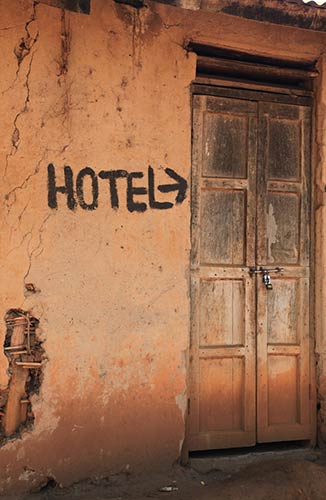 On this mission, we enjoyed the advantages of a committed and highly skilled local person on the ground. When we made initial contact with him, he had already been alerted to our assignment and how we would need his help. He had already had his ear to the ground and learned of certain movements, important guests arriving and he even learned that a local out-of-the-way eatery had hired a well-respected cook known for his particular skills for preparing the same kind of meals our target was known to prefer.
Within minutes of meeting with the local guy, we had already narrowed the probable location of our target down to about two square blocks in the most violent and dangerous part of town. The ball was in our court now. The local undercover person could not risk being identified with a failed or even successful take down of a locally admired benefactor, albeit he was a terrorist.
Our cover was that we were American businessmen who came looking for special products produced within that region of the country, but we also arranged for indigenous American Consulate staff to overhear a planned conversation between the RSO (the Embassy or Consulates Regional Security Officer) and the DEA attaché. They were to briefly and in hushed tones discuss the fact that two American businessmen just arrived in the area for the purposes of import/export, but that U.S. law enforcement suspected them to be involved in the drug trade. This established our “street creds” right from the Consulate informants and gave us “cover for action” when we chose to stay in the roughest part of town.
We chose the seediest hotel that was closest to our target. Here are some things that you can learn from our operation to help you choose a safe hotel room for your future travels. When we first get to the hotel we plan on using, we case the exterior. We are looking for several things. Among them are:
- If we had to jump from a window, is there a low-topped structure that we could use to break our fall?
- Which side of the hotel would be easiest for a drive-by shooter, car bomber, or other hostile attack to occur?
- Are there wall mounted exterior ladders/stairs for servicing equipment or other things?
- Is there a side of the hotel that is easiest to observe and even perhaps in line of sight of surveillance cameras (jewelry shops, banks, etc.), and if so, is there a side that is “dark”?
- Is there a local law enforcement or military post nearby?
- How is the parking lot laid out? Look for choke points, places where you can escape the parking lot other than the driveway – perhaps jump a curb and get directly on a side road. Plan on exactly where you want to park and why.
- What kind of cars are in the parking lot and how many and how many open spaces? Part of what we are looking for is what kind of guests stay here; rich, poor, gang, cops, business people, etc. We can get a pretty good idea by driving through the parking lot late at night and glancing at the cars, and when possible, what’s inside of them.
 Next, based on all of the intelligence we gained by casing the exterior and factoring in other special considerations, we determine which room(s) we want and which ones we will not take. When choosing a room, some of our special considerations include:
- We will not stay by an elevator, which is good since most everyone else wants to.
- We will not accept a room above the third floor (unless it is adjacent to an exterior ladder or has a break-fall with easy ground access). This is because in the event of a bombing, fire, active shooter, etc., you will not have time to wait on a fire truck, police officer, or any rescue teams. You may have to drop from the ledge to the ground.
- We do not accept a room on the first floor. Any bomb blast will kill people on the first floor, if not directly due to the blast, due to the shrapnel and flying debris.
- We will not accept a room that is exposed to easy access by attackers, such as the side of the building exposed to a road/driveway/parking lot that can be used for car bombing access.
- We insist on a room near the stairs (and away from the elevators). This is for safety and improved chance of escaping a life-threatening situation. Most people will run for an elevator and create a jam and panicked frenzy near it. We stay near the stairs and we commit to memory how to get to the stairs from our room, including either step-counts or crawl-counts and especially the number of doorways (easily felt) between our door and the stairs.
- If the clerk tries to put us in a room not of our choosing, we refuse and might even get a bit testy. We insist on the “right” room for us. In some cultures, or with certain individuals, you can use the ploy that your choice of rooms is based on some supernatural influence. Star alignment, cosmic waves, anything. They don’t want to get into an argument with a crazy person. They just want you to go to whatever room you want and leave them alone.
- We prefer a room on the second floor, near the stairs, with a window that we can escape from and move quickly to cover and out of any crowds.
- We want to know exactly where our vehicle is in relation to the window.
- We want to have our vehicle parked so that we can escape regardless of how jammed the parking lot is, if it is blocked by threats or emergency response vehicles or anything else.
- Let me dispel a myth. We do not choose a room for surveillance advantages on a mission like this. The whole idea behind surveillance is to not lose sight of your target. With just two of us and a specific assignment, we are not going to be able to sit by the window in 24/7 shifts and watch somebody. A trip to the restroom, turning your head for a few minutes because you think someone is knocking on your door, or whatever breaks your line of sight and means you don’t know if they just left, someone just showed up or what is going on. Room choice for surveillance will be different based on mission requirements.
The bottom line is that we know what to look for and what to avoid and we want to ensure that we have the most and the best advantages planned out before accepting a room. By the way, we did manage to isolate and positively identify our target on this operation. We were entirely non-alerting and we coordinated well with our local contact who engaged the law enforcement authority at the consulate and the US Embassy in their capitol. They then coordinated with the local militia to take down this bad guy. We stayed on him while they processed all of the proper coordination and we stayed to watch him go bye-bye. Don’t tell anyone, but we used an excuse like “after action survey” or something like that to get to stay in-country and kick around a little bit. I loved their local cuisine.
I believe that every human on the planet should know how to do two things: swim and have some basic survival skills, because both can save your life. When an emergency situation happens, it can be a very chaotic and scary event. Whether you are by yourself or with others, someone will need to Take Charge of the situation. If you’re in a group, it may be the responsible adult, it may be the Captain of the vessel or it may be the most qualified person in the group.Once someone has taken charge, you need to Assess the Situation. First, you must account for everyone and figure out if anyone is missing. Next, what is the immediate physical condition of everyone involved? You must take first aid action for anyone who is hurt or injured. Heaven forbid there are casualties but, if there are, you need to move them away from the immediate area for several reasons. First, the psyche of the group. Second, depending on the environment you find yourself in, it may be necessary to move the deceased far enough away from the group’s area to preserve and protect the group in terms of hygiene, disease prevention and attracting unwanted visitors.
 Once the situation seems to be under control, you need to Make a Plan. This step is critical to the overall success of survival. A Survival Priority Task List should be laid out to keep everyone on the same page and provide direction for group members. Remember, The Wild always has a vote and the plan must be flexible enough to adapt to the situation as it unfolds on the ground.
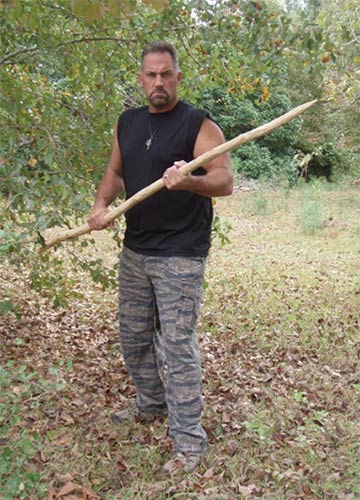
Keeping everyone safe from any further harm is clearly important. You want to protect the group form any hostility that may be in the area. In a survival situation, hostilities can be human, wildlife and weather, so both security and shelter come into play. Regarding security, let your primal instincts take over. Let that sixth sense come upon you and trust your gut. Check and see if there are any weapons with you, what kind are they, and are there enough? If not, you may want to make some to help out. Primitive spears or clubs are easy and quick to make. You can use them not only to protect yourself and the group, but to hunt for food as well. Also, always travel around in pairs, if possible.
Shelter will protect you from the last hostility, the weather and elements. It could be a broken down car or a lean-to. The rule is that you should never leave the area where the emergency happened because that’s the most likely place the rescue parties are going to look first. It may become evident that rescue is not coming for you. It may come time for self-rescue. If you have to leave the site, make sure you clearly mark the direction you head in, so that if someone does come looking, they will know which way to go. Navigation is one of the most important and overlooked survival skills. Always have a compass with you, a paper map, a satellite phone, a personal GPS beacon or whatever makes sense for you.
Remember, the minute an emergency situation occurs, you must take control of it and not let it control you. Your very survival depends upon it. Those who act increase their chances of surviving by tenfold, compared to those who sit down and wait to be steamrolled over by the circumstances. So, you need to ask yourself, do I want to sit idly by and wait for death to claim me or am I a warrior in this fight for my life and will smack death across the face and say, “No way! Not today!”

Last month, I detailed the fact that gold and silver are currently experiencing one of their biggest breakouts in history. There is a valid case to be made for precious metals continuing their run up to their 2011 highs ($1950oz for gold and $49oz for silver) and a case to be made for them to test their recent lows. So, what really is next for the shiny metals?
 Well, I am extremely confident in both gold and silver, especially as we head into what is sure to be an exciting election year. In early September, gold broke through $1550 per ounce, its highest price since early 2013. It then retreated to around $1,500 before finding its floor. Likewise, silver reached a three-year high of $19.30 in London – the highest price setting since September 2016. On September 4, former Federal Reserve Chairman Alan Greenspan said it was “only a matter of time” until the United States, like Europe, had negative interest rates and that investors are rushing to gold as a hard asset for real returns.
However, don’t be surprised if gold and silver take a breather before returning to fresh, multi-year highs, while even testing their all-time highs. It’s not only natural that precious metals take a breather before staging their next rally, history shows that it’s healthier for the market in the long term. But, what would cause gold and silver to truly test their all-time highs?
First, gold is entering its best time of the year – from September through February – when a rolling series of holidays in various cultures spurs jewelry fabrication for gift giving. Those holidays begin in India, especially for Diwali (October 27 this year), followed by Christmas and the Chinese New Year. Historically, virtually all of gold’s price gains have come in this September through February period.
Second, there is the continued “race to the bottom” in both interest rates and currency values as most major countries try to compete in global trade by lowering the value of their currency (to favor their exports) and also by lowering interest rates to boost their sputtering economies during a global economic slowdown. Super-low interest rates favor gold and the gradual devaluation of nearly all currencies increases the comparative value of gold.
Third, the U.S. government has abandoned all spending restraint. Both Parties have abandoned debate over the “debt ceiling” until 2021. On August 1, Congress passed a deal that increased an already-bloated budget by $320 billion for the next two years while allowing continued borrowing as needed. Basically, it’s an open checkbook. So, as you can see, gold and silver have several reasons to rise again, but don’t be surprised if the metals take a “pause that refreshes” before making their big run. [Publisher’s Note: For questions about buying gold and silver coins you can contact Forest Hamilton directly at foresthamilton@universalcoin.com or call 800-822-4653. Please know, if you purchase any coins from Forest, we don’t receive any compensation from him. We simply know he’s one of the good guys in the business that can be trusted.]


