


Thirst-Quenching Strategies for Conserving Water in a Survival Situation
The South African city of Cape Town is home to roughly 4 million people. Plus, it attracts tourists from around the world who visit the city for its culture, local wine and coastal beauty.
But over the past few years, Cape Town has dealt with extended droughts and wasteful overuse, which has brought the city to the brink of completely running out of water.
On July 9, 2018 — dubbed “Day Zero” — the city is expected to turn off water to most homes. City leaders plan to set up about 200 water collection sites where residents can obtain strictly monitored water rations — about 6.5 gallons per day. (Current water restrictions limit citizens to 50 liters — or just over 13 gallons — of water per day.)
Obviously, people are angry and scared. Cape Town has the highest murder and robbery rates in South Africa. Many are concerned about the civil unrest that will undoubtedly occur once people have no water.
Military personnel and local police will be guarding the water collection sites and authorities have crafted a comprehensive plan to regulate distribution. But in a city of 4 million people, things can easily get out of hand.
Your Town Could Be Next
Drought and overuse aren’t the only things that can cripple a water supply. Officials in Flint, Michigan, issued a federal state of emergency after the city’s lead-laced water was ruled a public health crisis. Florida residents were given a boil-water notice after Hurricane Irma tore through the state last fall.
Ideally, you should have plenty of water storage for an emergency — at least one gallon of water per person per day for 30 days. But you also have to be prepared to make that water last in the event of an extended crisis.
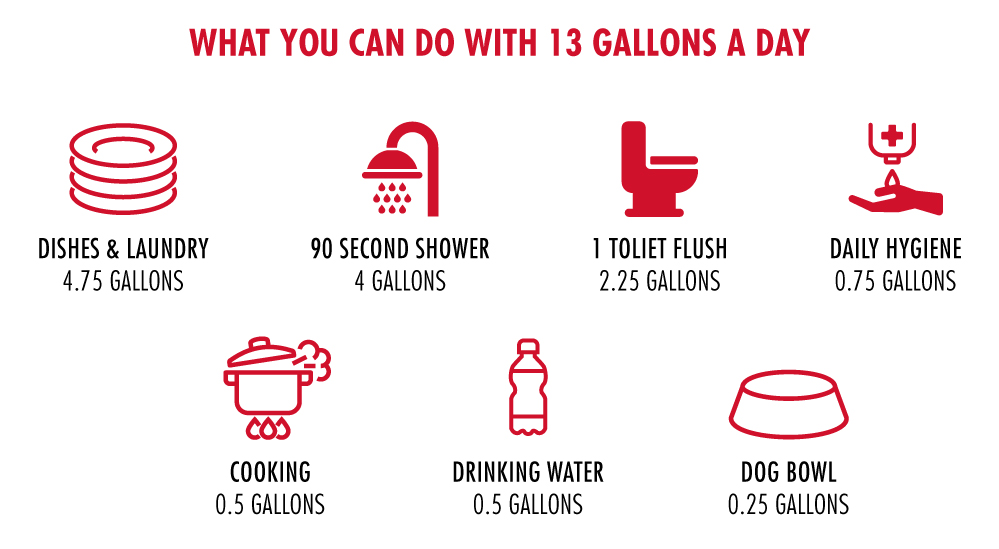
With that in mind, here are a few ways to conserve water if you ever find yourself in a situation like the people of Cape Town.
In the bathroom — One of the easiest things you can do is limit the number of times you flush the toilet. Basically, flush only when you need to dispose of a solid. In other words, “if it’s yellow, let it mellow.” Showers should be very quick — only about 90 seconds. Also, consider installing a water-saving shower head and faucet, which can make a big difference in the amount of water you use
In the kitchen — Even if you have a dishwasher, I recommend washing dishes by hand. Fill two buckets, one with soapy water for washing and another with clean water for rinsing. (This is what the Boy Scouts do at Scout camp.) Do the same thing for washing clothes. Hand washing saves water compared to using a machine
Reuse, reuse, reuse — When you shower, plug the drain. Yes, I realize this will fill your tub with soapy water. But unless you’ve been outside rolling around in the mud, you can reuse this water for things such as washing your hands. You can also reuse cooking water. If you boil pasta, save the water when you drain it for preparing other meals.
“What’s happening in Cape Town could happen here in the U.S.”
The scary thing is what’s happening in Cape Town could happen here in the U.S. In addition to the Flint water crisis, we’ve seen severe droughts in the West and massive storms disrupt the water supply in major cities across the country.
Keep these tips in mind when you need to cut back on water usage. Or better yet, start getting into some of these habits now. At the very least, like your parents always said (I know mine did), never leave the water running.
A Note From Your Editor: Ex-CIA Operative JAVELIN

Can’t We All Just Get Along?
by JAVELIN
You’ve heard me mention before that Republican presidents have always been better for the Intelligence Community. This is still true today.
The fact is Republicans tend to follow the letter of the law and will go to any means necessary to protect our country. In my opinion, Republicans are more concerned about keeping America safe, as opposed to Democrats, who tend to say they want to protect America but don’t want to hurt others in the process.
I began my intelligence career in the early 1980s when President Reagan was elected to office. When I hit the streets as a case officer in the ’80s, the Intelligence Community had the unwavering support of President Reagan. There was no question he wanted our agency to “go get those commies.”
President Reagan infused billions of dollars into the Intelligence Community so we were able to do our job. During Reagan’s administration, I did some of the most successful intelligence gathering I’ve ever done in my entire career. I know many of my counterparts around the world would agree.
Clearly, there is a difference between the Republican Party today and that of Reagan’s. One of the biggest differences, in my opinion, is that former Republican administrations typically supported the military, law enforcement and intelligence agencies.
While President Trump says he does this, I don’t think it’s to the same level as previous Republican presidents. President Trump is what I call a “selective Republican.” He does not support the Intelligence Community to the same degree as previous presidents.
Another reason things are different under the current president is that from the beginning of his presidency, Trump has had issues with law enforcement — most notably the FBI. Of course, he continues to fight with the FBI to this day.
As for President Trump’s relationship with the CIA, I believe they are trying everything they can to get his full support. I would speculate the CIA has people who are trained and ready to work — the biggest setback is probably financial. Money is an important aspect to gathering intelligence. If there isn’t enough money, it can be challenging for case officers to do their job.
Based on my experience, during Reagan’s administration, if a top intelligence official asked for something, they usually got what they needed with few questions asked. I don’t believe this is the case today. Unfortunately, this makes the CIA’s job that much more difficult.
To get on the same page as the intelligence agencies, President Trump needs to listen to his military commanders overseas and give them the resources they need to operate. I believe President Trump is much better for the Intelligence Community than a Democrat would have been. However, there are still things he could do better to help keep America safe.
Snatched off the Street

Your Life Depends on What You Do Next…
Living, working and traveling internationally can be among the most rewarding and satisfying experiences of a lifetime. That said, given the recent statistics on foreign abduction and kidnappings, it could also become your worst nightmare.
According to international kidnapping statistics presented by public policy groups, an estimated 120,000-plus kidnappings occurred around the world in 2017 — many of which affected international travelers.
Ongoing wars and international unrest have lured journalists, medical professionals and aid workers to some of the most hostile places on the planet. Along with this comes the motivation (and opportunity) to abduct or kidnap a foreigner. Militant groups especially have discovered the political and monetary value of holding a Westerner captive.
Avoid Abduction at All Costs
As with many crisis situations, you can greatly improve your odds of survival through preparation. Check out my article regarding steps to take before you travel abroad in last month’s issue, here.
“Militant groups especially have discovered the political and monetary value of holding a Westerner captive.”
When traveling or working in a foreign land, do your best to simply blend in. Always travel in pairs or groups. Familiarize yourself with the area — you should know where and what to avoid before you start your journey.
DON’T:
- Be loud or obnoxious — it attracts attention.
- Wear clothing that identifies you as a foreigner — this includes expensive accessories.
- Be obvious with conversation, a camera or a map. That screams, “I’m a tourist!”
The “Hot Spots”
If you plan to travel to one of the countries listed below, I highly recommend you look into kidnapping and ransom insurance. (If you are traveling for work, ask your employer if they already have a plan.) This provides peace of mind for these situations, helping businesses and individuals with full reimbursement for ransom monies paid.
Mexico
Mexico is the No. 1 at-risk country for kidnappings according to RiskMap 2016, a new report from Control Risks. According to statistics published by the Mexican Secretaría de Gobernación (SEGOB), last year kidnappings nationwide increased 25% over the previous year and 345% in the last decade.
India
Kidnapping rates in India have increased faster than any other crime in the last 50 years, according to statistics released by the country’s government.
Lebanon
Instances of kidnappings have declined as Lebanon’s government becomes more stable. However, neighboring Syria’s civil war has once again made Lebanon one of the most likely places to be kidnapped. Recent estimates show the kidnapping rate increased almost 100% last year.
Colombia
Once considered the second-highest-risk country for kidnappings in the world after Mexico, Colombia has improved dramatically in the last decade as the government has gotten a better handle on its rebel problem. The best way to stay safe in Colombia is to travel with someone from the area.
Venezuela
A lack of economic opportunities, especially in Caracas, creates an environment conducive to kidnappings, as police are unable to maintain order. Kidnappings frequently occur as travelers are leaving hotels and when they use unauthorized taxis to and from wealthier areas with limited vehicle and foot traffic. Once again, the best ways to stay safe are to be alert when leaving your hotel and travel with others.
Other countries with high rates of kidnapping include the Philippines, Brazil, Nigeria, Pakistan, Afghanistan and Egypt.
You’ve Just Been Taken…
If you end up in a kidnappers clutches, you will most likely be terrified. But your No. 1 goal at this point is to try to remain calm and gather as much information as you can.
1. Be QUIET. Don’t speak, cry or yell (unless you are still in a populated area — then let the world hear you!).
2. Consider motive. Try to determine why you have been kidnapped — is it financial, ideological or both?
3. Pay attention. Try to identify your captors. Make note of their language, ethnicity, clothing and any unique markings like tattoos.
4. Use your senses. You will probably be without sight to observe your location, so use all of your available senses to assess where you are or where you are going.
Time Is on Your Side
The longer you are detained, the more likely you will survive. If your captors want to negotiate an exchange, they can’t do it effectively if you are dead. You need to tell yourself this might be your situation for a LONG time.
Let everything slow down. Practice combat breathing to keep calm. Develop what I call a “long-haul” mental perspective. You never planned on being in this situation, but now you are. Keep your faith and NEVER stop imagining your freedom.
The New Weapon of Choice for Radical Cowards

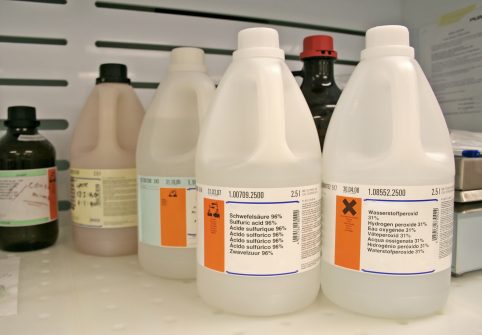
In today’s world, terrorists, gangs and assorted criminals are always looking for new and more horrific ways to injure and maim. Here in the U.S. we’re used to seeing guns, knives, chains and bats used as weapons to intimidate, injure and kill. However, as in other parts of the world, we are now beginning to see acids and alkalis used with increasing frequency.
These substances are legal for anyone to own, are difficult to detect, don’t generally raise suspicion, are not limited by age and are cheap and easy to come by. It’s really only a matter of time before these types of attacks become commonplace in the United States.
Acids vs. Alkalis
Acids are liquids or gels with a pH less than 7. The closer to 0 they get, the more positively charged hydrogen ions they have and the stronger and more rapidly damaging the acid.
Examples of common severely damaging acids are sulfuric (pH 0.3), nitric (pH 0.1) and hydrochloric (pH 0.1) acids. Though these are commercially available at many hardware stores, they are sometimes a little challenging to find. Acids burn and are corrosive.
Alkalis are liquids or gels with a pH greater than 7. The closer to 14 they get, the more negatively charged hydroxide ions they have and the stronger and more rapidly damaging the alkali.
Examples of common powerful alkalis are things like ammonia (pH 11.5), bleach (pH 12.6) and oven and drain cleaners with lye (pH 13.5). These are not only readily available at your corner grocery, but are also very inexpensive. Alkalis burn and are caustic.
A quick reminder from high school chemistry: The pH scale is logarithmic. This means that for each point change, there is a 10-fold increase or decrease in acidity or alkalinity. For example, an acid with a pH of 3 is 10 times more acidic than one with a pH of 4, while an acid with a pH of 2 is 100 times more acidic and one with a pH of 1 is 1,000 times more acidic.
Cool the Burn
Liquid acids and alkalis can soak you and will affect a larger surface area but are easier to wash off. Gels tend to stick where they hit. They affect a smaller surface area but are significantly more difficult to wash off.
In either case, the primary solution to minimizing permanent injury — including blindness and disfigurement — is immediately rinsing the affected areas under large volumes of rapidly running water. A water fountain or water bottle won’t do. Of course, that’s certainly better than nothing, but you really want a shower or a hose.
If you are hit in an acid or alkali attack, immediately rinse the afflicted area under high volumes of rapidly running water for at least 15–30 minutes. Be sure to remove all affected clothing so that bare skin is exposed. This is NOT a time for modesty.
Make sure someone (not you — unless you’re alone, and then only AFTER you’ve rinsed off) is activating the EMS system.
Of course, like any danger, the best way to avoid damage from an acid or alkali attack is to avoid the attack altogether. You improve your chances by being situationally aware of your surroundings at all times, walking as far away from the street as possible in order to avoid a “drive-by” attack and trusting your instincts. Having your “head on a swivel” is not paranoia. If you stay alert, you’ll stay alive.
Three Ways to Stop a Home Invasion Before It Starts

Protect Your Perimeter With a Top-of-the-Line Driveway Alarm
Last year, car enthusiast Bob Sears awoke in the middle of the night to the sound of a blaring security alarm — except it wasn’t his home security alarm.
You see, Bob had also installed a driveway alarm. It was triggered by a burglar checking to see if any of Bob’s cars were unlocked.
Once Bob figured out what was going on, he yelled at the criminal to get away from his cars. The suspect quickly ran off empty-handed.
Even though Bob’s vehicles were locked, there is no telling what the criminal would have tried to do next. Would he have smashed a window? Attempted to break into the garage? Or would he have tried the front door of Bob’s home to see if it was unlocked?
The fact is having a driveway alarm alerted Bob to the burglary in progress and gave him ample time to scare off the criminal before they had the chance to complete the crime.
Who’s There?
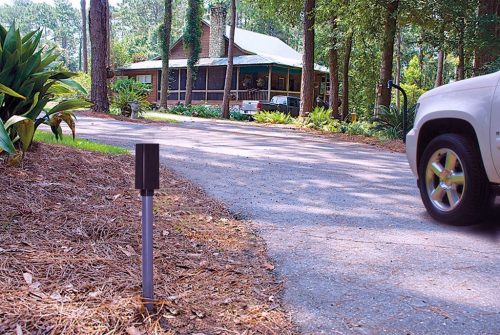
With security alarms and camera systems becoming more affordable every day, I want to share with you three options for driveway alarms. These devices are far too often overlooked, but the fact is they add another layer of protection to help keep your family safe by keeping criminals from ever making it to your home.
1. Chamberlain CWA2000 — The Chamberlain driveway alarm comes with a base receiver and one sensor, but allows you to add more sensors to the system if needed. It uses an infrared sensor to detects motion up to 30 feet away. The receiver has a half mile range, so this alarm is ideal if you have a long driveway. Another great thing about this alarm is that it’s wireless and battery-powered, so you don’t have to worry about running a power line to the end of your driveway. In addition, the infrared is designed to pick up vehicles, people, even large animals. It currently sells for about $50 on Amazon.
2. Mighty Mule Wireless Driveway Alarm — The Mighty Mule uses an electromagnetic sensor, which means it will only detect vehicles. It won’t alert you to people or animals entering your driveway. The system includes a sensor wand that is partially buried in the ground and can detect metal within 3–12 feet. The base receiver works up to 400 feet away from the sensor. Since this alarm only detects metal, it reduces the risk of false alarms. The Mighty Mule system sells for about $60 on Amazon. It comes with a 12-month warranty that includes technical support.
3. Guardline Wireless Driveway Alarm — The Guardline system comes with one sensor and a base unit, but you can add up to 16 sensors if you want to monitor more than one area or set up a perimeter around your home. The base system works up to a quarter mile from the sensors and has been tested in different environments including heavily wooded areas. The sensor detects vehicles, people and large animals. One of the best things about this system is that it features a 12-volt relay, which allows the user to add a wired external alarm to the system. Overall, this system comes with some of the best features available, which means it is a little pricier. It sells for $100 on Amazon.
The bottom line is any of these three systems would be a worthwhile addition to your home security plan. Any warning you can get when someone is approaching your home buys you valuable time to prepare and defend your family in a life-or-death situation.
I’m a firm believer in having multiple layers of protection around your home, and a driveway alarm is an aspect of security I highly recommend.
Weaponized Anthrax to Hit American Shores?
The Secret to Treating This Deadly Bacteria
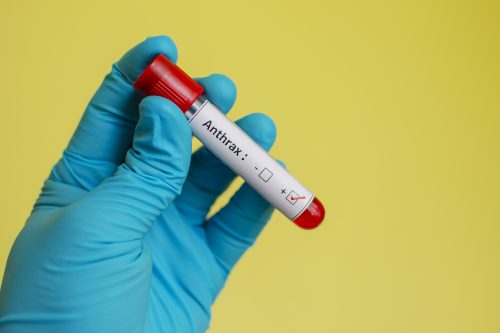
We don’t generally hear a lot about anthrax except in doomsday scenarios. However, anthrax recently re-entered our collective consciousness after a North Korean defector was found to have anthrax antibodies in his system — indicating he’d been immunized against it.
This has led many people to assume that North Korea has an active biological warfare program. In fact, some intelligence sources now say that the “Hermit Kingdom” has been conducting heat and pressure resistance tests on various strains of anthrax in order to load these virulent spores on ICBMs for weaponized delivery.
More Common Than You Think
Many people don’t realize that anthrax is actually fairly common in certain parts of the world. It often affects those who deal with livestock such as farmers and veterinarians. However, it is very rare here in North America.
“That makes anthrax more dangerous than the Ebola virus.”
Anthrax can be transmitted in four ways: through the skin, the lungs, the intestines or an injection. Symptoms can occur anywhere from one day to two months after exposure.
One reason this is such a scary and vicious disease is that the spores, which are inactive or hibernating forms of the bacteria, can survive in harsh environmental conditions. They can become active and infect people and animals literally hundreds of years after being buried.
Another reason anthrax is so worrisome is certain forms of the disease, when left untreated, have upward of an 80% mortality rate and are capable of killing you within a day or two — particularly if inhaled. That makes anthrax more dangerous than the Ebola virus.
Anthrax’s virulence (or lethality) is so great because of its own hardy protective defenses. Once inside a host, these defenses protect it from the host’s immune system. They also produce dangerous toxins that kill host cells and cause severe edema, or swelling. These properties of the anthrax bacterium often result in organ failure and death.
The Silver Lining
The “good” thing is that anthrax is very susceptible to antibiotics like penicillin, doxycycline, erythromycin and Cipro. If anthrax is diagnosed quickly, treatment can reduce its mortality to under 20%.
The last anthrax-related death in the United States was in 1976. A weaver inhaled spores while working with wool imported from Pakistan. The most recent anthrax infection in the U.S. occurred in 2009. The victim was infected after playing an African drum. Luckily, she survived.
Though there is an immunization available, it is not recommended except for those with an increased risk of possible exposure.
The best way to protect yourself is to make sure you have antibiotics on hand such as those mentioned above and educate yourself on the symptoms of the various forms of anthrax transmission.
Survival Food That Will Outlast Any Crisis
Imagine: A massive hurricane strikes your hometown. You and your family are forced to flee, grabbing your bug-out bags as you jump in your car.
You feel confident and prepared — you know you have enough food in each bag to last three days while you plan your next move.
Then you open one of your MREs (meals ready-to-eat) and inhale a rancid smell that clearly says the food has gone bad.
If you think all survival food is created equal, I can assure you it’s not.
So before you purchase a bunch of survival meals, consider these three factors:
1. Shelf life. Most survival food will only stay good for about three–five years. When you see claims that certain MREs will last for 25 years, I caution you to think twice about buying them. Instead, look for MREs that come with a time and temperature indicator, which will help you determine when the food goes bad. Food in pouches spoils the quickest, whereas food that comes in No. 10 cans will last longer.
2. Packaging. The most critical factor of keeping food fresh is keeping light and moisture out. These elements cause food to deteriorate more quickly. Before purchasing large quantities of MREs, here are two tests you can do to make sure they last. Take a flashlight and see if it shines through one side of the bag. If it does, you’ll be lucky if the food lasts three years. Next, if you can tear apart the packaging at the seams very easily, this is a sign that air is more likely to get in.
3. Nutrition. You may not be able to eat more than one MRE per day, so the ones you choose must have the necessary calories. Keep in mind, in a bug-out situation in which you are moving or walking a lot, you’ll need to take in about 25% more calories than you typically do. Also, make sure you choose an MRE that includes carbs, proteins and fats. It’s important to keep up your energy since you could be in survival mode for an extended time.
You May Be a Victim Without Even Knowing It

How Hackers Seize Control of Your Computer and Steps to Prevent It
Most people know the dangers of using public Wi-Fi, but it’s a risk people often take. Sometimes you have no choice — if you’re traveling and need to check your email, for example. However, if you don’t take the proper precautions, this opens you up to a whole host of threats.
One of the latest internet hacks is called cryptojacking. The most insidious part of this ploy is that most people aren’t aware they are victims. This is exactly what happened to Stensul CEO Noah Dinkin when he used his laptop at a Starbucks in Buenos Aires.
When Dinkin tried to connect to the public Wi-Fi network, he noticed there was a 10-second delay before his device connected to the internet. During this lag, the internet service provider (ISP) for this particular Starbucks was essentially hijacking customers’ laptops to “mine” cryptocurrencies — hence “cryptojacking.”
“You don’t even have to download or click on anything for a hacker to take advantage.”
According to Starbucks, “As soon as we were alerted of the situation in this specific store last week, we took swift action to ensure our internet provider resolved the issue and made the changes needed in order to ensure our customers could use Wi-Fi in our store safely.”
What is Cryptojacking?
Here’s a quick breakdown of how cryptojacking works. First, cryptocurrencies (such as bitcoin) aren’t created by a central bank like money issued by the government. Instead, they are generated or “mined” by computers solving complex equations.
Cryptojacking is when someone runs a mining code on your machine that uses your device’s computing power to secretly mine cryptocurrencies. The thing is you don’t even have to download or click on anything for a hacker to take advantage. In-browser cryptojacking uses JavaScript, which runs on just about every website. You may never know your computer was used without your consent.
In addition, hackers can “borrow” your computer for a short period of time — like 10 seconds, which is exactly what they were doing at the Starbucks Dinkin visited.
Cryptojacking basically takes all your computer’s power for its task, so your computer might run more slowly. But this typically lasts only a few seconds, so many victims never realize what’s occurring. That being said, the surest sign your computer is being used for cryptojacking is your computer usage will skyrocket.
Permission Not Granted
One of the best things you can do to protect yourself is install a browser extension that blocks miner codes from running. For example, if you use Chrome as your web browser, you can install an extension called No Coin to prevent cryptojacking. There are similar browser extensions for Safari and Firefox.
In addition to these extensions, you might want to disable JavaScript in your web browser. Ad-blocking software may also help keep you from becoming a victim.
If your computer slows down all of a sudden or starts behaving abnormally, check your CPU usage. On a Mac the resource monitor is under the “Activity Monitor,” and on Windows you’ll find it in the “Task Manager.”
If you think your computer is infected with mining code, immediately clear your browser cache and scan your device with antivirus software.
Unfortunately, many websites will probably start looking at this as a way to reduce their advertising costs while making more money from internet users. In other words, companies you generally trust may turn to this method of making money as a way to profit off people simply visiting their websites.
All you can do is take every possible precaution to thwart cryptojackers while you still can.
How Are You Going to Spend Your $3,000?


Prep for a Financial Crisis by Putting Your Tax Refund to Work
There’s no way to sugarcoat it. I hate doing my tax returns.
Right now I’m sitting at my kitchen table, barely halfway through my returns, and I already want to give up.
About half of these forms might as well be written in hieroglyphics. And the other half is just overcomplicated bureaucratic fluff.
But if you’re one of the lucky ones who snags a refund… it’ll all be worth it.
Actually, I say “lucky ones,” but the truth is most people who file their returns get a refund. According to data from the IRS, about eight out of 10 people who file land themselves a refund check.
“The average tax return is just under $3,000. That’s enough to book a nice vacation… or protect yourself from financial crisis.”
And it’s no small chunk of change, either. The average tax return is just under $3,000. That’s enough to book a nice vacation… or protect yourself from financial crisis.
Now, hear me out.
I know it’s tempting to blow your refund on something big. After all, it’s not very often $3,000 just falls into your lap.
But here’s a better plan…
You can use that money to prepare your finances for disaster and crisis (and take some of the financial stress off your shoulders while you’re at it).
Supercharge Your Emergency Fund
An emergency fund is your last line of a defense in a financial crisis. Put simply, it’s a stash of money to replace your income if you lose it.
You can use it to pay the bills, feed your family and give yourself time to secure a new income — without worrying about losing the house.
The fact is if you don’t have one, you’re always just one disaster or unexpected expense away from financial ruin.
I recommend storing an emergency fund of at least three–six months’ income.
If you don’t have a break-in-case-of-emergency nest egg, $3,000 is the perfect amount to kick-start one. If you already have an emergency fund, why not use your refund to supercharge it?
You’ll be able to rest easier knowing that you’re fully protected against even an extended financial crisis.
Pay off High-interest Debt
Instead of splurging on an overpriced vacation, use your $3,000 to cut down on your debt.
Start by paying off your high-interest debts like personal loans or credit cards before moving on to low-interest debt.
This will save you a fortune in the long run and drastically increase your monthly disposable income.
Buy Physical Silver and Gold
How should you invest your refund when the next big financial crisis could be around the corner?
A store of physical silver and gold can’t be wiped out by a computer error…
It will increase in value as the price of silver and gold rises…
And in bullion form, it’s perfect for trading in a disaster scenario — when your cash and credit in the bank might be unavailable.
It’s a good idea to keep 20–50 ounces of pure silver on hand in the form of American Silver Eagles from the U.S. Mint.
Twenty ounces will cost about $400 at today’s prices (including commission from a reputable dealer) while a one-ounce gold coin will cost around $1,400.
Keep in mind these three options when you get your refund this tax season and see if you can’t put it to good use. The next big financial crisis could be just around the corner… and it pays to be prepared.


