



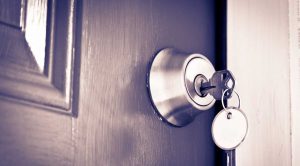
 Last fall, Natasha W. was out shopping with her two kids when brazen thieves broke into her home. “You can see where they kicked it, and there’s hand prints,” said Natasha when showing media where thieves broke into her home. The unique part about this break-in was the way they did it. Obviously, we know thieves commonly target front doors to see if they are unlocked. However, this particular criminal completely removed the deadbolt from the front door. Then, they kicked the door open busting the doorframe. Luckily, by the time Natasha and her children returned home, the thieves were long gone and no one was hurt.Now, it’s not surprising that 33% of break-ins occur through the front door because criminals know these doors are weak. While you may keep your doors locked at all times, the fact remains that the construction company who built your home likely used cheap door locks and screws and was more concerned about staying on budget than making sure the door could withstand multiple kicks. Considering how easy it is for a criminal to kick down a door, I want to share with you an easy upgrade that you can do yourself, without spending a lot of money.
Put simply, reinforce the strike plate. The strike plate or strike box is the little metal plate that you screw into your doorframe. This is where the lock actually goes into the doorframe. The problem is, these strike plates typically come with the lock that was installed. So, if you have a cheap lock, you have a cheap strike plate. For this reason, I highly recommend installing a new strike plate this weekend.
As for which strike plate to buy, I like the Schlage brand, however, the most important part is how you install it. I recommend installing a double strike plate. In short, these plates will have two openings, one for your door handle and one for your deadbolt lock. The reason you want to use a double plate is because if a criminal tries to kick the door open, the impact will be distributed through the entire plate and it won’t be as easy to get into your house so they might give up and go elsewhere.
 Here’s the proper way to install your new strike plate: Most plates are installed with 1/2 inch or 3/4 inch screws. But, as Mike Gatlin of Advantage Lock & Key says, “All a screw does is make a track for a crack to start in that wood and it just breaks out from there.” Essentially, since these strike plates are installed with such short screws they can easily be busted with one swift kick. This is why I recommend installing strike plates with three-inch screws. You will be adding two more inches of security into a 2 X 4 doorframe, which will make it a lot stronger and sturdier. After installing three-inch screws, if someone tried to kick in your door, the door would most likely give before the strike plate does.
The reality is, a $10 strike plate and a couple dollars worth of three-inch screws will make your door more difficult to kick in. Plus, thieves are always looking for easy entrances, and if they kick your door multiple times and it’s not budging, they will most likely move on because they don’t want to draw attention or make a lot of noise. Plus, the stronger your door, the more time you will have to grab your home defense weapon and prepare for an intruder. A few dollars and a half hour of your time will go a long way in keeping your family safe, so next time you are at the hardware store grab a new strike plate and screws.

One day, while a few of us were hanging out in the “Training Room,” the secure phone rang. It was the Executive Deputy Director’s assistant. He told us the Asst. Deputy Director of counterespionage at the FBI asked us (Clandestine Ops) to send three operatives to meet with a KGB defector. This defector was offering to sell the United States government advanced KGB espionage gear and weapons that he had commandeered in Moscow and then snuck into the US.The foreign agent refused to meet with any FBI Special Agents and insisted on CIA operatives – his counterparts. Three of us hopped on the chance. It was the first time any of us had an assignment for a clandestine rendezvous with a KGB agent on U.S. soil. Our mission was to meet with him and see if he was legitimate. We were to collectively validate his stated credentials by asking him extremely cryptic questions only he could answer. Our plan was to start by the three of us fanning out in a gentle arc about 10 feet in front of him. That would give us flanking moves (if things went tactical), good line of sight (including peripheral vision) and cover for escape routes since we had no idea what we were walking into.
The Bureau provided us with the pre-arranged instructions, bona fides for exchanges, signaling protocols and the location of the initial meeting site. The defector would be parked in a small open field just off of a remote road in Manassas, VA. On the day of the mission, we met him there, confirmed with challenges and responses and agreed to follow him to his covert site.
He was what you would call a very tough, robust, hard-looking man. None of us would have wanted to go solo in hand-to-hand combat skills with this behemoth. Next thing we knew, he jumped in his BMW and launched it at rocket speeds through the streets of Manassas and into greater Prince William County. We surmised by his driving pattern that he was using a stair-stepping method of Surveillance Detection and making his way towards D.C. It was not long before we hit the on-ramp to I-495, the interstate that loops D.C. From there, he continued to weave, pass on the shoulder and cut-off other drivers. Several times while we were following him (actually, more like giving chase) around the beltway and in DC suburbs, we clocked him at 110 MPH.
 He was using the “Moscow” Surveillance Detection Route (SDR) method. He wanted to confirm that we had not brought any other teams with us. He used his reckless, radical driving to expose any vehicles that might have been shadowing us and/or him. As we were racing down the beltway at breakneck speeds (We always have the contact for our FBI liaison in the event we encounter domestic law enforcement), we were discussing among ourselves the potential scenarios once we arrived on his turf. Of course, first in our minds was security. There was the very real possibility that he lured us out for a snatch and grab of three CIA Clandestine Operatives, but if it was a trap, it was one that we would have to deal with after we arrived.
We also considered it might be a plot to get revenge on any one or all of us for one or more of our successful activities in Moscow. Recently, we concluded an operation that penetrated their state security and severely weakened their national defense grid. It was also possible that the goal of this senior KGB operative was to tag us and/or our vehicle and track us back to one of our covert operations facilities.
Our risk assessments are no different than the ones you make on a day-to-day basis. Whether you have to make decisions for home, family, or work, the same formula applies. First, we identify as many of the potential risks that we can, then we compare those one at a time to our likely rewards. Once we have that calculus, we can decide in advance what risks we are willing to take in order to achieve the potential benefits. And in this case, we knew that getting our hands on advanced Soviet gear was worth most any risk. During this process, we also determine which risks we can mitigate through planning, special skills, devices/tools and preparations and which risks are beyond our control or influence. These kinds of pre-fabricated assessments help us to avoid making the really big mistakes in life – or at least not making them as often as we would otherwise.
The KGB defector led us to an office park. He parked in front of a little window-front office. The title on the door was “Commercial Janitorial Supplies”. As we entered the office, there was a rather plain looking receptionist at the front desk. He walked up to her and uttered some indiscernible phrases. She responded in clear Russian, “Da.”
He then walked to the back left of her desk and opened the door of a coat closet. The receptionist asked us to sign in (we all have fully backstopped domestic aliases) and we saw her reach under her desk just as the KGB operative opened the door.
We heard the faint sound of buzzing. It turned out to be an electronic security device protecting the small door in the back of the closet – a small door that was concealed by a shoe/boot rack only about 48” tall and about the same width. The hulking Russian said “one of you must go through that door.” I was expecting our team leader to say something like “where one of us goes, all of us goes”. However, next thing I know, he points to me and says “Take Him”.
I followed “Vladimir” as he got on his hands and knees and crawled into the tiny hole. As I peered into the abyss, I could see nothing but utter pitch-black darkness inside of that tiny opening. He called for me to follow him and gestured with one hand that protruded from the void. My heart began pounding as I ran through some of the possible looming scenarios – He could drag me out through a secret back access, he could strangle me as I crawled through, he could take me hostage and demand the rest of the team to enter and my mind was working overtime considering other potential extremely wicked outcomes.
As my knees crossed the threshold and I began to stand up, the lights came on. In front of me, there were long conference tables stacked with exquisite gear, weapons, devices, special clothing and armor. After I did an initial walk-through and assessment, I invited the rest of the team inside for a gander. We were there well over two hours while he demonstrated the functionality and special applications of the most awe-inspiring devices. While there was lots of spectacular gear, I can only describe two pieces that were/are not classified in their design and use.
One was a very powerful crossbow made of composite materials with a laser sighting and targeting apparatus. The entire weapon system folded up into an easy to carry item that is common for people to have with them. The other item was a specially designed “suit” of protective materials and radical cushioning/padding. It was easy to get on and off very quickly and would enable the wearer to jump from a second story window – or equivalent height – and land safely on hard ground.
When he told me about its protective capacities, I showed and voiced great doubt. Then he put it on and jumped off one of the tables and landed squarely on his knees and elbows. Remember, this guy was about 6’5’’ and weighed in the area of 280 lbs. It was truly stunning. Our team leader told him that we were certain that we could arrive at an agreement to purchase most, if not all, of his contraband. He smiled and we became work-buddies.
All of the gear went to the R&D teams at the Agency. They wanted to reverse engineer the pieces and ensure there were no pests integrated into their design.
So, was this truly worth the risk? Yes, to get our hands on some of the best tools of our trade from the enemy. Like a car mechanic, electrician, software developer, dentist, or farmer, if you want success, only use the best. After all, the Agency gladly traded the fate of three spooks for the chance of being the best prepared and most effective intelligence apparatus. In other words, always seek out the best and don’t rely on crappy materials to save you or your families lives. Avoid cheap gear and only “buy once and buy right.”

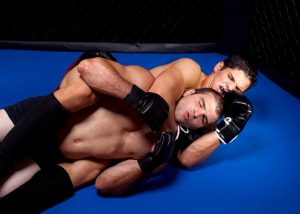 In the last 20 years, the “no rules” and “no holds barred” tournaments like the Ultimate Fighting Championship, have elevated ground fighting and grappling arts into the limelight. You can now find Jiu Jitsu and other ground fighting art-based schools in most cities around the United States. These ground-based schools have added to not only the martial arts world, but self-defense as a whole by widening people’s techniques and defense strategies. The problem is that practitioners can easily put blinders on and believe their art is “the best” and that all fights should go to the ground.However, in reality, people who only focus on the ground can find themselves in trouble out in the street and in real life situations. Environmental elements such as asphalt, ice or debris can make any Jiu Jitsu black belt think twice about going down to the ground. But, even more so, the reality of weapons and multiple attackers can make grappling the ultimate wrong defensive choice. Another problem is that learning dozens of joint locks, chokes and submissions can take years of lessons, which most people don’t have time for. In these instances, one can short cut these moves, as effective as they are, and escape them with a little-known secret of Kino Mutai.
Kino Mutai is a Filipino Art using three techniques that can help you out of an attack. Although there is much more to the art than these three moves, these alone can spoil most attackers who try and take you to the ground. One of these techniques includes biting, using the incisors or side teeth, to bite soft tissue areas such as the neck and even inside of an opponent’s thigh. These areas cause both rapid blood loss and immense pain. Obviously, we don’t want someone else’s blood in our mouth if we can avoid it, but if we are defending against a serious life or death attack it’s worth it to make it home to your family.
Eye gouging is the next of the three tools, where a person uses their thumbs to gouge into the attacker’s eye sockets. There are few targets that can cause attackers to abandon their onslaught as much as when a defender counter-attacks with going after their eyes.
Finally, pinching painful targets such as the back of the arm and groin, can motivate an attacker who takes you down to the ground to get off and get away quickly. Use several fingers to pinch these areas hard to increase the pain and reaction.
Furthermore, another important key to using these moves is that we make them uninterrupted. For example, if we bite someone the moment after eye gouging them, the psychological effects are terrifying, while once again increasing damage by being able to continue the technique with impunity. Positioning your body properly to bite a target without the opponent being able to stop it can turn the tables on the attacker quickly. Using these tips can outsmart even the most skilled ground fighter at their own game. Fighting smarter not harder is the name of the game and Kino Mutai can give you the tricks to do so.

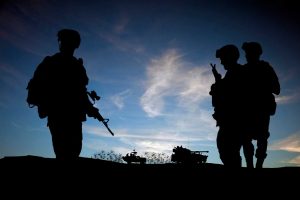 I was scared. We all were, though no one would show it or verbalize it. Few of us had ever been in actual combat before. Our Special Forces attached team was flying on a Talon EC-130 into post-9/11 Afghanistan just months after our initial invasion. Our mission was to rout the Taliban and to deny Al-Qaeda sanctuary and freedom of movement within the borders of Afghanistan and beyond.We were all locked and loaded, each carrying an M4 Colt carbine and an M9 Beretta with a full battle load of ammo, forty pounds of body armor and a seventy-pound ruck sack. I remember wondering whether or not I’d just bought a one-way ticket or if I’d make it home in one piece. I wondered if I’d ever see my wife and two-year-old daughter again. After viewing decapitation videos and the video of the horrendous torture and slaughter of Navy SEAL Neil Roberts, who fell out of the back of the MH47 Chinook earlier in the war, we were advised to save one bullet for ourselves should we fall into enemy hands.
We bumped around the country at 10 miles an hour in our dust filled Toyota Tacoma pickup trucks wearing civilian clothes, hiking boots, baseball caps, and full beards – somehow thinking no one would know who we were. Afghanistan was the most heavily mined country in the world with some 20 million land mines scattered throughout the countryside by Russian and American forces 20 years before. It wasn’t just the land mines we were wary of, but the remotely detonated booby-traps set up to kill us and to set us up for an all-out ambush. These booby traps were usually well placed around tight curves and sheer rock mountain walls on one side so the majority of our team would be in the “kill zone” with little way of escape.
As we traveled, we saw dozens of burned out Russian armored personnel carriers, tanks, helicopters and planes. All had been scavenged for any part that was considered usable. We discovered weapon stockpiles – mostly Chinese rifles and mortars. We discovered mass graves with skulls, femurs, humeri. We found fields laden with opium poppies and hashish. Much of this served to remind me of the frailties of human life. Psalm 23 kept running through my head: “Yea though I walk through the valley of the shadow of death, I will fear no evil. Thy rod and thy staff, they comfort me.” The Lord’s protection of King David as he engaged in hand-to-hand combat many times throughout his life encouraged me and gave me hope and confidence.
I was there for a purpose. I was the FOB 201 Special Forces Flight Surgeon and Diving Medical Officer with the US Army’s 1st Battalion 20th Special Forces Group (Airborne). I was responsible for all things medical in the two-thirds of Afghanistan that our Battalion controlled.
 My responsibilities included advising our commander with regard to medical issues, training our Special Forces Medics (whom I trust more than I trust most medical or surgical residents), setting up medical supply delivery throughout our area of operations, coordinating and providing medical care to our forces in safe houses throughout the country, and setting up, coordinating, and overseeing Medevac routes and logistics – especially for those places north of the Hindu Kush as winter rolled in (helicopters just couldn’t make it through the treacherous mountain passes in bad weather). We also organized and ran medical services for the indigenous population.
One of our most successful indigenous clinics was just outside of Asadabad, just miles from the Pakistani border. We treated otitis, colitis, pneumonia, chronic pain, leprosy, and shrapnel injuries. This was the same place we mobilized from for our frequent forays into the surrounding areas with the CIA and Delta. We quickly discovered that our “allies” were anything but. Once we were held at gunpoint until a $50,000 ransom was paid to the Pakistani government. Along the border, Pakistani forces were told to engage us and even went to arms on our forces – until a couple of Army A10s moved in with a low pass over the heads of our “friends” causing them to stand down.
Some ask why I gave up my job at the University of Tennessee and left my family to put myself in harm’s way. As I sat in my living room watching events unfold on the morning of September 11, 2001, I realized we were at war. I realized life would never be the same again. I realized I must act to protect what I believe in and must sacrifice if my children are to grow up in a world free from fear. I experienced every emotion that morning from shock to sadness, from anger to bewilderment. We were at war. It was a religious war and it was a war of values.
 In the weeks before we deployed, I took my entire medical section to New York City where I had spent a couple of years of my life. I gave them each a New York Metro Subway token to place on the chain with their dog tags. As we viewed the site where the World Trade Centers once stood, we cried – soldiers standing there in tears as we imagined people jumping from 80 stories above. We stood incomprehensibly envisioning planes flying into these symbols of freedom. We stood, steeling our determination and resolve to find those responsible and meet justice to them.
The line from Braveheart rang true, “And dying in your beds many years from now, would you be willing to trade all the days from this day to that for one chance, just one chance to come back here and tell our enemies that they may take our lives, but they’ll never take our freedom”. Would I do it again? Certainly. Do people truly understand and appreciate what the average soldier sacrifices? Hardly. I do wish I could tell America that freedom is bought with a precious price. Appreciate it. Stop whining and complaining. Stop bickering. Unite. Learn humility. Give thanks. Get along. Love one another. Aim high. And remember, “Every man dies – but not every man truly lives”.

With stocks falling on a regular basis, investors are seeking shelter. Mad Money’s Jim Cramer, recently predicted a gold bull market ahead. He said the current market reminded him of 2007 when the Federal Reserve was not listening to the reality of the world around them, but kept raising rates. He’s not alone in his concerns. Craig Johnson, chief market technician at Piper Jaffray, said on CNBC TV that, “Cramer’s spot on correct,” adding that gold may be “putting in a bottom here and it looks like we’re going to see this maybe 9 to 10 percent higher to get back to the old highs.” He’s referring to gold’s highest point in recent years, which refers to gold prices over $1,400 in August of 2016.
Recently, gold has made some spectacular moves. On Christmas Eve Day, gold rose another $12 to $1,270, while the Dow careened down another 650 points in what began to resemble a free-fall for the fourth consecutive day. This was followed by a recalcitrant Federal Reserve statement, a partial federal government shutdown and the resignation of the Secretary of Defense over the President’s announcement of a rapid removal of troops in Syria. Many Americans spent Christmas in a nervous state.
Then, the day after Christmas, stocks recovered by having the biggest one-day Dow gain in history. That same day, gold hit $1,278 and silver rose above $15, reaching its highest level since August. Meanwhile, Bitcoin, which peaked at over $19,700 a year ago, now trades at around $3,600 – down over 80%.
Back on November 30, when gold traded at $1,217, Barron’s published a debate on gold between James Grant, editor of Grant’s Interest Rate Observer and gold bear, Daniel Weiner, editor of The Independent Adviser for Vanguard Investors. Weiner used the standard debating technique of comparing gold’s price since its “bubble peak” of $850 in January 1980 as “proof” that gold is not an inflation hedge. But, a choice of almost any other long-term starting date in history shows gold beating inflation, so a choice of this peak month in 1980 reflects an easily-spotted anti-gold bias.
Now, here is Jim Grant’s succinct list of positives: Gold is an investment in disorder, not a hedge against inflation. Gold is scarce, malleable, ductile, beautiful, indestructible. Gold is a monetary asset, not a credit instrument. It is cash, not a promise to pay. It is final payment itself. Gold competes with currency and the promises to pay currency. Gold, which has probably never traded at zero – not in a Millennia – is a store of value.
Gold explains itself: One look tells you it’s valuable. You don’t need a computer server, electrical outlet or instruction manual. Gold is out of favor. While gold yields nothing, it nonetheless out-yields $7 trillion of notes and bonds worldwide that (a decade after Lehman) still yield less than nothing. Gold is mute: You don’t have to listen to the earnings call. Gold’s price is the reciprocal of the world’s faith in central banks.
Grant concludes: “If you approve of a decade-long suppression of market interest rates and of trillion-dollar budget deficits in a time of supposed bounding prosperity, by all means, don’t exchange your paper money (or digital representations of paper money) for gold. But if you harbor the well-founded suspicion that something’s not quite right in this over-leveraged world, do yourself a favor. Lay in some real money.” In the five weeks after that debate was published, gold rose $71 (+5.8%) while the S&P 500 fell 8.3%.
For the last several months, Mike Fuljenz and I have been advising investors to take some profits (not all, of course) from their stock portfolios to invest in gold and rare coins, since stocks and precious metals markets often move in opposite directions. This stock/gold transition period, which we predicted last August, began to happen in October and the pace began accelerating dramatically in December. Don’t wait for the dust to settle before making a move into gold and silver as I believe we are in for quite a financial dust up in the coming months and years.
[Publisher’s Note: For questions about buying gold and silver coins you can contact Forest Hamilton directly at foresthamilton@universalcoin.com or call 800-822-4653. Please know, if you purchase any coins from Forest, we don’t receive any compensation from him. We simply know he’s one of the good guys in the business that can be trusted.]


