



We’ve all heard the saying, “If it seems too good to be true, it probably is.” There’s definitely something to that advice. After graduating from college, Jessica D. moved to Salt Lake City, UT to start a new job at a law firm. Upon arriving, Jessica stayed with family members while she searched for an apartment to rent near her new job. Jessica used a real estate website to search for current rentals that were available in her neighborhood. She even drove by many of the rental listings to check the area out to see if it was appealing to her.
Eventually, Jessica found the perfect place to rent, so she downloaded a rental application that the landlord had posted on a legitimate real estate website. She completed the application by providing her Social Security number, driver’s license, phone number, email, current address, yearly income and pretty much every piece of personal information you can imagine. Then she scanned the document and e-mailed it directly to the landlord for review.
As weeks passed, Jessica never heard back from the landlord, but she noticed the rental was still listed as available online. Finally, Jessica went to the place she was hoping to rent and knocked on the door. She was shocked to learn from the person who answered that the place had been rented for years and wasn’t currently available. Sadly, she had been duped by an online scammer who now had all of her personal information.
Before long, Jessica began getting strange calls from debt collectors. She decided to check her credit score where she learned that this scammer had used her personal information to open fraudulent accounts, effectively destroying her credit. Unfortunately, these types of scams are all too common and a new one seems to pop up almost daily. Since so many people are affected these days, I want to share with you some easy tips for repairing your credit score if you’ve been hacked and someone has stolen your identity.
 Piggyback another person. One of the easiest ways to improve your credit score is to piggyback on a person with a good credit score. Ask a (very) trusted friend or family member if they can make you an official joint-holder of their credit card. Of course, they will have to trust that you won’t use it, but they don’t even have to give you a physical card. However, it is a simple process to add someone to a card and it’s a simple way to improve your credit score.
Buy a tradeline. A credit report tradeline is simply an industry term to describe a credit account. If you have credit accounts, you therefore have tradelines on your report and they may come in the form of lines of credit, car loans, mortgages and credit cards. Buying a trade line means you are literally buying credit from a person who has very good credit and is putting their credit up for sale. Currently, one-third of Americans use another person’s credit score to improve their own. When it comes to buying a tradeline, you can check out a website called BoostMyScore.net. They are one of the leaders in buying tradelines. Of course, do your own due diligence and consult an attorney if needed.
File disputes one at a time. If you’ve been the victim of identity theft, you may have multiple disputes to file on your credit report. With that being said, if you’re disputing several items on your credit report, only put one dispute in each letter and space out your disputes. The creditor could become suspicious of too many disputes and consider them fraudulent. In addition, make sure you provide them with any documentation such as a police report showing how your identity was stolen.
 There is no question that repairing your credit is a pain in the neck. However, you have no choice if someone has stolen your identity and fraudulently opened credit accounts. One of the most important things you can do to prevent yourself from having to deal with this type of credit mess is to place a credit freeze on your report with the three main credit bureaus. I’ve personally had a credit freeze for over 15 years now and you should too.
Welcome EJ Snyder!
By Jason Hanson
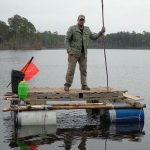 I’m excited to announce that EJ Snyder will be joining us as a contributor to Spy & Survival Briefing. No doubt, his vast amount of experience will prove incredibly valuable to you as a reader. You probably recognize EJ from the Discovery Channel television shows Naked and Afraid and Dual Survivor. EJ is a decorated Army Combat Veteran with 25 years of military service under his belt, serving Ranger positions in Infantry and Airborne units. He earned two Bronze Star Medals, the Legion of Merit, the Order of St. Maurice (Centurion) and over 40 other medals and decorations while serving our country. EJ is an expert in tracking, trapping, building shelter and equipment, primitive weapons, navigation, security, self-reliance and self-defense. Like I said, I’m thrilled to have EJ with us and if there’s something you’d like him to write about, you can shoot an email to jason@spybriefing.com with your request. He can also be reached through his personal website at www.ejsnyder.com.

80% of people either have back pain currently, have had back pain in the past or will have back pain at some point in their lives. It probably comes as no surprise that low back pain is now the leading cause of work-related disability and is a major contributor to missed time off work. In fact, 15-25% of adults will experience back pain in any given year. Low back pain is now ranked third behind cardiovascular disease and COPD as the most debilitating conditions we deal with.
Though men and women experience back pain at similar rates or prevalence, there tend to be varying gender-related causes. While back pain in women may be related to weight, back pain in men can be more closely correlated to height. In other words, the heavier a woman is, and the taller a man is, the more likely they are to develop back pain.
Despite the correlations above, the prevalence of back pain increases with age and occurs primarily because of repetitive lifting trauma or because of an acute injury due to rapid movement or sudden deceleration like a fall or an accident. We also know that our risk of developing back pain increases with poor general overall health, smoking, a sedentary lifestyle or a lack of effective sleep and exercise. Those of us who’ve had back pain know that it can range anywhere from a dull annoying ache to a completely debilitating, sharp stabbing pain that takes our breath away and leaves us nearly unable to move.
As a quick anatomy review, the neck is made up of 7 cervical vertebra, while the back has 12 thoracic, 5 lumbar and 4 fused sacral vertebra. There are 3 to 5 bones in the coccyx. The vertebra are separated by shock absorbing gel-filled discs. Spinal nerves exit the spinal cord and come out between the vertebra. The spine has three gentle curves, however, when these curves are pronounced, they may lead to increased risks of dysfunction including back pain.
Back pain is usually acute or short-lived and only lasts a few days to a couple of weeks. If it progresses beyond this to as long as 3 months, we call it sub-acute back pain. If back pain persists beyond 3 months, which approximately 20% of back pain does, we refer to it as chronic or long-lasting back pain.
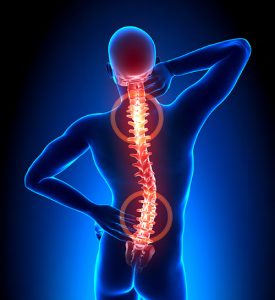 Since the vast majority of back pain is acute, musculoskeletal and non-traumatic, imaging (X-rays, CT, MRI) is usually not needed. Usually a good history and examination are sufficient, along with anti-inflammatories, physical therapy-type exercises and occasional muscle relaxants. Narcotics or opioids are rarely ever needed or recommended in these situations.
If the pain is from a nerve being pinched, steroids may also help. However, if you have fallen or had an accident, X-rays will be needed to make sure there are no fractures or vertebral slippages. For certain historical complaints, physical exam findings or sub-acute to chronic symptom length, further imaging, such as MRI, may be warranted.
Sometimes, herniated discs, pinched nerves, arthritic changes and spinal stenosis can cause significant and longer lasting pain. In these instances, narcotics may be helpful, but the core of medical therapy should still be anti-inflammatories. In the event you need surgery, narcotics may be used but should ideally be limited to 3 to 5 days. The longer one uses narcotics, the less effective they become and one can get addicted to them in as little as a few weeks.
The best way to prevent back pain is to maintain a healthy back, stop smoking, exercise, squat instead of bending over, maintain flexibility, eat healthy and get sufficient sleep. A recommendation I often make includes buying an inversion table like Teeter Hang-Ups and learning to decompress your spine by hanging upside down for 10 minutes or so a day. Another is to find an OsteoStrong near you and spend 10 minutes there once a week. The results are amazing. I’ll leave it to them to explain the process.

There are lots of training programs in the Intelligence Community. Most of them will forever remain concealed from anyone and everyone who does not have the proper clearance level and a demonstrable need to know. Even the title of many of these courses are classified. However, there are also lots of training module titles that have found their way into public discourse.
If you are familiar with some of the operational elements in America’s international espionage units, you may have read or heard such titles as “Flaps and Seal”, “Locks and Picks”, “SDR’s”, “Cocktail Party”, “SOTC (Special Operations Training Course)”, “MOTC (Military Operations Training Course)”, “Disguises”, etc.
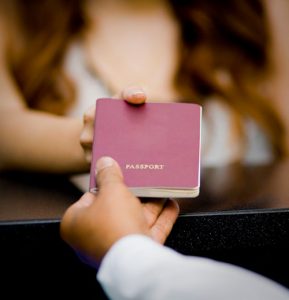 One of the training courses that I attended was “Border Crossings”. Border Crossings refers to the act of entering or exiting a country’s port of entry – such as landing at the airport, docking at a port, or driving through the gated entry into a country. Every nation in the world has some form of border control mechanisms including armed agents empowered and authorized to detain, arrest, or even employ deadly force in the event an individual is presumed to present a potential threat.
Fundamentally, the “Border Crossings” training acclimates clandestine operations officers with the risks, hazards, processes and tradecraft involved in crossing into or out of foreign countries. As you can imagine, a spy’s encounters with foreign officers, soldiers, or agents while on their soil is fraught with deadly personal jeopardies and grave threats to US national security.
Right now, I want to address two elements that are common to international travelers who might find themselves in the (temporary) custody of foreign border agents. Those of us with passports filled with stamps from around the world have most likely encountered hostile, aggressive, abusive, petty, jealous, resentful, antagonistic and most often, idiot border agents. Sometimes those encounters result in what we endearingly refer to as a “Second”, as in second interview at the border.
This is where, for whatever reason, the initial or primary border agent has deemed that someone is in need of a more thorough interview (often, more likely, a shakedown). Perhaps the individual behaves in a way that alerts the agent. Perhaps the traveler’s clothing, bags or appearance strike the agent as suspicious. Maybe the traveler’s ethnicity, country of origin, religion, politics, skin color, gender, or another personal trait troubles the agent. In foreign countries, there are no “Civil Rights” or prohibitions against profiling and almost all forms of discrimination are acceptable.
This is when the individual is pulled out of the normal progression through customs and is delivered to a secure room where they will await a more senior government border agent. This has happened to me more than once while I was operating as a spy for the US government. I will tell you two of the methods that I have used to get home safely.
On one occasion, it was pretty obvious to me that it was a shakedown. It was a Latin American nation and the initial inspector made a comment about my “really nice American” watch. Which, by the way, is a very good idea to wear when crossing borders. It serves as bait and an easy way to “pay the toll” when you are perceived to be a “wealthy and privileged” American. If they are going to try and shake you down anyway, you may as well have something that you are ready to trade for your freedom so that they do not make you go through all of your bags in search of their commission.
I was ready to show some moderate protestations before surrendering my watch as my toll payment. However, the senior border patrol agent that met me in the secure interview room had already pilfered my checked baggage and found something he preferred over my watch.
 He produced my Leatherman multi-tool and gabbed on about how interesting it was and how he might need to keep me there while he looked into what it is used for. As soon as I offered to surrender it to him rather than be delayed and miss my flight, he quickly agreed it was an acceptable solution to his concerns and he immediately released me. This is a simple and fairly innocuous and defensible approach employing subtle bribery.
The more powerful technique is only achievable through training. The best way to describe it is “intentional domination through applying mental fortitude and demonstrating iron will.” This method requires that you remain calm, cool, collected and ultra-confident. It involves minimal engagement with the interrogator and the clear projection of an absolute absence of intimidation.
You do not allow the interrogator to cause you to respond. You have to practice concealing and suppressing normally involuntary reactions. You remain stoic, serious and completely unaffected by his/her threats, accusations, or displays of power or authority. We call this apparent sincerity. A self-induced condition where you successfully imitate all of the language, behavior, and reactions of a sincerely innocent person.
Learning to influence and dominate your two-legged threats is one of the most powerful and reliable skills an individual can develop in their arsenal of non-lethal weapons. As spies, we learn and develop the ability and power to cause others to conform to our will by virtue of our psychological skills and mental tenacity. And you can d
 o the same. Iron will and mental fortitude are absolutely independent of body size, age, gender, race, physical prowess, education, social position, economic status or any other artificial factors. It is the very root of a person’s power to influence and control their environment and their interpersonal interactions.
Developing the skills and attributes of iron will does not change your personality any more than learning a foreign language will cause you to stop speaking English. This ability will give you the power to manage volatile situations and affect outcomes to your advantage. It will be of immense benefit to you (and your family and friends) as you develop and practice your new, powerful crafts.
Here are some of the primary elements in developing and perfecting your iron will and mental fortitude: Learn that confrontation is not inherently bad. Understand that perception is reality. Develop at least the appearance of supreme self-confidence. Practice speaking in precise and direct phrases – never ask questions or make requests. Commands are mightier than requests or threats. Explore how to use voice tones to convey your authority and power. Rehearse employing sophisticated and proven body language to include stance, eye focus, hand positioning, posture and facial expressions. Recognize why and how to avoid issuing threats – threats give people a choice of behaviors. Know that the pen is mightier than the sword and that an unarmed individual can dominate an armed individual.
Learn to develop and employ your iron will and mental fortitude to the level of highly powerful effectiveness. It might be the only weapon you have to protect yourself, your family and or your friends. If nothing else, it might save you from having to give away your Rolex (or Timex) the next time you travel abroad.

For those of you unable to attend the National Rifle Association’s Annual Meetings in Indianapolis this year, I am truly sorry. I will do my best to let you experience it through my eyes over the next two installments of this letter.
 This was my thirteenth straight annual convention and it seems to get better every single year. From the 15+ acres of bountiful and beautiful guns on the exhibit hall floor, to the thousands of people that attend events like the NRA’s National Prayer Breakfast and the Freedom First Financial Seminar, the one theme that weaves its way through the very fabric of the show is a deep and unabashed love of America. There is more red, white, and blue on and around the attendees than a 4th of July picnic in the deep south.
In attendance were Presidents, Vice Presidents, Presidential hopefuls, Governors, Senators, Mayors, 3 and 4 star Generals, country music stars, Hollywood celebrities and as many as 100,000 salt of the earth Americans sprinkled throughout. While I have had the pleasure over the years of spending time with the likes of Donald Trump, Jr, Chuck Norris, Tom Selleck, Ted Nugent, Wayne LaPierre, Allen West, and Ollie North, my greatest joy every year is seeing moments of America being its absolute best.
Watching people of all races, different generations, varying backgrounds, and religions come together to protect our sovereign rights is enough to restore my faith in humanity and our future as a country. I remember the first dinner and auction that I attended where a grandpa holding his young grandson with a matching cowboy hat made room for a group of heavily tattooed millennials to sit at their dinner table.
Based on today’s social media rhetoric, one might expect that there would be animosity or even fear between the two parties, but I watched them break bread, strike up a friendly conversation and in the end, shake hands, hug and exchange phone numbers in order to stay connected with their new-found friends and brothers.
When our company first partnered with the NRA over a decade ago, we earned the title of “Official Gold and Silver Expert for NRA Publications”. While that title certainly means something, the shared passions and values we have with the people that are the NRA means a lot more to us. We brought around 40 employees to work in our two large gold and silver booths, serve the needs of both new and existing clients and help with the 10th Annual Freedom First Financial Seminar. Mike Fuljenz and I had the honor of being keynote speakers this year and I was also honored to be one of four speakers on Sunday at NRA’s National Prayer Breakfast along with Lt. Colonel Allen West, Lt. Colonel Oliver North, and Ken Blackwell in front of over a thousand people getting up early to worship God. As you can see, this week really is filled with God, Guns, and Gold!
In next month’s article, I’ll tell you a few more stories and share the details of our breakthrough program, “Project 20/20: Perfect Vision for an Uncertain Future.” I think you’ll find it very useful in protecting your financial future and I’m always here for you to get on the phone and help you with anything you need.
[Publisher’s Note: For questions about buying gold and silver coins you can contact Forest Hamilton directly at foresthamilton@universalcoin.com or call 800-822-4653. Please know, if you purchase any coins from Forest, we don’t receive any compensation from him. We simply know he’s one of the good guys in the business that can be trusted.]

When I travel, there are several EDC (everyday carry) items that I bring with me. However, there is one in particular that I never forget. I always make sure and have my tactical pen and a flashlight, but just as important is a small roll of duct tape. Sure, you can use duct tape for a variety of things such as a compression patch for lacerations that happen to you or other passengers during extreme turbulence or even a terrorist attack.
But, when I was training the Air Marshals, I showed them how duct tape can be used to make a highly effective weapon. In short, you can use duct tape and two in-flight magazines to quickly create a 16-20” baton that is extremely durable. In order to do this, first open up one of the magazines. Insert the second magazine about three inches into it. Then roll both magazines together into a long tube and twist them tightly. Then wrap the duct tape around the magazines twice at the joint and twice at both ends.
 When using this magazine baton to defend yourself, there are some extra considerations with using a longer weapon in tight quarters like an airplane. Ideally, the main two angles you’ll use are two diagonal downward strikes, creating an “X”. Direct “stabs” might be useful, but with a softer blunt object, such as the one we’re using, they may not be the most effective strike.
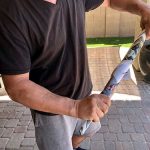 Because time is of the essence in an emergency situation, the ability to construct and then use such a weapon is a skill within itself. Therefore, what I do with my students is time them when constructing a magazine baton. My goal is to have them make it in less than 30 seconds and then employ the weapon with a series of offensive attacks.
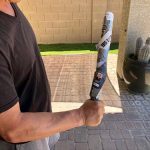 To do this, find several magazines and a roll of duct tape and time yourself. Most people will take one to two minutes the first couple times, but then narrow it down to under a minute. Remember, the goal is 30 seconds and then you’ll want to stand up and do 25-50 reps of the “X” pattern. You won’t need this many strikes, but the reps after constructing this weapon under a small time limit will drill these two important striking patterns into your muscle memory. I realize there are many close quarter weapons, however, this is a trick to convert everyday items into a longer-range weapon that could save your life.

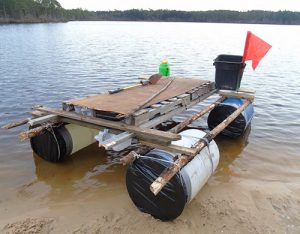 When I was in the Amazon, I built a fully functional raft with only a knife, large balsa wood trees, bamboo, and only vines to hold it together. I travelled over 12 miles up and down the Amazon and it got me and my partner safely to extraction. In Colombia, I opted to build a raft out of drift wood, small balsa trees and palm tree trunks held together by just fishing line. I needed it to navigate the waters of the treacherous and fast-moving Orinoco River over a half mile wide. The skills to build a raft, whether you build something basic or one ready for a sea battle, can be just the thing that can save your life.
When it comes to building a seaworthy raft, there are three main factors you need to consider: 1) Buoyant base and platform material. 2) Lashing and assembly material. 3) Mobility and maneuverability control systems. Anything can work in a pinch and with the right know how and creativity, you too can make it work if you follow these key factors and steps.
Step 1: Gather your raft materials. Before you begin, you have to gather as much materials as you will need for your raft to safely carry yourself, other riders, and supplies. You want to gather anything that is buoyant and pliable. Wood, plastic, Styrofoam, barrels, pallets, or even doors (not metal). You also need to gather lashing material (ropes or cordage) nails, screws, duct tape or industrial adhesives will work.
Step 2: Let’s say you were lucky enough to have access to some barrels or something similar.
Lay down four 55-gallon barrels (preferably plastic pickle ones) and lash them to a support beam system made up of four long beams 10 to 12 feet in length and two cross beams to form the base.
Step 3: Lay down some plywood to support the deck. Then take two pallets to form the deck’s base and attach or lash them to the barrel support beam system. Place plastic bottles or jugs and other buoyant material in between the pallets void space to assist in helping the raft float. Secure it with lashing or tape at the opening ends or jam other material in the ends to prevent any loose material from floating out.
Step 4: Place another layer of plywood or a door on top of the pallets to form the deck. If you find the deck is slippery, you can mix sand or dirt in with paint and apply it to the deck, as this will give it a non-slip surface once dry.
Step 5: Fashion paddles by securing a long push pole and attach a rudder if possible. If you are crossing a large lake or the ocean, you may want to fashion a sail if you can, to help take advantage of winds and save energy.
Step 6: Launch! Test your raft out first to see how it floats, for balance and maneuverability. Testing it near shore will give you an opportunity to make adjustments before you actually launch out to rescue. Finding out in the middle of rapids that your raft is not buoyant enough, is taking on water fast, or falling apart from poor lashings, is not the time. Plan time for testing.
In addition, here are some optional items you may wish to have. Adding these to the journey can make the situation a little better. For instance, a sun shade, a basket for supplies, a large water jug, extra paddles, rain catch system. You may want to fly a bright flag and have other signaling options available to communicate or aid in rescue. Also, if you have more than two people or more supplies, simply repeat steps 3 and 4 by laying a second deck built the same way alongside the first deck and you have just doubled your capacity.
Knowing how to build a raft can certainly save your life in an extreme survival situation. It can also be a game changer in long term survival for moving about to find resources and utilizing the resources below the surface of a body of water as well. Of course, its biggest asset and use is in rescuing out of a bad situation. You are only limited to your imagination and creativity when constructing a capable raft. Just remember the 1,2,3’s of raft building and you and your companions will be okay. Stay dry!


