



It was my first time in Paris and as my partner Max and I were on one of the plexiglass-encased escalators at Charles de Gaulle Airport, something very odd occurred. We entered Europe through the second busiest airport in Europe on a counter-terrorist mission. The team that preceded us failed to close the deal and it was up to us to get results. While I was admiring the stunning web of tube-like escalators that made up the terminal, we heard my name being announced over the airport intercom – my true name.
 While we train for these scenarios, this was the first time I ever had to deal with it on a live op. Of course, you behave as if nothing happened, but for me and Max, it was a potential mega-disaster. Then, about three minutes later, my true name was called out again. This was a bit of a relief to me. To me, it meant that they probably had not seen anyone respond or betray their cover and they were still looking. Also, they had not called out Max’s true name and neither of our aliases, so they might have been expecting a solo mission. We proceeded as if all was well, while at the same time we engaged in high intensity surveillance detection protocols.
How does this happen? There is so much money available in the schemes of international terrorism that leaks occur. That is why we train so hard and use situational awareness to keep from getting rolled up or having a mission go off-track leading to international blow-back.
Max and I continued to converse normally and stayed true to our path towards baggage claim. I was confident that my appearance and alter-identity would shield me. But, we still had problems to analyze and solve. We needed to understand how that trap was calculated to expose us. We needed to understand how that trap played out in the context of our entire mission so my situational awareness was at an all-time high.
The fact is, spies (actually, everyone) must develop the crucial skills of genuine situational awareness (SA). SA is the (practiced and developed) ability to have cogent, fully cognitive awareness of everything of importance happening around you. There are three primary dimensions of your SA. The first is your immediate vicinity. Quite literally, anything in arms reach out to about a 15-foot radius. The second dimension is your surroundings. The scope of this dimension requires the context of where you are at the time.
For instance, are you attending a church service, are you in a night club, or possibly at home or even golfing? Basically, your second dimension will be your line of sight or visible and auditory range of perception beyond your immediate vicinity. Your third dimension is outside of your surroundings. It can be described as exterior to your immediate environment. For example, if you are attending a church service, your third dimension of SA will include the parking lot, the back of the building, any lofts or basements and extend out to any current events that may affect you. Your third dimension of SA is not describable with physical boundaries, rather it includes events that may have a significant impact on you.
Those events may include things such as a developing military coupe in the country you are working or a wide spread power outage in your area. While you can observe your first two dimensions, it is the developed ability to perceive your third dimension that will be essential in your aptitude to be fully situationally aware. You can practice developing your skills in all three dimensions as you go about your normal day. Just take a few moments to realize that all of those dimensions are surrounding you and describe them to yourself in your mind. You are actually re-training your brain to perceive and process what others are not even aware exist.
But, you cannot be attentive to all things at all times. You will need to learn what we call relevant observations. On TV, they show spies walking into a room and mentally recording everyone’s height, weight, clothes, shoes, bags, packages, briefcases, hair color and every other personal aspect – all in under 15 seconds. That would be a really cool skill, but it would tie up too much brain power for most of us. That’s why we focus on relevant observations and situational awareness.
Relevant observations will be tailored to where you are, what is going on around you and what you are doing and want to accomplish. For instance, if you are walking around a mall trying to pick-up surveillance, you do not need to look in every store or at everyone coming your way or even everyone following you. You will only need to be alert and try to spot synchronized movements. Simply put, out of those hundreds of people, you are interested in spotting only one of them – the one walking the same pace, direction, and making turns identical to yours. Don’t expend your precious time or mental faculties trying to observe and assess every person or every movement. Focus on your relevant observations.
Once you have a candidate for your suspected tail, notice the unchangeable features such as skin color, height, demeanor, gender and gait. Once you have managed to identify those attributes clearly in your mind, you can use the surveillance routes you take to identify and confirm if you are indeed being followed.
That’s exactly what we did as we delayed the start of our operation for several days so that we could study our threat profiles in each dimension. By being acutely aware of our three primary dimensions, we were able to proceed with confidence. After making a few more border crossings and employing some impromptu counter surveillance techniques, we determined that we were not being followed and we engaged in our operational acts.
Over time, you will learn how to split your time and attention between your immediate proximity and your surroundings while you are simultaneously calculating what may be occurring outside of your view. You will need to be analyzing your “threats’” and their actions, reactions, movements, staging, and evolving plans for you. That means you are considering the likelihood that they are entering and searching your vehicle, tagging it for technical surveillance, setting up to get pictures of you and trying to collect your biomatter for DNA samples. You will also be considering how they will be set up to regain surveillance on you if they lose you.
The bottom line is, if you start to practice thorough situational awareness you will become the master of your territory instead of being subjected to your surroundings. You will soon see how empowering it is to be conscious of your three dimensions of awareness and you’ll be prepared to act at a moment’s notice.

 Here’s the thing. This man saved his family by initially confronting the intruder with a baseball bat, hoping that the guy would simply run out of the house. Unfortunately, that wasn’t the case. Once the man and the intruder were involved in a close encounter, the man defending his family knew he needed more than the baseball bat and he transitioned to a more effective weapon. The reality is, this is exactly the type of thing we should train for. Whether your primary self-defense weapon is a gun or a baseball bat you always need to have a back-up option. Chances are you’ve heard me mention that the average gunfight occurs at a distance of three yards, lasts three seconds, and involves three shots being fired. The reality is, if you are ever involved in a self-defense encounter it most likely won’t occur at 10, 15, or 20 yards with you shooting at a stationary target.
Since we know most dangerous encounters will occur in close proximity, it’s important to train and mentally prepare for close quarters encounters with a deadly threat. Considering this, I want to share with you some things to remember in a self-defense situation where the intruder is touching or within a few yards of you.
 Action is faster than reaction. The initial attacker is always going to be faster than the person who is reacting. This is just the facts of life and it doesn’t matter how strong or fast you are. With that being said, once someone is close to you, within a few yards, you need to be the one taking action. At the very least, get your hands up. If you simply wait and react to their moves, you will always be a step behind.
Don’t create space. Unless the person has a knife, you don’t want to create space and back peddle. It puts you back on the defensive end of things and allows the threat to take control of the situation and be the aggressor. Again, when your life is imminent danger, you need to take the fight to them and not push away to create space. Of course, I’m not saying you shouldn’t run away to safety if that is an option, but oftentimes, in a close quarter encounter, your best chance for survival is to take the fight to the attacker.
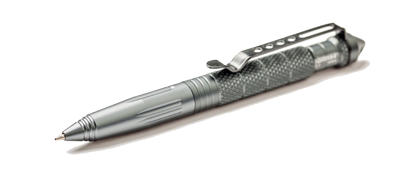
Fighting with multiple weapons. One of the most critical aspects of close quarters self-defense is the reality that you may not be able to deploy your primary weapon. For instance, if the bad guy rushes you then you may not be able to draw your handgun. For this reason, I always recommend making a back up weapon part of your everyday carry gear. I usually carry a fixed blade knife, as well as a tactical pen, which could both be used to strike an attacker at close range.
No matter what weapons you choose to carry or even have in your home, always be prepared to use a second weapon as we have seen criminals becoming more aggressive and brazen with their actions, ultimately changing the way we react in a self-defense situation.

In today’s world of never-ending advertising, it’s becoming more and more difficult to know what we want versus what we truly need. Marketing is designed to appeal to our inner desires to have things that make us feel secure, important, connected, and valued and is fashioned so most everything is targeted to appeal to us in that way.
 This is especially true in the survival and tactical markets. There are dozens, if not hundreds of adverts imploring us to buy that one item we can’t live without, that will save our lives and keep us safe, healthy, and secure. However, if we bought everything that attracted us, we’d be broke and have a huge storage bill. In the end, we must be somewhat practical. We can’t carry or even use everything as much as we’d like to. So, when it comes to medical gear, what 10 categories and items should you have to help you survive a winter medical emergency? Let’s list these in alphabetical order.
1) Bandages – I’d select an assortment of both types and sizes. For example, you certainly want Band-Aids or the like in various sizes for simple cuts and scrapes. You also want to have some 4×4 gauze and waterproof surgical tape for larger and more involved wounds along with some wound packing material like loosely knit gauze. Also, maybe a couple of larger abdominal bandages, an ACE wrap or two and self-stick bandaging wrap like Coban. I’d also make sure to have something to cleanse the wound with like Betadine, Bactine, or chlorhexadine. Isopropyl alcohol is always a good back-up as it doubles as fuel, but you just have to be careful as it will hurt if applied to an open wound.
2) Basic meds – Here, I’d include a well-labeled selection of medications for various conditions. Be sure and have a good antihistamine such as Benadryl, Claritin, or Zyrtec. An anti-diarrheal like Imodium, something for constipation such as Dulcolax, a nausea medication like Phenergan or Zofran. You’ll want anti-inflammatory pain meds like Tylenol, ibuprofen, and aspirin, and antibiotics that can be used for UTIs, URIs, and GI issues such as Bactrim, Augmentin, or Cipro. If anyone in your family has specific needs, be sure to include an extra supply of their medications in your survival kit.
3) Fire – I believe strongly in redundancy. For this reason, I recommend that you keep several items in this category handy. Wind and waterproof matches, a dependable lighter, and a flint and striker. In addition, I’d grease up a few cotton balls with Vaseline to serve as fast-starting tinder for use in starting a fire and then store them in a Ziplock baggie. You obviously don’t want to freeze to death if your vehicle gets stranded in a winter storm.
4) First Aid Handbook – There are so many of these on the market. I am admittedly biased, but my favorite is the Special Operations Forces Medical Handbook. You can find this on Amazon. It is full of incredibly useful and life-saving information should you ever find yourself separated from medical care and in need of urgent intervention.
5) Knife – Most of us carry a nice folder/pocket knife. What I’m talking about here is a heavy-duty fixed blade that can chop down a small tree to help you build a lean-to or shelter, act as a weapon, skin an animal, cut through clothing and serve as a digging tool. This is invaluable and is perhaps the most useful tool of this entire list. Whatever you do, get a good fixed-bladed knife, please.
6) Light – Again, I like redundancy. I usually recommend a good LED headlamp, a small tactical flashlight and a larger flashlight with a stronger beam. These can be essential in administering first aid in low-light conditions, as well as finding your way, signaling, reading and more.
7) Space blanket – Some believe these to be unnecessary, but I promise you they can prove to be very handy in building a shelter, staying warm, collecting water, or even signaling for help. They are light, cheap, and they pack small. Once you unravel it and use it, just buy another one.
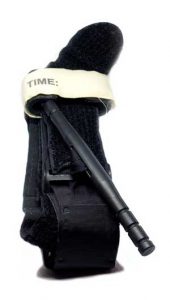 8) Tourniquet – When it comes to saving someone’s life, including your own, you cannot go without a tourniquet. Learn how and when to use it. My favorites are the Israeli CAT tourniquet or the SOF Tactical tourniquet. They are both easy to use, very affordable and incredibly effective. Don’t be scared to use it. Medical opinion has changed in recent years. We now tell non-medical personnel to use a tourniquet to stop bleeding of an extremity early. It should go without saying, never use a tourniquet to stop a neck bleed.
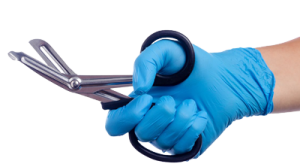 9) Trauma shears – A good pair of trauma shears is also an essential piece of equipment. You can find them for as little as $5 a pair, but if you have the funds, I’d recommend you invest in the multi-utility Leatherman Raptor Shears for $70.
10) Water filter – Last, but most certainly not least, you need a good, easy to use, portable and easy to carry multi-stage water filter. There are many on the market. MSR, Katadyn, and Sawyer all make quality filters that I would trust. Expect to spend just shy of $100 for a good and reliable one.
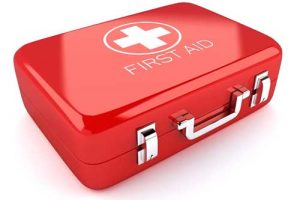
Of course, you have to have a small pack to carry these in. You could go with something as simple as a traditional red first aid kit or backpack or you could go for something more tactical – completely up to you. Though there’s no right answer, it does depend on your intended use. Are you going to carry in your car or are you planning on hiking with it out in nature? Your answer will help you decide which direction to go. There are certainly more things that you could include, but I do believe these to be the basic necessities that you should start with and always have within reach. Be safe. Stay alert. Stay alive.
When you hear stories about being pickpocketed, you probably think about these crimes occurring in major U.S. cities or in Europe where tourists are commonly targeted. The reality is, this occurs daily in cities big and small around the U.S.Recently, police in Snohomish County, WA found that a pickpocketing ring has been targeting innocent shoppers all over the Puget Sound, including locations such as Everett, Bellevue, Factoria, Lynnwood and Woodinville. The way it works is these criminals are focusing on people doing everyday shopping at places such as Trader Joe’s and Panera Bread. One victim had just bought her lunch when someone bumped into her and simply took her wallet without her realizing it until they were long gone. According to the victim “I was in a restaurant having lunch with a friend, I wasn’t paying attention and so I would never suspect anything like this would happen there.”
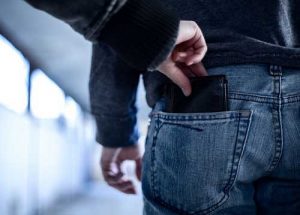 This ring of thieves is very sophisticated and don’t waste any time before spending their victims money. In fact, for one victim, thieves ran up $14,000 in charges on her credit card in less than 45 minutes. On the same day, they targeted another victim at a grocery store and ran up another $3,200 in credit card charges. So far, detectives have linked 7 pickpocketing cases to the same crew of thieves and this will no doubt continue to grow until they are caught. According to police, the criminals are using the credit cards they steal to buy things like gift cards or to buy merchandise from electronic, grocery and department stores.
Here’s the thing: Whether you are traveling to Europe where pickpocketing is very common or simply going out grocery shopping, you need to be aware that pickpocket thieves are everywhere. Here’s how to protect yourself from these thieves in this New Year.
Clothes. There are tons of different companies that make so-called “pickpocket-proof” clothing. If you are traveling overseas I would definitely buy a few different sets of clothes to wear that will help keep your valuables secure. Most of the shirts and pants sold by these companies operate using at least two levels of closure methods. In other words, a button may open the outer pocket, and then an inner pocket will open with a zipper. A few companies that I would look into that sell this type of clothing are Clothing Arts and
Clever Travel Companion.
Backpacks. When you think about backpacks, you probably figure they really aren’t the most secure way to carry valuables. But, as long as it’s on your person, there are many different options when it comes to anti-theft backpacks. The way these work is that they usually have a hidden zipper somewhere where you can stash your most prized possessions like wallets, passport, thumb drive, engagement ring or what not. Since they aren’t readily visible, pickpocket thieves have a hard time reaching them. You can also find backpacks with locking zippers and slash proof material so the bad guy can’t simply run up to you and cut your backpack. A couple of anti-theft backpacks that I would look into are ones made by Travelon or Kopack.
Purses. As long as women have carried purses, they’ve been prime targets for criminals looking for an easy thing to steal. Anti-pickpocket purses are similar to backpacks but they commonly are made with cut proof shoulder straps, which is obviously one of the easy ways criminals steal handbags. Many of these bags also come with lockable zippers and some even have latches that cover the zippers. A few companies that make quality anti-pickpocket handbags are PacSafe and Travelon.
In addition to the items I’ve already mentioned, one of the most secure ways for females to carry important things is with a bra wallet. In short, these are wallets that you easily attach to a bra and wear underneath layers of clothing.
Remember, no matter where you travel this coming year, tourists are always going to be targeted. The last thing you want to deal with on a vacation is having all your valuables stolen. So, start preparing now for your next trip and check out some of the gear I’ve mentioned that will help keep your valuables safe.

 A “Meet the Press” interview with billionaire hedge fund manager (and fanatical anti-Trump campaign investor) Tom Steyer opened with Steyer looking deeply into the eyes of the camera and saying, “This President is a clear and present danger. He is mentally unstable and armed with nuclear weapons.”Such radical views from the other side, by the likes of the billionaire Koch brothers, might be greeted with scorn or even calls for a Congressional investigation into libel laws. But, Tom Steyer was greeted with a friendly interview by “Meet the Press” host Chuck Todd, who gave Steyer a platform for his views.
The fact is, from 1972 to 1974, it took about two years from the Watergate break-in to Nixon’s resignation for the forces of Congress and two investigative journalists at the Washington Post to bring a sitting President to resign, avoiding the inevitable vote against him in a Senate impeachment trial. Today, the Washington Post (owned by Amazon’s Jeff Bezos) is even more anti-Trump than the 1970s Post was anti-Nixon, with teams of dozens of reporters looking for every possible misstep by Trump, his staff, his family, his past businesses, his every word (through fact-checking armies), policies, meeting and personnel choices. We now have a Democratic majority in the House of 38 to 40 seats, enough for a majority impeachment vote.
If the impeachment talk continues, we may see a replay of the 1973-74 markets in 2019-20. In 1973-74, the Dow Industrials declined 45% from 1051.7 on January 11, 1973 to 577.6 on December 6, 1974. That coincided with one of the biggest bull markets in gold and rare coins. Gold more than tripled, from under $60 to over $180, while the Rare Coin CU 3000 index rose 348% — more than four-fold. There was an impeachment threat in the Reagan years, too. On March 6, 1987, Representative Henry B. Gonzales, a Democrat of Texas, introduced articles of impeachment against President Ronald Reagan regarding the Iran Contra affair.
It’s not well remembered today, but there were hearings running for three months – from May 5 to August 6, 1987 – including testimony by Oliver North and others, followed by Congressional Committee meetings investigating Iran-Contra through the fall. The impeachment threat wasn’t over until the final committee report came out in November, after a huge 36% stock market crash! At the same time, we saw the beginnings of a large bull market in rare coins. From 1986 to 1990, the Rare Coin CU 3000 Index rose 665% at a time when gold bullion and stocks were essentially flat.
The bottom line is that it has paid to invest in gold and rare coins when “impeachment” threats are in the air. As in both of those past episodes of political uncertainty and wild stock market gyrations, it pays to take some stock market profits off the table and invest in gold and silver bullion and rare coins. It never pays to wait too long, since stocks can fall very fast – and coins can rise very fast – especially in times of national uncertainty and turmoil. While I don’t know what the outcome of what the House’s impeachment push will be, I do know that gold and silver are one of the last true forms of private, portable wealth and that they will be around long after all of this is a distant memory. This is why I encourage you to invest in gold and silver this year, if you haven’t protected yourself already with these precious metals in the past.
[Publisher’s Note: For questions about buying gold and silver coins you can contact Forest Hamilton directly at foresthamilton@universalcoin.com or call 800-822-4653. Please know, if you purchase any coins from Forest, we don’t receive any compensation from him. We simply know he’s one of the good guys in the business that can be trusted.]

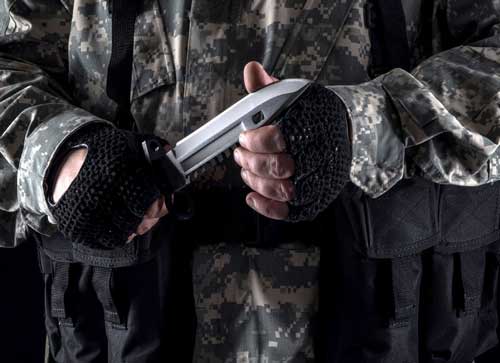 What happens if we have an attacker who has a knife and we are unarmed? What I am not going to teach you is some multi-step joint lock where you catch the attacker’s hand in midair and lock up their fingers into a pretty “Hollywood” move. Those are “fine and complex” muscular movements that don’t work when you have adrenaline rushing through your system. Let me repeat, they are physically impossible to do as your rush of adrenaline will shut down the ability to perform those detailed movements.What you need is “gross” motor skill movements that are general movements that focus on large muscle groups. So, I’m going to show you a simple three step process that when practiced against different attacks will give you a direct line to securing the attacker’s knife, taking them out of commission and giving you full control.
The three-step strategy to remember when dealing with this situation is Distance, Isolate and Terminate. Distance means that when the attacker swings, slashes or stabs at you, you need to be far enough away to evade the knife, but close enough so that when the blade passes you can close the gap. Once the knife passes you and starts to return to the attacker, then is the time to close the gap and isolate.
We close the gap because when facing a weapon of any sort being at a distance is where you are at a disadvantage. Being close to the opponent and “jamming” their ability to move is where your greatest defense and counter attack lies. So, once again, when the attacker strikes past you, then we rush in to our next step, which is to isolate the weapon arm. This is where we grab the attacker’s weapon arm with both of our hands, securing control over it.
The third and final step is to terminate. We end the altercation not by simply seizing the arm, but by using this closer range to use our ballistic tools, such as knees, elbows and head butts. Striking our opponent using these moves will provide the best bang for your buck, increasing your leverage and damage on the opponent. My only caveat is to make sure you leave the elbow strikes until last, as you will have to release your hold in order to elbow strike.
In other words, you’ve spent time and energy getting into that close range, dodging the knife attack and securing the weapon arm, the last thing you want to do is to have to let go of that dangerous limb in order to strike your attacker. I’m not saying to pass up on the elbow strike as it is a powerful tool, but simply use it at the end of your strikes, softening up our opponent first with knee strikes and head butts.
Distance, Isolate and Terminate is not just about “techniques”, but having the attributes to pull it off in real life. The point being, you have to put in some practice time in order to develop the timing and proper angles to protect yourself while inflicting as much damage as possible. To help you better understand these techniques I have put together a short video series that walks you through these moves. You can access the video here: https://selfdefense.isrefer.com/go/kk2/JasonH
One of your most critical pieces of gear, whether you are bugging out or just wearing it for everyday carry, is your belt. You should never go cheap with your belt since you are most likely depending on the belt to hold a gun, magazines, knife and other important gear.Now, anyone who has been in law enforcement is familiar with wearing a pant belt, plus a duty belt to carry your gear. Well, Ronin has taken this concept and made a small, lightweight belt that still allows you to attach your Molle system gear without it being uncomfortably bulky.
The Warrior’s belt is a two-piece system with the inner belt being worn like a normal belt through your pant belt loops. The inner belt is about two inches tall and fastens at the front with a hook and loop. The outer belt measures 1.75 inches tall and has 2 rows of 21 columns of Molle around the whole belt. The front of the belt attaches to itself with a 2-inch cobra buckle with an attached “D” ring. The outer belt can be adjusted a couple of inches and is rated with a strength of 7,000 lbs. The inside of the outer belt is made with Velcro around the whole thing, which allows for a secure fit around your body.
The design of this belt is ideal for running and keeping your gear in place. Plus, you can attach tons of different pieces of gear that work with the Molle system. Military members who know how incredibly important a belt can be are the people who designed this belt for civilian use. The Ronin Warriors (Senshi) Belt comes in sizes from small to extra-large and the colors of black, tan, coyote, and ranger green. You should note that the belt is not inexpensive and starts at around $190, depending on the size and color options you select.


